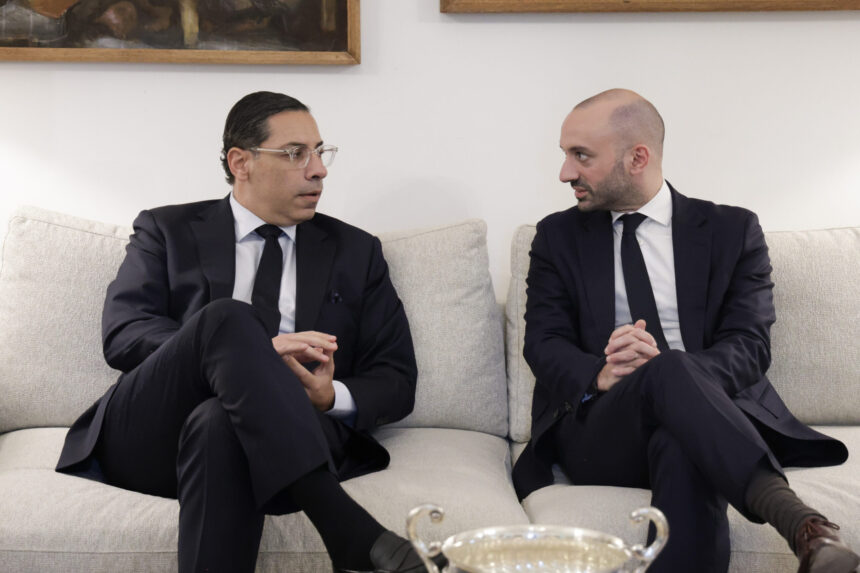
The signing of a strategic bilateral agenda between Cyprus and France was a focal point in discussions held between President Nikos Christodoulides and French European Affairs Minister Benjamin Haddad on Monday.
- Minister Haddad expressed optimism about the timeline, stating, “Our goal is to finalise it as soon as possible and I believe we are close.”
Strategic bilateral: Key Topics Discussed
During their meeting, the leaders addressed several important matters, including the upcoming EU Presidency and Cyprus’s ambition to become a full Schengen member by 2026. President Christodoulides remarked, “France is one of the member states with which Cyprus shares the same views on most of the issues on the European agenda. It is therefore important to coordinate in view of our [EU Council] presidency.”
Finalisation of the Strategic Agenda
The strategic bilateral agenda is expected to be finalised in November. The agreement aims to bolster cooperation between Cyprus and France across various sectors, notably economics, energy, and defence. This document will be officially signed by French President Emmanuel Macron during a forthcoming visit to Cyprus, although details of the trip are still being finalised.
Minister Haddad expressed optimism about the timeline, stating, “Our goal is to finalise it as soon as possible and I believe we are close.”
Geopolitical Considerations
The geopolitical position of Cyprus and its surrounding regional issues formed another crucial part of the conversation. President Christodoulides stressed the importance of “coordinated actions” among neighbouring countries, particularly those with strong ties to France, such as Lebanon.
Additionally, the president presented updates concerning the long-standing Cyprus problem and underscored France’s significant role in the current international political climate, noting, “Bear in mind that France is both a permanent member of the UN Security Council and an EU member state.”
Schengen Membership Ambitions
Another topic of interest was Cyprus’s efforts to achieve full Schengen membership by 2026. The president conveyed his aspirations for the completion of related procedures by the end of the year, stating, “We are working on the related technicalities.” This initiative reflects Cyprus’s desire to enhance its integration within the EU framework.
Challenges Ahead for the EU
Earlier in the day, Minister Haddad met with Deputy Minister of European Affairs Marilena Raouna, where he reiterated France’s commitment to support Cyprus in facing “significant challenges ahead of us [the EU]” in light of its upcoming Council Presidency. He highlighted the implications of Russian aggression against Ukraine, labelling it a pressing European issue that resonates particularly strongly in Cyprus, the EU’s last member state under military occupation.
Security and Defence Concerns
The two ministers also delved into security and defence matters, as well as the EU’s multiannual financial framework. Raouna noted that these issues are integral to Cyprus’s priorities for its forthcoming presidency.
Minister Haddad acknowledged Cyprus’s status as a “strong and steadfast ally” in the context of enhancing the European industrial defence base, especially during a time of increasing geopolitical challenges and the necessity for reduced dependencies on external resources.
Strengthening Bilateral Relations
Throughout their discussions, both ministers emphasised the “excellent relationship” between Cyprus and France. They expressed a mutual goal to deepen and upgrade bilateral ties in various fields, reinforcing the commitment to collaborative efforts in the face of evolving regional and global dynamics.
The anticipated strategic agenda signifies a commitment that transcends mere diplomatic niceties, aiming to establish a robust framework for cooperation that could enhance stability and promote shared interests in the Mediterranean region.
As the signing date approaches, both Cyprus and France appear determined to solidify their partnership, which is poised to benefit not only both nations but also contribute to broader European stability.