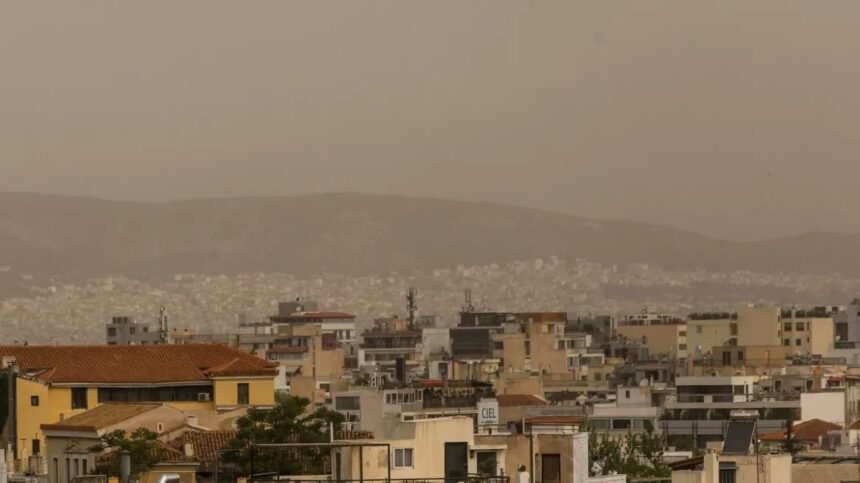
cyprus air — cyprus air — Air pollution in Cyprus, particularly from particulate matter (PM 2.5), has been reported to be 50% higher than in Paris, leading to serious health implications, including premature deaths.
This alarming information was presented by Dr. Stavros Malas, President of the Cyprus Institute, during a session of the Parliamentary Committee on Internal Affairs. The discussion revolved around the potential opening and expansion of a new road within the Athalassa National Forest Park in Aglantzia, a project that Dr. Malas argues could worsen the already dire air quality in the region.
Dr. Malas emphasised that Cyprus’s PM 2.5 levels are currently exceeding the forthcoming European Union air quality standards, with the nation not seeing improvements over the past decade, unlike many other EU member states. According to the data, Nicosia experiences PM 2.5 levels that are significantly above the new limits set to be enforced by the EU in 2026.
Cyprus air: Health Costs Linked to Air Quality
The public health ramifications of air pollution in Cyprus are substantial. The estimated health costs associated with PM 2.5 pollution are projected to amount to 3.7% of the country’s GDP in 2023. This figure underscores the urgent need for effective measures to mitigate emissions, particularly from road traffic, which remains the principal contributor to urban pollution.
Implications of Proposed Road Expansion
The proposed road within Athalassa National Forest Park is expected to significantly increase local exposure to PM 2.5, with estimates suggesting a 2.5-fold increase in pollution levels. Dr. Malas referenced data from NASA and the European Environment Agency, indicating that such increased exposure could lead to a reduction in life expectancy for many residents in Aglantzia, particularly affecting children attending schools in the vicinity.
In particular, the students of the French-Cypriot School of Nicosia are likely to face heightened health risks due to their proximity to the proposed road. Dr. Malas warned that the expansion could not only exacerbate health issues but could also hinder the Athalassa Forest Park’s role as a critical recreational space, threatening local biodiversity.
Current Air Quality Challenges
The Air Quality Monitoring Network in Cyprus currently reports average PM 2.5 levels at 15 micrograms per cubic metre, already surpassing the new EU limit of 10 micrograms per cubic metre. This situation calls for immediate action to address the high levels of air pollution in urban areas, particularly those caused by vehicular emissions.
Dr. Malas’s presentation has sparked a broader debate on the need for sustainable urban planning and the protection of natural spaces in Cyprus. As the country grapples with its air quality challenges, the potential environmental impact of infrastructure projects like the road expansion becomes a pressing concern for policymakers and residents alike.