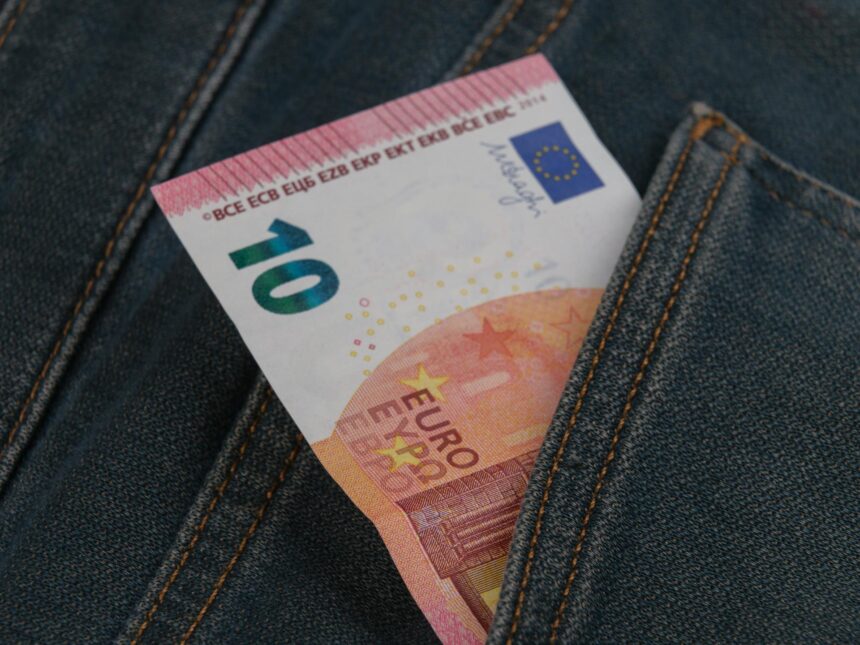
lowest inflation — Cyprus has achieved the distinction of registering the lowest inflation rate in the European Union, with annual consumer prices holding steady at 0.0 per cent in September 2025, according to recent data from Eurostat.
- As the euro area grapples with rising costs, the stability seen in Cyprus could serve as an interesting case study for policymakers aiming to balance economic growth with inflation control.
This figure starkly contrasts with the broader trend in the euro area, where annual inflation has risen to 2.2 per cent, up from 2.0 per cent in August. This marks a notable increase from the previous year, when inflation was recorded at 1.7 per cent, highlighting an ongoing upward pressure on prices across the region.
Within the EU, the overall annual inflation rate has also climbed to 2.6 per cent in September, a rise from 2.4 per cent in August 2025. A year prior, the inflation rate stood at 2.1 per cent, indicating a significant shift in economic conditions.
Lowest inflation: Comparative Inflation Rates Across the EU
Cyprus’s inflation rate of 0.0 per cent places it at the forefront among EU member states, with France following at 1.1 per cent, while Italy and Greece both report rates of 1.8 per cent. In stark contrast, Romania recorded the highest annual inflation rate in the EU at 8.6 per cent, followed by Estonia at 5.3 per cent, and both Croatia and Slovakia at 4.6 per cent.
The variation in inflation rates across the continent underscores the divergent economic experiences of member states, with Cyprus’s stability providing a sharp contrast to the challenges faced by others.
Inflation Trends and Economic Indicators
As inflationary pressures grow in many EU nations, the data reveals that eight member states experienced a decrease in annual inflation rates compared to August 2025. Conversely, four states reported no change, while fifteen saw increases, reflecting a landscape of broad-based upward pressure on prices.
In examining the components of inflation contributing to the euro area’s annual rate, services emerged as the primary factor, accounting for 1.49 percentage points. This was followed by food, alcohol, and tobacco, which contributed 0.58 percentage points. Non-energy industrial goods added another 0.20 percentage points, while energy had a negative impact, contributing -0.03 percentage points.
Implications for Cyprus and the Euro Area
Cyprus’s unique position in this economic climate raises questions about the factors that have allowed it to maintain such low inflation. Analysts may look to various elements, including economic policies, consumer demand stability, and perhaps even external market influences that have shielded Cyprus from the inflationary trends affecting many of its neighbours.
As the euro area grapples with rising costs, the stability seen in Cyprus could serve as an interesting case study for policymakers aiming to balance economic growth with inflation control.