foot and — Four thousand pigs will be culled following the first confirmed case of foot and mouth disease (FMD) at a pig unit in the Palaiometocho area, as announced by the Veterinary Services on Thursday. This alarming development raises fresh concerns about the potential spread of the virus across the region.
Veterinary Services spokeswoman Sotiria Georgiadou confirmed that the culling is necessary due to the outbreak. She stated, “We are looking into the matter and waiting to see how it will evolve.” In line with established protocols, all animals in infected units will be culled to prevent further transmission.
The confirmation of FMD in Palaiometocho marks a significant shift in the outbreak’s landscape. Previously, the disease appeared to be largely contained within 80 infected sheep and goat units located in Larnaca and southern Nicosia, specifically in the areas of Dali and Geri, along with 11 cattle units. The new case, however, indicates that the virus has spread further west into Nicosia.
Georgiadou reported that police have been informed to establish roadblocks and disinfection points around the new cluster. She explained, “The three units are isolated anyway. Epidemiologically, we now consider them as one unit.” This proactive approach aims to contain the virus effectively.
Dr Dimitris Epaminondas, President of the Pancyprian Veterinary Association, highlighted the need for potential new measures in response to the evolving situation. He remarked, “What we need to see is whether new measures will be taken and whether the strategy will change.” This underscores the urgency felt within the agricultural community as the outbreak progresses.
Efforts to control the virus focus heavily on the pig farm in Palaiometocho, with Georgiadou emphasising the importance of a swift culling process, as pigs shed the virus more rapidly than other livestock such as sheep, goats, and cattle. She noted that the spread of FMD should not be viewed as a failure, attributing the primary responsibility to human activities, including movements of machinery and personnel that increase risk.
In total, around 33,000 to 34,000 sheep, goats, and cattle have already been culled due to the outbreak. The addition of the 4,000 pigs from Palaiometocho brings the total number of culled animals even higher. Vaccination efforts are ongoing, with the second dose administered to 73.5 per cent of cattle, 56.3 per cent of sheep and goats, and 84 per cent of pigs in the infected zones.
With the recent case, the number of infected farming units has risen to 92, and Georgiadou expressed concern that this number could soon reach three digits. She clarified that most of the affected units are small, indicating that while the overall impact may seem manageable, the consequences for individual farmers can be severe.
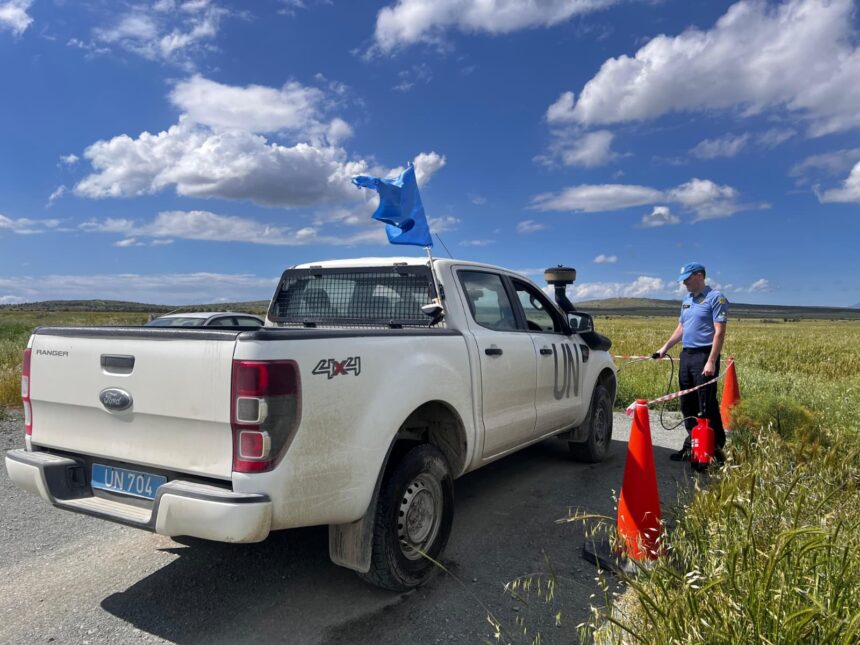
Losses from the outbreak are currently estimated at 2.6 per cent for cattle and 6.4 per cent for sheep and goats, as stated by Georgiadou. Meanwhile, the United Nations Peacekeeping Force in Cyprus (Unficyp) reported that its officers are actively supporting biosecurity measures in the buffer zone near the affected farm to prevent further spread of FMD to livestock and farming communities in that area.
Petros Kalias, President of the Cyprus Pig Farmers Association, commented on the uncertain future of market prices, noting that while the national impact may be limited, the individual losses for farmers could be significant. This situation reflects the delicate balance that farmers must navigate as they grapple with the ongoing threat of FMD.