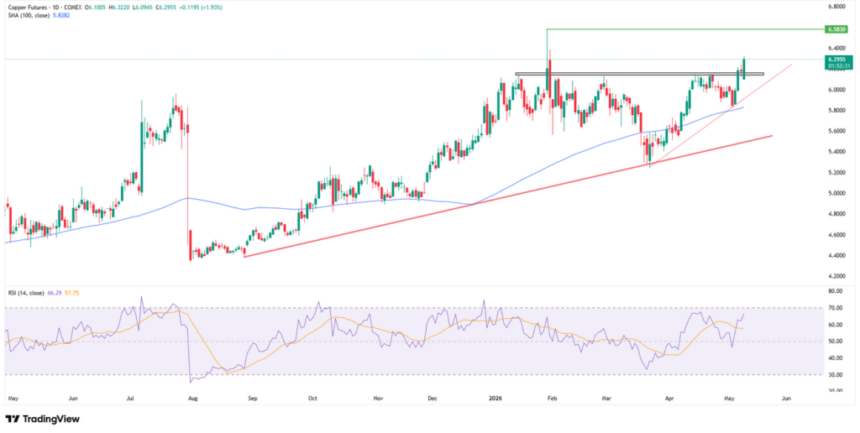
Copper futures prices have surged above $6.29 a pound, nearing record highs last observed in January. This upward momentum is largely fuelled by robust expectations for long-term demand growth and rising concerns about potential disruptions in production and supply.

Photo: financialmirror.com
As a pivotal metal in energy, industry, and new technologies, copper is positioned at the heart of the ongoing global economic transformation. Investors are increasingly confident that copper demand will sustain its growth trajectory for years, driven by several key sectors including artificial intelligence infrastructure, power grid modernisation, and the clean energy revolution.
Copper: Drivers Behind the Price Surge
The essential role of copper in a variety of applications—from electrical installations and data centres to electric vehicles—underscores its importance as economies shift towards electrification. Recent drops in energy prices have also alleviated some concerns about global economic conditions, further bolstering copper’s appeal as a commodity that intertwines short-term investor expectations with long-term technological trends.
Supply Side Challenges
However, the rise in copper prices is not solely attributed to demand dynamics; significant supply-side challenges are also at play. There are growing worries regarding the availability of raw materials required for copper processing, particularly sulfuric acid, a critical component in copper refining.
The ongoing conflict in the Middle East has disrupted supplies of sulfuric acid, while China’s recent export ban from May to December could significantly impact the global seaborne market, potentially reducing available sulfuric acid by around 3 million tonnes. This situation presents risks to key producers, especially Chile, Indonesia, and India, which are already grappling with supply constraints.
Impact on Chile’s Production
In Chile, the world’s largest copper producer, output fell approximately 6% year-on-year in the first quarter of 2026, highlighting the acute challenges faced by the industry. Restrictions on essential inputs like sulfuric acid could exacerbate these issues, limiting the ability to ramp up refined copper supply just as demand is expected to rise.
Emerging Opportunities in Congo
Amid these turbulent supply conditions, the Democratic Republic of Congo (DRC) is emerging as a vital player in the global copper market. Plans are underway by China Railway Group Ltd. (CREC) to develop one of the largest copper projects in the world in the DRC. Discussions between CREC and Congo’s Minister of Mines, Louis Watum, signal a strong commitment to investing in this venture. The proposed mine, located in the Kasai-Oriental province, could produce between 200,000 to 500,000 tonnes annually, positioning it as a significant addition to the global copper supply.
President Félix Tshisekedi’s backing of this project illustrates the DRC’s ambition to solidify its status as the second-largest copper supplier globally, especially as copper production in the country has tripled over the past decade. With Chinese firms currently dominating DRC’s output, this investment represents a deepening of China’s influence in Africa’s raw materials sector.
Geopolitical Implications
As the stakes rise, the United States is also looking to expand its presence in Congolese mining. The increasing competition for access to copper reflects broader geopolitical dynamics, as major economies vie for strategic resources crucial for future economic growth.
A Complex Market Landscape
The copper market is currently characterised by a fascinating blend of strong demand fundamentals and increasing supply-side uncertainties. The pressures of geopolitical competition and technological transformation are likely to continue shaping the landscape for copper prices in the months and years ahead.