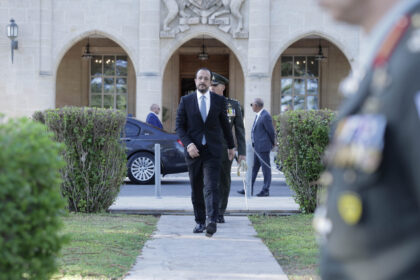
golden passports — Concerns over the prospect of golden passports in Cyprus have been reignited following recent discussions in parliament. Independent MP Alexandra Attalides raised questions regarding the fast-track citizenship process, which has been a contentious issue in the past.

Photo: cyprus-mail.com
Golden passports: Understanding the Pathways to Citizenship
Currently, there are three primary avenues for obtaining Cyprus citizenship. Two of these routes—being of Cypriot descent or marrying a Cypriot citizen—are not accessible to the majority of applicants. This leaves naturalisation as the standard method for third-country nationals.
The criteria for naturalisation, outlined in Article 111 of the Population Register Law of 2002 (Ν. 141(I)/2002), mandate that applicants must reside in Cyprus for a total of eight years, with the last year being continuous. Other requirements include good character, proficiency in Greek, and financial independence.
Changes to Citizenship Criteria
Recent amendments to the law (Article 111B (2)) have introduced a new pathway specifically for “highly specialised” employees in designated sectors, predominantly IT and technology. This fast-track option permits these workers to apply for citizenship after just four years of residency, rather than the standard eight. Additionally, the language requirement has been relaxed; applicants need only demonstrate an A2 level of Greek, which is considered ‘Elementary’. However, this adjustment adds an additional year to the residency requirement.
Current Statistics and Legislative Actions
In her inquiry, Attalides was informed by Interior Minister Constantinos Ioannou that since the introduction of the modified law, 208 third-country nationals, along with 65 dependents, have successfully obtained citizenship. Furthermore, there are currently 360 applications pending under this new framework.
Attalides has expressed concern over the potential for companies to exploit this modified citizenship pathway. She is preparing a draft law aimed at increasing transparency, which she intends to submit when parliament reconvenes next month. Her proposed legislation would require the migration department to maintain records detailing the employer, nationality, position, skills, and qualifications of applicants. “The ministry’s playing dumb, just like they did during the Citizenship by Investment Programme (CIP),” she stated.
Public Concerns and Social Media Influence
The MP raised alarm over the promotion of this citizenship scheme on social media platforms, particularly TikTok. She noted that numerous videos are circulating that suggest foreigners can easily obtain citizenship through employment in Cyprus. “If you go on TikTok, I’ve seen foreigners who are advertising this scheme, saying ‘Come to Cyprus, get a job, get citizenship’,” she remarked.
The Balancing Act of Citizenship
There is a broader debate regarding the fairness of citizenship allocation in Cyprus. Critics point out that many long-term residents, such as domestic workers, often find it challenging to acquire citizenship despite their contributions to society. Conversely, the government appears willing to ease restrictions for individuals deemed ‘crucial’ to the economy, particularly in the tech sector.
Nicodemos Damianou, the deputy minister for research, innovation, and digital policy, defended the fast-track provisions, stating that they are essential for positioning Cyprus as a competitive hub for technology and innovation. He highlighted that the tech sector already contributes over 14% to the national GDP, emphasising the need to attract specialised talent.
Evaluating the Implications of Fast-Track Citizenship
The core question remains: what should dictate the granting of citizenship? Should it be based on a person’s connection and contributions to the country, or should it prioritise those who can provide immediate economic benefits? Attalides expressed her opposition to the current law, suggesting that residency permits could suffice for those employed in Cyprus.
She cautioned against the risk of corruption and abuse within the system, warning that without increased transparency, there could be significant repercussions down the line. “In a few years from now, this will be the new big scandal,” she predicted, voicing her concerns about the potential for misuse of the relaxed citizenship criteria.