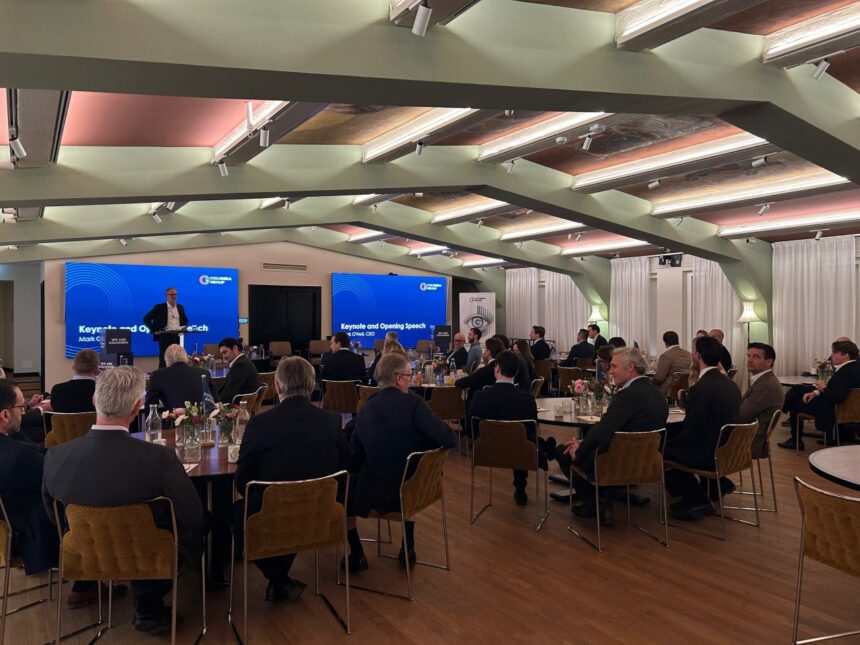
integrated ship — integrated ship — Columbia Group’s CEO Mark O’Neil has called for a shift in the ship management industry towards a more integrated model. This new approach aims to foster closer partnerships between shipowners and managers, a sentiment he expressed during a recent industry event in Oslo titled “Partner-Shipping: What does partner shipping look like for your business?”
Integrated ship: Rethinking Traditional Models
O’Neil reflected on the evolution of third-party ship management, a practice that began over 50 years ago to separate vessel ownership from technical and crewing operations. While this model initially provided shipowners with significant advantages, including economies of scale and access to global resources, it has since become commoditised.
“Margins in ship management are extremely small, which often led to services becoming standardised,” O’Neil explained. He noted that this trend has resulted in management becoming more about “simply joining the dots,” which does not serve the best interests of the owners.
The Need for Partnership
O’Neil believes that the perception of ship managers as detached from owners’ priorities has hindered the growth of third-party management. To address this, Columbia Group is advocating for a new model called “second-party management.” This model positions ship managers as extensions of the owner’s organisation rather than as outsourced service providers.
“It’s a mindset as much as a structure,” O’Neil stated. “Even if we are based in different locations, mentally we must be insourced, not outsourced.” He emphasised that managers need to act as part of the owner’s team, promoting a sense of shared responsibility.
Technological Transformation in Shipping
While O’Neil acknowledged the impact of technology and digitalisation on the maritime sector, he reinforced that shipping remains fundamentally a people-driven industry. He pointed out that despite the advancements in technology, the human element remains crucial for effective operations.
Economies of scale continue to offer significant benefits in professional ship management, particularly in areas like procurement, compliance, and operational efficiency. O’Neil underscored the need for managers to think commercially and understand the larger context of their operations.
Panel Insights on Partnership
During the event, O’Neil led a panel discussion featuring industry experts, including Hakon Rosaker from Clarksons Capital and Erik Tomstad from Nat Chartering. Rosaker echoed the call for stronger partnerships, stating that in the current environment, trust and collaboration are more important than ever.
“It’s not just about capital; it’s about working with people you genuinely trust,” he noted. His comments highlighted the significance of evaluating a company’s track record and its choice of partners.
Christen Guddal from Gard discussed the importance of human relationships in insurance, likening it to the need for dependable support during tough times. “In many ways it’s like the old Carole King song, when you’re down and weary, you need someone you can rely on,” he remarked, emphasising the essence of true partnership.
Communication as a Cornerstone
Tomstad stressed the importance of having a manager who thinks like an owner, which is vital for a successful operation. He emphasised that this approach means understanding the bigger picture and working cooperatively towards shared goals.
Arun Sankar from Columbia Group highlighted the role of communication in fostering strong partnerships. He suggested that clear data access and regular updates contribute to building transparency and trust among partners. “When partners have access to clear data and regular updates, it builds transparency and trust,” he stated.
Andreas Hadjipetrou, Columbia Group’s chief commercial officer, also underscored the necessity of communication, especially in challenging situations. He noted that maintaining constant communication with vessels is crucial, particularly in regions like the Middle East. Ensuring crews receive mental health support and regular updates is essential for their well-being.
Navigating Uncertainties Together
O’Neil concluded the session by reiterating that the need for strong partnerships is more critical than ever as the global shipping industry faces increasing geopolitical uncertainty and regulatory complexities. He called for industry players to embrace an insourced mindset to navigate these challenges effectively.
As the maritime sector evolves, the emphasis on collaboration and a partnership-oriented approach may redefine traditional ship management practices, paving the way for a more resilient and efficient industry.