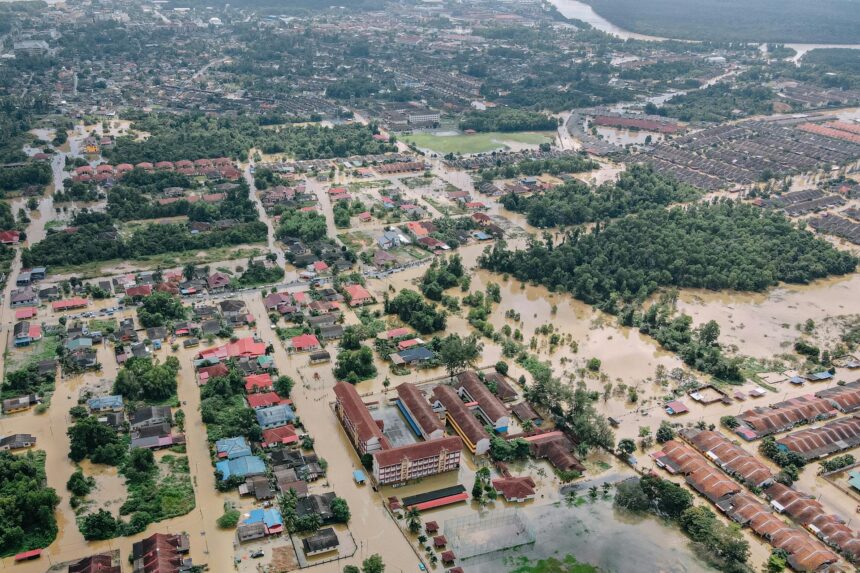
Climate change is increasingly influencing migration decisions worldwide, prompting researchers to explore how communities perceive and respond to these environmental challenges.
- Climate change is increasingly influencing migration decisions worldwide, prompting researchers to explore how communities perceive and respond to these environmental challenges.
Professor François Gemenne, a leading expert in climate migration from the University of Liège, has dedicated over 20 years to understanding how rising temperatures and sea levels impact where people choose to live. His pioneering work has brought attention to the link between environmental changes and human migration, transforming a once niche topic into a mainstream concern.
With funding from the EU, Gemenne co-directed the HABITABLE project, a four-year international initiative that concluded at the end of 2024. This ambitious research effort brought together experts from Europe, Africa, and Thailand to investigate the realities of climate migration through household surveys, interviews, and focus groups.
The findings revealed a growing awareness of climate-related migration issues, with many Europeans recognising that they too could be affected. “Whereas climate migration was seen as an issue affecting small islands or Alaska, many Europeans now consider themselves at risk, too,” Gemenne stated.
According to the Obs’COP survey, which tracks global public attitudes toward climate change, over one in five people in France believe they may need to leave their homes within the next decade due to climate impacts. However, decisions to migrate are often influenced by factors beyond climate data. The HABITABLE researchers introduced the concept of social tipping points, highlighting how collective decisions by families can trigger broader community migration.
For instance, in regions experiencing repeated crop failures or flooding, the decision of a few families to relocate can prompt neighbours to follow suit, potentially leading to significant migration from entire villages. Gemenne cautioned against oversimplifying the complexities of climate migration, stating, “There are real discrepancies between public debate and empirical realities for climate refugees.”
Understanding these nuances is critical, as individuals’ responses to climate pressures can vary based on their economic and social resilience. In Ghana’s northern savannah regions, research led by Professor Mumuni Abu explored how environmental stressors drive migration and reshape local communities. His team’s work revealed the importance of considering factors such as gender, age, and social class in migration decisions. Through theatre and storytelling projects, they successfully raised public awareness and helped local authorities design more inclusive policies, particularly for vulnerable groups like women and youth.
In Southeast Asia, the HABITABLE team focused on communities along the Mekong River, where they examined the impact of climate stressors on livelihoods and migration patterns. Sara Vigil from the Stockholm Environment Institute highlighted how broader socioeconomic pressures, including debt and declining fish stocks, can influence migration choices more significantly than climate factors alone. “The impacts of climate change on migration are shaped by deeper structural inequalities,” Vigil noted.
The research findings underscore the need for a more nuanced conversation about regions deemed “uninhabitable” due to climate change. Gemenne cautioned against blanket assumptions, emphasising that perceptions of uninhabitability may stem from narratives rather than lived experiences. “While the impacts of climate change are increasingly real, I’ve seen places where people consider their home uninhabitable, not because of direct experience, but because they’ve been told so.”
Reflecting on the implications of the HABITABLE research, Gemenne shared three key lessons for future climate migration dynamics: the importance of people’s perceptions, the value of social tipping points as a framework for understanding migration, and the necessity of equitable research partnerships that incorporate local knowledge into global decisions.
The insights from the HABITABLE project are currently showcased in a global exhibition on Migrations and Climate at the National Museum for the History of Immigration in Paris, running until 5 April 2026. This exhibition aims to reach a broader audience, emphasising the relevance of research findings for real-world policy decisions.
Gemenne expressed hope that the work undertaken through HABITABLE will inspire lasting change and support local authorities in crafting effective adaptation and migration policies. “I hope HABITABLE can become a living study, carried forward by many local partners, shaping decisions long into the future,” he concluded.