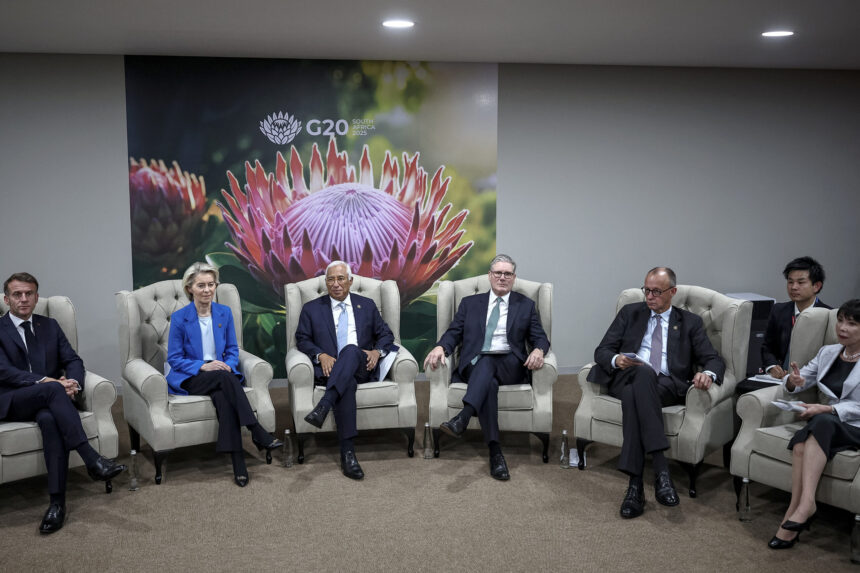
g20 summit — The G20 summit in South Africa adopted a declaration addressing pressing global challenges, including the climate crisis, despite being drafted without US involvement. This move has drawn criticism from the White House, with officials labelling it ‘shameful’.
Photo: cyprus-mail.com
South African President Cyril Ramaphosa’s spokesperson confirmed that the declaration, which includes language on climate change that the Trump administration opposes, ‘can’t be renegotiated’. This reflects the ongoing tensions between Pretoria and Washington, particularly regarding environmental issues.

Photo: cyprus-mail.com
Ramaphosa noted that there was an ‘overwhelming consensus’ among G20 leaders for the declaration, highlighting the collaborative spirit of the summit. Envoys from the participating countries worked intensively throughout the year to prepare the document, which was finalised without input from US representatives.
The G20, which encompasses the world’s largest economies, has faced challenges in recent years, particularly regarding climate policy. The declaration emphasises the significance of addressing climate change, calling for a transition to renewable energy and acknowledging the heavy debt burdens faced by developing nations.
These points are particularly contentious for the Trump administration, which has consistently expressed scepticism about the scientific consensus surrounding climate change. US officials had indicated their intention to oppose any reference to climate issues in the summit’s output.
In his opening remarks, Ramaphosa asserted that the summit’s declaration was crucial and should not be diminished by the absence of US officials. He underscored the importance of the G20 presidency being hosted in Africa for the first time, stating, ‘We should not allow anything to diminish the value, the stature and the impact of the first African G20 presidency.’
Contrasting significantly with his earlier visit to the White House, where he faced dismissive comments from Trump about South Africa, Ramaphosa’s assertive stance at the summit reflected a shift in tone. The South African leadership has made it clear that they would not accommodate US demands regarding participation.
This summit has also highlighted the geopolitical tensions within the G20. EU Commissioner Ursula von der Leyen warned of the ‘weaponisation of dependencies’, hinting at China’s recent restrictions on rare earth exports, which are critical for energy transition and technology sectors. Her comments point to the complexities of international relations that underpin the G20 agenda.
As the summit concluded, Ramaphosa noted that the US would host the G20 in 2026, but he would have to transfer the rotating presidency to an ’empty chair’ given the US’s decision to boycott this year’s event. The South African presidency reiterated its refusal to hand over the G20 presidency to a junior US official, labelling this a breach of protocol.
‘America chose to boycott the summit. That’s their choice, and that’s their prerogative to do so,’ stated presidency spokesperson Vincent Magwenya. This bold statement encapsulates the shifting dynamics within global governance, as nations grapple with their roles in a rapidly changing political landscape.