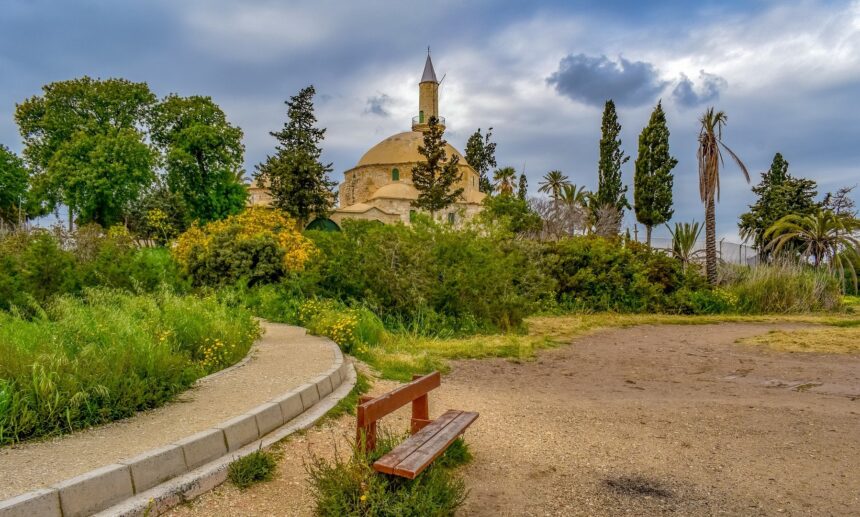
Bronze Age tombs have been discovered at Hala Sultan Tekke, with findings dating back to 1400 BC. Excavations conducted at the Dromolaxia-Vyzakia site revealed two tombs and significant evidence of human activity from the late Bronze Age, as confirmed by the antiquities department on Monday.

Photo: cyprus-mail.com
Bronze age: Significant Archaeological Finds
These tombs yielded an array of artefacts, including intricately crafted local pottery, tools, and personal adornments. The antiquities department stated that the ceilings of the chamber tombs had collapsed in antiquity. While this caused some damage to the contents, it also preserved many items, allowing researchers to glean vital information about the archaeological context.
Insights into Burial Customs
The collapse effectively sealed the tombs, safeguarding their contents and providing a unique opportunity for the research team to study burial customs of the Late Bronze Age. The tombs, used for over a century, contained human remains that are currently under analysis, with preliminary results suggesting a demographic ranging from newborns to adults, with a life expectancy rarely exceeding 40 years.
Generational Use and Family Ties
The excavation team noted that stratigraphic data indicates the tombs were used across multiple generations. Often, the remains of older individuals were carefully relocated to accommodate new burials. This practice reflects a deep-rooted sense of family continuity and kinship among the community.
Trade Routes and Exotic Finds
Among the artefacts uncovered were exotic objects that likely arrived in Cyprus through intricate trade networks, facilitated by civilisations such as the Mycenaean, Egyptian, and Mesopotamian. This underscores Cyprus’s significant role in Mediterranean trade during the Bronze Age.
The Economic Importance of Hala Sultan Tekke
The discoveries at Hala Sultan Tekke highlight the area’s economic foundation, primarily based on the export and production of copper. Evidence of copper processing activities, including slag heaps, ores, furnaces, and crucibles, points to a thriving industry. The antiquities department explained that raw materials from the Troodos mountain range were processed locally, with finished goods transported via the well-protected port of Hala Sultan Tekke. This made the site an attractive hub for traders from across the Mediterranean, especially between the mid-15th and late 13th centuries BC.
Excavation Management and Analysis
The excavation was conducted under the supervision of Professor Peter Fischer and Rainer Feldbacher from the University of Gothenburg. The analysis of the findings is being carried out at the Larnaca District Archaeological Museum, ensuring that the artefacts are studied within the context of their original environment.
A Window into the Past
The ongoing research at Hala Sultan Tekke not only contributes to our understanding of Bronze Age burial practices but also sheds light on the social organisation of the time. The findings will provide valuable insights into the lives of those who inhabited the region, their trade practices, and their interactions with neighbouring civilisations.
Future Research Directions
As further analysis of the artefacts and remains continues, researchers are hopeful that additional discoveries will emerge, enriching our understanding of this pivotal period in history. The significance of these tombs extends beyond mere archaeological interest; they offer a glimpse into the cultural and economic dynamics of a society that thrived thousands of years ago.