British inflation in August held at 3.8 per cent, according to official data released on Wednesday. This figure remains the highest among major advanced economies, reinforcing expectations that the Bank of England (BoE) will maintain interest rates until next year.
- “The Chancellor should look to ease the cost of living pressures on struggling families at the budget in November,” Smith said.
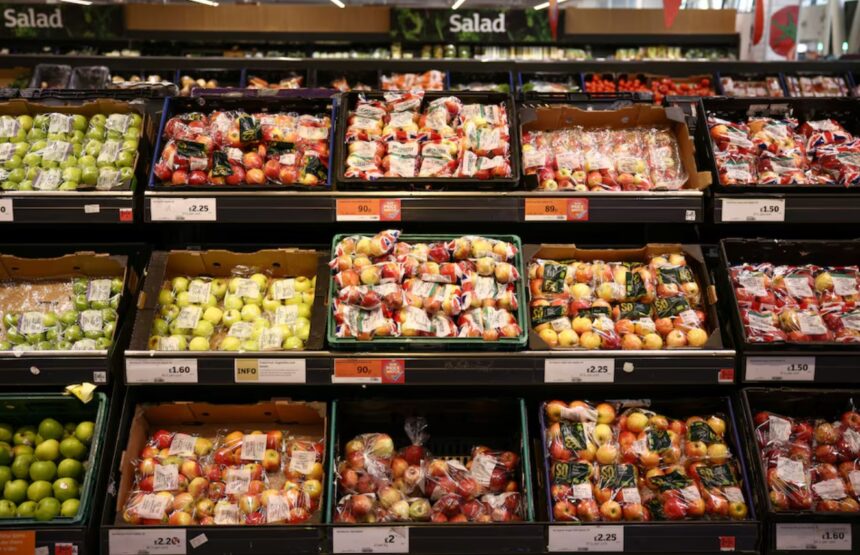
The Office for National Statistics reported that a surge in food prices was the driving factor behind the sustained inflation rate, with food and non-alcoholic drink prices rising by 5.1 per cent compared to a year earlier. This increase follows a 4.9 per cent rise in July and is the sharpest since January of the previous year. Notably, this spike in food costs countered a decline in airline fares.
James Smith, research director at the Resolution Foundation, commented on the situation, stating that the persistent high inflation is likely to burden households. He urged the Chancellor to consider measures to alleviate cost-of-living pressures during the upcoming budget in November.
“The Chancellor should look to ease the cost of living pressures on struggling families at the budget in November,” Smith said.
In light of rising food prices, longer-term inflation expectations among the public have also increased, reaching levels not seen since 2019. Finance Minister Rachel Reeves expressed her commitment to addressing the issues faced by households facing higher bills. “I am determined to bring costs down and support people who are facing higher bills,” she stated.
Inflation for services, which is closely monitored by the BoE, showed a slight deceleration, decreasing to 4.7 per cent from 5.0 per cent in July. Despite this, many firms have indicated intentions to raise prices following an increase in social security contributions introduced in Reeves’ first budget last October. With another budget announcement scheduled for November 26, further tax hikes are anticipated.
Core inflation, which excludes energy, food, and tobacco prices, experienced a modest decline, falling to 3.6 per cent from 3.8 per cent. Most economists surveyed by Reuters and the BoE had predicted that the headline inflation rate would remain steady at 3.8 per cent.
In comparison to other countries, British inflation is markedly higher; in the United States, inflation rose to 2.9 per cent in August, while in the euro zone, it increased to 2.1 per cent—just above the European Central Bank’s 2 per cent target.
The BoE has forecast that British inflation will reach 4 per cent in September and is expected to remain above the 2 per cent target until spring 2027. As a result, the central bank is anticipated to keep its benchmark interest rate steady at 4 per cent in the upcoming meeting, especially following a closely contested 5-4 split vote for a quarter-point cut last month.
While there are signs of a loosening labour market, basic wage growth remains elevated at 4.8 per cent, which the BoE considers too high. Recent data revealed that Britain’s economy grew by only 0.2 per cent in the three months leading up to July.
Paul Dales, chief UK economist at Capital Economics, remarked, “We still expect the looser labour market to weaken wage growth and eventually bring down UK inflation to similar rates as in the US and the euro zone.” He projected that this scenario could enable the BoE to reduce interest rates from the current 4.0 per cent to 3.0 per cent by the end of next year. However, he cautioned that the risks associated with inflation remain substantial, making a rate cut unlikely in the immediate term.