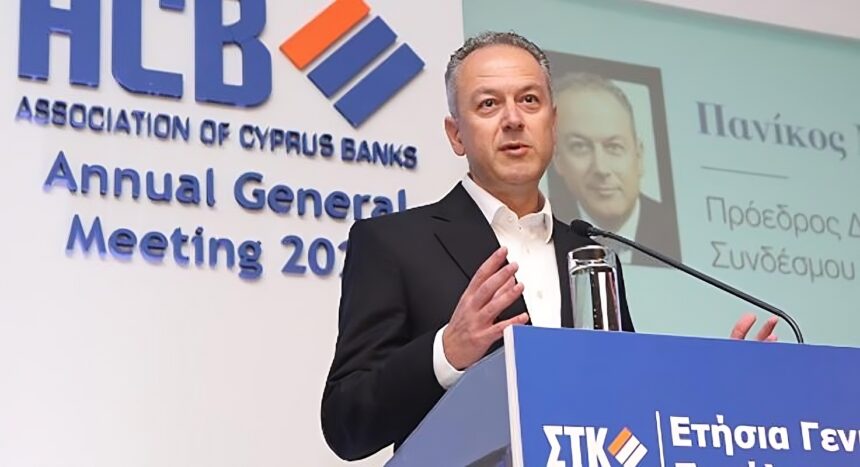
The Bank of Cyprus (BoC) has set its sights on higher shareholder returns as it presents its first-quarter 2026 financial results. Chief executive Panicos Nicolaou underscored the strength of the Cypriot economy, indicating that the bank plans to bolster its dividend payouts in the coming years.
Bank of: Resilience of the Cypriot Economy
During a press conference, Nicolaou remarked on the resilience of the Cypriot economy, even amidst ongoing international crises and geopolitical instability. He noted that the economy continues to demonstrate robust growth rates, outpacing many eurozone countries. “There is economic activity even during periods of crisis,” he stated, emphasising the country’s ability to withstand potential future disruptions.
Future Dividend Policy Details
Nicolaou outlined the bank’s future dividend policy, aiming for the upper end of its ordinary payout range, which stands at 70 per cent of profits. Starting from 2026, he mentioned that the bank will evaluate the possibility of additional distributions, which could range from 20 per cent to 30 per cent, depending on market conditions and capital requirements. The total capital allocated for the 2025 dividend amounts to €305 million.
Comparative Payouts and Market Conditions
Responding to queries regarding dividend levels during unstable periods, Nicolaou pointed out that BoC’s payout levels are comparable to the eurozone average. He questioned, “Why should we be different when the bank’s capital exceeds 20 per cent, while the European average is around 15 per cent?” His comments reinforced the bank’s strategy to maintain competitive distributions in line with its capital position.
Banking Stability and Credit Risk Assessment
The BoC chief also addressed the observations made by the International Monetary Fund (IMF) regarding banks’ business models, asserting that financing is provided based on genuine customer need. He highlighted the importance of proper credit risk assessments to ensure the stability of the banking system.
Geopolitical Uncertainty and Economic Flexibility
Discussing the impact of geopolitical uncertainty, Nicolaou acknowledged that predicting future international developments is challenging. He mentioned anticipated increases in interest rates, although he noted that there has been no significant impact thus far. “What matters is having buffers so that you can make decisions at the right time,” he advised, reiterating the Cypriot economy’s flexibility to adapt to new challenges.
The Importance of Foreign Investment
Nicolaou stressed that maintaining Cyprus’s stability and credibility is crucial for attracting foreign investments, which he views as vital for the economy. He remarked, “The most important thing is to preserve the stability and credibility of our country abroad,” highlighting that investors are drawn to Cyprus not out of affection but for the stability and satisfactory returns it offers.
Current Market Conditions for Deposits and Loans
On the topic of deposit rates, Nicolaou explained that they are influenced by market conditions. He noted that the average deposit rate in Cyprus is currently around 1.16 per cent, compared to 1.11 per cent in Greece. With deposits in the Cypriot economy exceeding €50 billion and loans at approximately €25 billion, he argued that the current market behaviour regarding returns can be attributed to the high volume of deposits.
Impact of Tax Reform on Financial Results
BoC’s Executive Director of Finance, Eliza Livadiotou, reported that the bank’s financial results reflect the recent increase in corporate tax from 12.5 per cent to 15 per cent as part of the tax reform, which she indicated has added an estimated cost of 2.5 per cent. Additionally, Nicolaou mentioned a new 0.15 per cent tax on deposits, which further complicates the financial landscape for the bank.
Tourism and Housing Loan Trends
While tourism remains a concern, Nicolaou reassured that the sector’s previous strong performance has left businesses with substantial liquidity reserves. He reported that no support requests have been recorded from the sector as of yet. On housing loans, demand continues to rise, though he noted that access to housing is more affected by the ratio of property prices to wages rather than banks’ lending policies.
Legislative Changes and Foreclosure Issues
Nicolaou commented on the new foreclosure legislation, suggesting that while it may not address the non-performing loan problem effectively, it merely postpones necessary solutions. He emphasised that the focus should remain on borrower sustainability, advocating for innovative solutions like the “rent in exchange for instalment” scheme.
Strategic Expansion Plans
In line with its growth strategy, the Bank of Cyprus is preparing for a cautious international expansion, including plans to establish a representative office in India. Nicolaou explained that an application has been submitted to the Central Bank of Cyprus, and they expect the process to take between 12 and 18 months. The bank aims to gradually increase its foreign loan portfolio from 13 per cent to 15 per cent, with a focus on strategic acquisitions like the Cyprus Development Bank assets.
Enhancing Customer Access to Investments
Regarding investments, Nicolaou highlighted the bank’s application for Wealthyhood, which aims to provide customers with easy access to international and local markets. The new platform is expected to launch by June and will be connected to the bank’s existing applications, enhancing customer experience in investment opportunities.