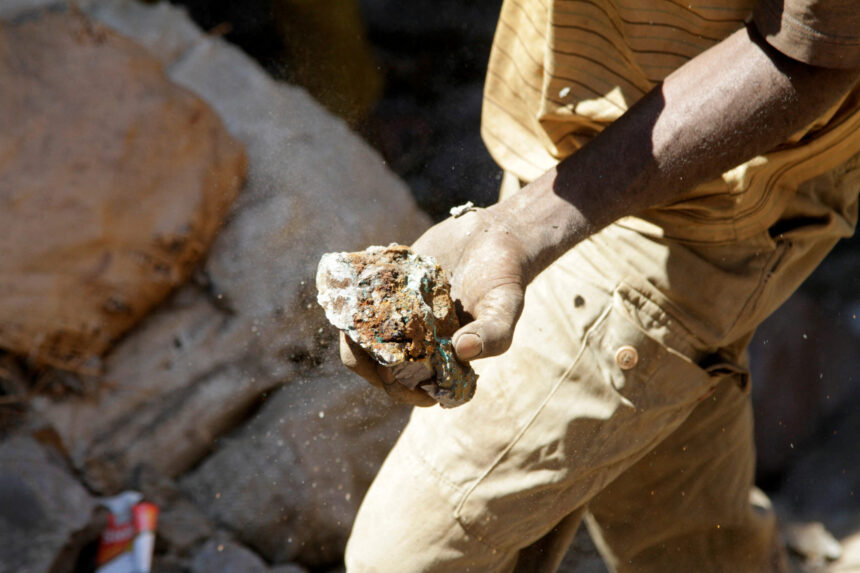
The Pentagon has made a significant request for mining companies to enhance domestic supplies of 13 critical minerals, which are essential for manufacturing semiconductors, weapons, and other key products. This call came just a day before the U.S. and Israel initiated military strikes on Iran, highlighting a strategic and urgent push for materials crucial to national defence.
In a document reviewed by Reuters, the U.S. military urged members of the Defense Industrial Base Consortium (DIBC)—a coalition encompassing over 1,500 companies and universities—to submit proposals by March 20. These proposals are intended to explore opportunities for mining, processing, or recycling these select minerals, which have become increasingly vital in recent weeks.
The list of 13 critical minerals includes arsenic, bismuth, gadolinium, germanium, graphite, hafnium, nickel, samarium, tungsten, vanadium, ytterbium, yttrium, and zirconium. Notably, the U.S. currently relies heavily on imports for most of these materials, with China being the dominant global supplier. The timing of the Pentagon’s request has raised questions, although there is no definitive indication that it was deliberately aligned with the military actions against Iran.
Among the minerals sought, yttrium has generated particular concern, especially within the aerospace sector. Yttrium is crucial for coatings that protect engines and turbines from extreme heat; any disruption in its supply could severely impact operational capabilities. Similarly, nickel, a widely traded metal, is facing export restrictions from Indonesia, the leading producer, which has limited its availability for stainless steel and battery production.
The Pentagon’s request for detailed cost estimates—including labour and material expenses—suggests that projects could receive substantial funding, ranging from $100 million to over $500 million. The criteria for selecting these specific minerals remain unclear, especially given that some are already subject to export controls from China, further complicating U.S. supply chains.
This latest initiative is part of a broader effort by the Trump administration to bolster the domestic supply of critical minerals, amid ongoing trade tensions with China. Last month, officials announced a $12 billion minerals stockpile initiative, backed by the U.S. Export-Import Bank, aimed at establishing a preferential trading bloc with over 50 allied nations. This bloc would potentially leverage reference pricing for minerals, informed by a Pentagon-developed artificial intelligence programme, as reported by Reuters.
Additionally, the U.S. administration has taken equity stakes in several mining companies, including MP Materials, Lithium Americas, and Trilogy Metals, signalling a long-term commitment to securing these vital resources. In a related move, the Defense Logistics Agency recently sought information on acquiring lithium, chromium, and tellurium to bolster military stockpiles.
As these developments unfold, the urgency for domestic mineral supplies has never been clearer, particularly in light of geopolitical tensions and the growing reliance on advanced technologies in defence.