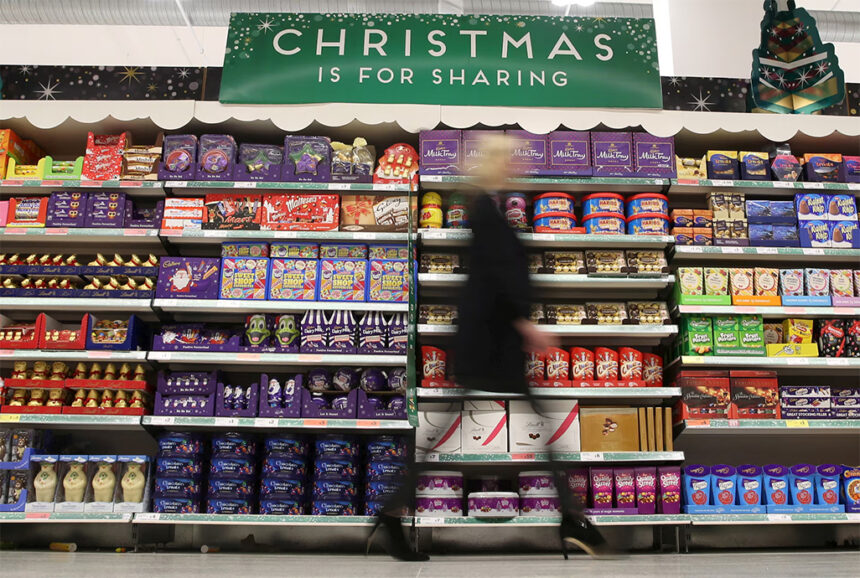
Britons prioritised festive food this holiday season but hesitated to splurge on gifts, a trend highlighted by trading updates from major retailers such as Tesco, Marks & Spencer, and Primark.
- Britons prioritised festive food this holiday season but hesitated to splurge on gifts, a trend highlighted by trading updates from major retailers such as Tesco, Marks & Spencer, and Primark.
- This complex landscape suggests a challenging retail environment ahead, as consumers navigate their spending amidst economic uncertainty and shifting priorities.
In December, Tesco, the UK’s largest food retailer, reported a 3.2% increase in underlying UK sales for the six-week festive period. This performance was deemed a “strong” Christmas, with market share reaching a decade high. However, the sales growth fell short of summer’s 4.6% and slightly missed analysts’ forecasts, resulting in a 5.5% drop in Tesco’s shares, reducing its yearly gains to 16%.
Marks & Spencer enjoyed a 5.6% rise in underlying food sales during the Christmas quarter, yet clothing and home goods saw a decline of 2.9%. The drop was attributed to weak demand and the lingering effects of a cyber hack that impacted the retailer last year. Primark’s parent company, Associated British Foods, described the clothing market in Britain as “difficult”, leading to a 12% decline in its shares, compounded by warnings of falling sales in continental Europe.
Festive food: Fast-Food Giants Feel the Pinch
Greggs, known as Britain’s largest fast-food chain, indicated that subdued consumer confidence would likely lead to flat profits this year. CEO Roisin Currie expressed caution regarding the outlook for 2026, reflecting the broader concerns in the retail sector.
Mixed Consumer Confidence
Ken Murphy, CEO of Tesco, noted that while many UK consumers were eager to treat themselves during the festive season, there was a clear divide in household budgets. Some shoppers were willing to trade up to premium products, as evidenced by Tesco selling 21 million pigs in blankets and 2.5 million bottles of Prosecco. However, he acknowledged that many others were “counting every penny”.
Looking ahead to 2026, Murphy anticipates that consumers will continue to favour dining at home over eating out to save money, while also seeking healthier options for their meals, albeit with indulgent weekend treats. He expressed uncertainty regarding the potential impact of the rising demand for GLP-1 weight-loss drugs on food sales.
Employment Concerns Loom Large
The fragile state of UK consumer confidence has been underscored by rising unemployment, with recent data indicating the jobless rate is at its highest since early 2021. Retailer Next reported better-than-expected Christmas sales but cautioned that growth would slow in 2026, with CEO Simon Wolfson highlighting employment pressures as a significant concern. He noted that the workforce is facing multiple challenges, including rising costs, increasing regulation, and the potential impacts of mechanisation and artificial intelligence.
This complex landscape suggests a challenging retail environment ahead, as consumers navigate their spending amidst economic uncertainty and shifting priorities.