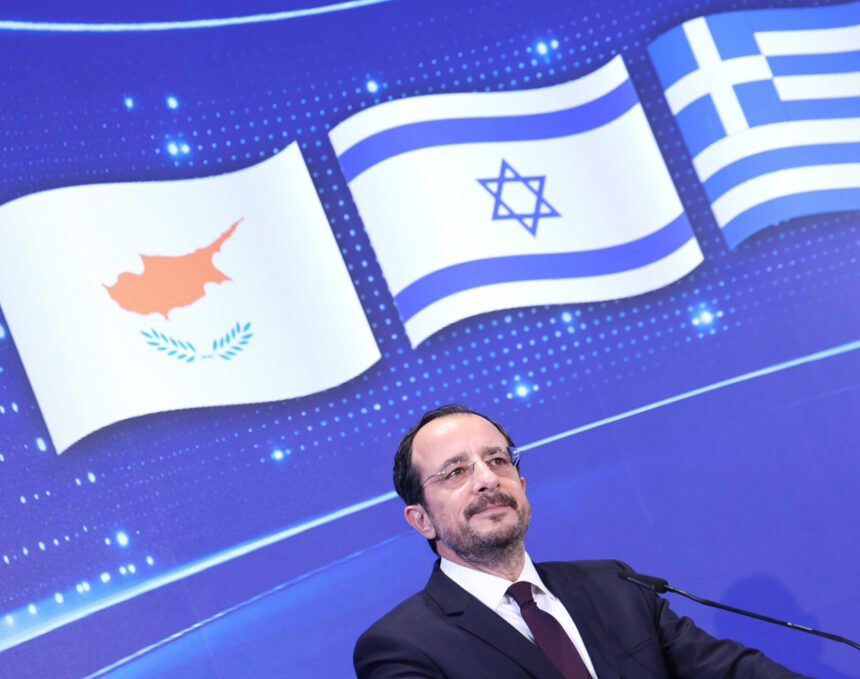
anti-turkey axis — Turkish Cypriot leader Tufan Erhurman on Monday voiced his concerns regarding what he termed an “anti-Turkey axis” being established by Greece, Israel, and Cyprus in the energy and defence sectors. In a social media post, he expressed disappointment that despite recent statements from Cypriot President Nikos Christodoulides about resolving the Cyprus issue, actions from these governments seem to contradict this goal.
Anti-turkey axis: Calls for Cooperation Over Conflict
Erhurman emphasised that collaboration between Cyprus, Turkey, and Greece in energy matters is crucial for addressing the long-standing Cyprus problem. He stated, “We have long been saying that cooperation between Cyprus, Turkey and Greece in energy is one of the most important motivating factors for resolving the Cyprus issue. A solution comes not by creating and fuelling antagonism, but by creating cooperation.” His comments highlight a pressing need for dialogue rather than division.
Seeking Equal Partnership
Moreover, Erhurman argued for a more inclusive approach to negotiations, advocating for the recognition of both Turkish Cypriots and Greek Cypriots as equal partners in any discussion. He remarked, “A climate for a solution can be brought about not by ignoring Turkish Cypriots, but by approaches which demonstrate that Turkish Cypriots and Greek Cypriots are accepted as equal partners.” This stance underscores the necessity for mutual respect and acknowledgment in the pursuit of peace.
Actions Speak Louder Than Words
In his statement, Erhurman reiterated that the path towards resolution requires substantial commitment from all involved parties. He stated, “The solution itself needs a climate which precedes it … and everyone who says they want a solution is expected to contribute to creating this climate not only with words but also with actions.” This call to action stresses the importance of tangible efforts over mere verbal commitments.
Focus on Fairness and Measurement
Erhurman further elaborated on the need for fair evaluation of the involved parties’ willingness to engage in constructive dialogue. He pointed out that any assessment of the desire for resolution should not be limited to discussions held at the negotiating table. According to him, “if a ‘measurement and evaluation’ is to be made, everyone’s ‘will for a solution’ must be measured not only by what is done and not done at the negotiating table.” This perspective introduces a broader understanding of commitment beyond formal negotiations.
Recent Developments in Energy Projects
His remarks came shortly after President Christodoulides held a telephone conversation with Israeli Prime Minister Benjamin Netanyahu on Sunday. The two leaders discussed several projects, including the Great Sea Interconnector and the planned India-Middle East-Europe Economic Corridor (Imec). The Great Sea Interconnector is particularly significant, as it aims to connect the energy grids of Cyprus, Israel, and Greece.
Concerns Over Energy Interconnection
Erhurman has publicly opposed the Great Sea Interconnector, arguing that it could exacerbate tensions rather than foster collaboration. Nevertheless, Cypriot Energy Minister Michael Damianos assured last month that the project “will not collapse” despite the controversy surrounding it. The dialogue between Cyprus and Greece regarding the interconnection has also shown signs of strain, although Damianos expressed optimism about reaching a common understanding.
Defence Sector Tensions
In addition to energy concerns, Erhurman’s statements reflect growing tensions in the defence sector. Recently, Cypriot Defence Minister Vasilis Palmas refuted reports suggesting that Cyprus, Israel, and Greece are planning to form a military “rapid reaction force” aimed at countering Turkish forces in the eastern Mediterranean. Palmas stated, “I am telling you that these issues which have such a high level of decisions are made by the political leadership, and as the political head of the defence ministry, I am telling you that no such issue has been raised and we have not discussed any issue.”
Speculation Surrounding Military Coordination
These reports initially surfaced in the Greek newspaper Ta Nea, which claimed that a brigade-level force, comprising around 2,500 personnel equipped with various military assets, would be established. Palmas dismissed these claims, indicating that even if discussions were to occur, they would not be appropriate for public disclosure. His comments reflect a desire to maintain diplomatic channels open amidst rising tensions.
Path Forward for Turkish Cypriots
In light of the ongoing discourse, Erhurman affirmed that the Turkish Cypriot side would continue to propose solutions aimed at fostering conditions conducive to resolution. He stated, “the Turkish Cypriot side will, of course, continue our suggestions and contributions towards creating a climate for a solution within the framework of our people’s will for a solution.” This commitment showcases the Turkish Cypriot leadership’s determination to seek collaborative approaches while also advocating for their interests.
As the situation evolves, the emphasis on dialogue, cooperation, and mutual respect remains paramount. The challenges ahead will require all parties involved to reconsider their strategies to ensure a peaceful resolution to the longstanding issues surrounding Cyprus.