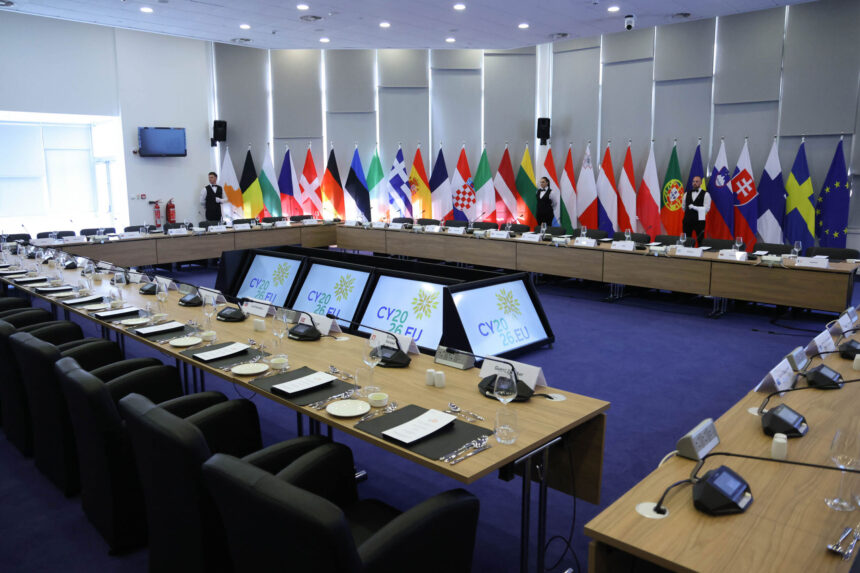
Cyprus assumes the EU Council presidency, showcasing strong public finances and investment levels, as highlighted by Eurostat’s recent report.
- Cyprus assumes the EU Council presidency, showcasing strong public finances and investment levels, as highlighted by Eurostat's recent report.
The figures reveal that Cyprus is running a budget surplus of 4.1 per cent of GDP, a remarkable contrast to the EU’s average deficit of 3.1 per cent. Additionally, Cyprus’s public debt is notably low at 62.8 per cent of GDP, compared to the bloc’s average of 80.7 per cent, positioning the nation favourably within the European Union.
Cyprus: Investment Levels Exceed EU Averages
Investment in Cyprus accounts for 25.2 per cent of GDP, significantly higher than the EU average. This surge in investment is primarily driven by robust household spending, which ranks as the highest in the union. However, despite these promising figures, GDP per capita stands at €35,730, below the EU average of €39,940, indicating a disparity in income levels despite strong fiscal performance.
Labour Market and Social Dynamics
Labour market conditions in Cyprus appear favourable, with an unemployment rate of 4.9 per cent, which is lower than the EU average. Youth unemployment rates also reflect this positive trend, underscoring a healthier job market for younger generations. Nonetheless, 17.1 per cent of the population is at risk of poverty or social exclusion, slightly better than the EU average of 21 per cent.
Demographics and Education Performance
Cyprus boasts a younger population profile relative to other EU member states, with a lower proportion of individuals aged over 65 and a fertility rate that is slightly above the European average. The education system remains a significant strength, with Cyprus ranking third in the EU for tertiary education attainment. However, the rate of early school leaving remains higher than the EU average, indicating areas for improvement.
Challenges in Innovation and Energy
Despite the positive fiscal indicators, Cyprus faces challenges in innovation and energy sectors. Spending on research and development is low, at just 0.68 per cent of GDP, which raises concerns about the country’s long-term competitiveness. Furthermore, energy dependence in Cyprus is high at 92.2 per cent, one of the highest rates in the EU, which raises questions about sustainability and energy security.
While carbon emissions have decreased significantly since 1990, the share of renewable energy sources remains well below the EU average, highlighting the need for a more sustainable energy strategy as Cyprus embarks on its presidency.