israel self-defence — israel self-defence — Activist groups in Cyprus are challenging the endorsement of Israel’s right to self-defence by President Nikos Christodoulides and Greek Prime Minister Kyriakos Mitsotakis, claiming such a position contravenes international law.
- The statement was issued by Genocide-Free Cyprus, Cyprus Palestine Solidarity Action, and Far Right Watch CY, following the leaders' recent visit to Israeli Prime Minister Benjamin Netanyahu.
The statement was issued by Genocide-Free Cyprus, Cyprus Palestine Solidarity Action, and Far Right Watch CY, following the leaders’ recent visit to Israeli Prime Minister Benjamin Netanyahu.
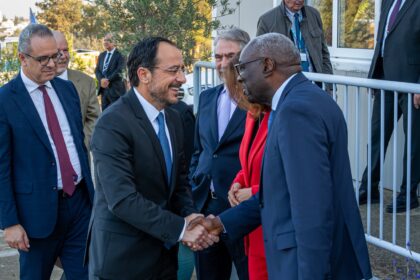
During their visit, Christodoulides and Mitsotakis expressed, “We affirm Israel’s right to self-defence under international law and reject baseless allegations against Israel.” The activist organisations counter this assertion, stating it represents an uncritical adoption of Article 51 of the UN Charter to justify what they term a genocide.
These groups outline three conditions under international law that must be met for a right to self-defence, alleging Israel fails to satisfy these criteria. They refer to the International Court of Justice’s July 2024 ruling, which deemed Israel’s military occupation of Palestinian land illegal, asserting that Israel’s control over Gaza remains intact since 2005.
According to the activists, Gaza has been under illegal Israeli occupation since 1967, a stance reiterated by the United Nations, the ICJ, the International Committee of the Red Cross, and numerous international human rights organisations.
On the principles of proportionality and necessity, the groups cite the ICJ’s ruling in the Nicaragua v. United States case, which determined that self-defence must be strictly necessary and proportionate to an immediate armed attack. They highlight a recent statement from the UN Secretary-General, who remarked, “Nothing can justify the horrific terrorist attacks by Hamas on 7 October. And nothing can justify the scale of death and destruction in Gaza since then—a level unprecedented in recent history.”
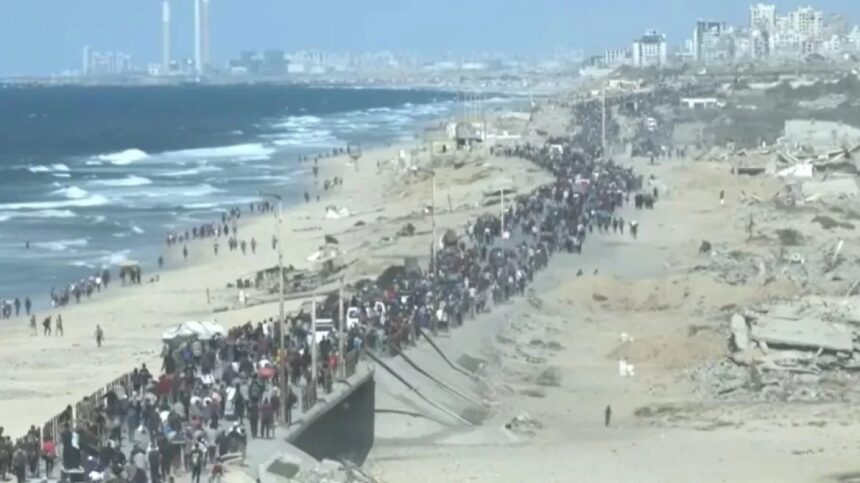
The organisations argue that the events following the 7 October attacks represent an extensive and unprecedented use of force, which, they assert, meets the definition of genocide, except in the United States.
Addressing the reporting requirements of Article 51, the groups note that the article only permits a temporary right to self-defence until the UN Security Council intervenes to maintain international peace and security.
They assert, “It is clear to everyone, with the exception of Nikos Christodoulides and Kyriakos Mitsotakis, that what is happening in Palestine is not an exercise of ‘Israel’s right to self-defence under international law’, but horrific war crimes.”
The activists also draw a parallel to Cyprus itself, suggesting that if the leaders’ interpretation of self-defence were accepted, it could legitimise the Turkish invasion of Cyprus as a rightful response to the coup d’état of 15 July 1974.
In their closing remarks, they contend that the two leaders’ shift towards supporting Zionism and their attempts to undermine international law invalidate their claims of acting in their countries’ best interests.