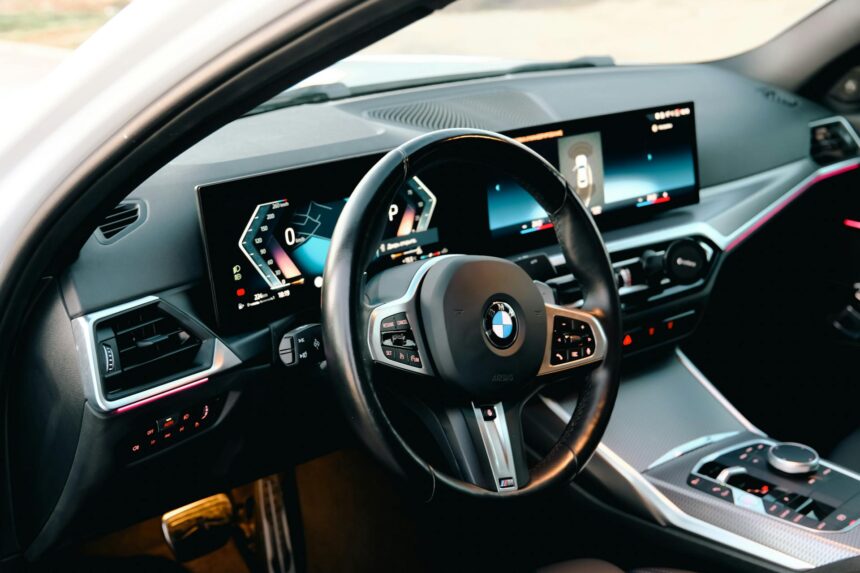
Cost sensitivity is slowing the adoption of OLED displays in new cars, as highlighted by a recent analysis from Omdia. The report, published through the Automotive Display Market Intelligence Service, forecasts a year-on-year increase of 11.8 per cent in global shipments of automotive OLED panels for 2025. This growth is expected to result in approximately 3.05 million units shipped, marking a significant step in the industry’s transition towards a more value-driven and application-focused strategy.
Cost sensitivity: Current Market Dynamics
Despite the optimistic projections, the automotive industry is facing several challenges that are moderating the pace of OLED adoption. Key factors contributing to this slowdown include increasing competition in the automotive market and a notable rise in cost sensitivity among manufacturers. These dynamics have led to a reassessment of how OLED technology is marketed to Original Equipment Manufacturers (OEMs).
Impact of Electric Vehicle Developments
Several European automakers have decided to postpone the launch of new electric vehicle platforms, which in turn has delayed the deployment of advanced display systems. As the market evolves, the evaluation of automotive OLED is now subject to much stricter cost-efficiency criteria than in previous years. This shift has forced manufacturers to reconsider their strategies, leading some to revert to more conventional technologies such as Full Array Local Dimming (FALD) LCDs.
Cost Trends and Supplier Participation
The participation of various suppliers has led to a decrease in panel prices, with a reported reduction of approximately 15 to 20 per cent compared to two years ago. Despite this decline, OLED technology remains pricier than mainstream LCD solutions, prompting manufacturers to weigh their options diligently.
Usage in Major Markets
In significant markets such as China, the integration of OLED displays has largely been limited to traditional suspended centre stacks and flat screens. This approach often neglects the unique design flexibility that OLED technology can provide. Consequently, the focus on cost efficiency has led car makers to explore more mature technologies for their near-term volume programmes.
Advancements in OLED Technology
Amid these challenges, there have been notable advancements in Tandem OLED technology, which employs two organic light-emitting layers to enhance brightness and lifespan. This progress further validates OLED as a reliable choice for vehicle displays.
Luxury Models Paving the Way
As manufacturers increasingly seek solutions that enhance vehicle value through innovative design, luxury models like the next-generation Porsche Cayenne EV are setting new standards. This model features an L-shaped centre stack seamlessly integrated with a passenger display that boasts a switchable privacy mode, enabled by a single-piece, irregular-shaped flexible OLED structure. Such innovations showcase the potential of OLED technology to enhance user experience and design aesthetics.
Future Outlook for OLED Displays
As European automakers continue to introduce new flagship platforms, flexible OLED technology is emerging as a key design element for the luxury vehicle segment. The ongoing overcapacity in manufacturing and gradual cost reductions are expected to improve the competitiveness of rigid OLED solutions. This shift could facilitate broader adoption into mid- to high-end vehicle segments post-2027.
Market Share Projections
The supply chain for automotive OLED components remains highly concentrated, with Samsung Display anticipated to hold over 70 per cent of the market share by 2025. BOE is projected to be the second-largest supplier, with a low double-digit share, while LG Display aims to increase its market presence in 2026 as more projects enter mass production.
Industry Expert Insights
Wray Wang, Research Analyst at Omdia, shared insights on the shifting landscape, stating, “Automotive OLED is transitioning toward a more disciplined growth phase.” He emphasised that cost efficiency, differentiation, and sustainable value creation would increasingly influence the technology’s trajectory in the coming years.
The Road Ahead
The automotive industry is now looking towards the latter half of the decade as a potential turning point where OLED technology may evolve from a luxury feature to a mainstream automotive standard. As manufacturers navigate the challenges of cost sensitivity and competition, the future of OLED displays in vehicles holds promising possibilities.