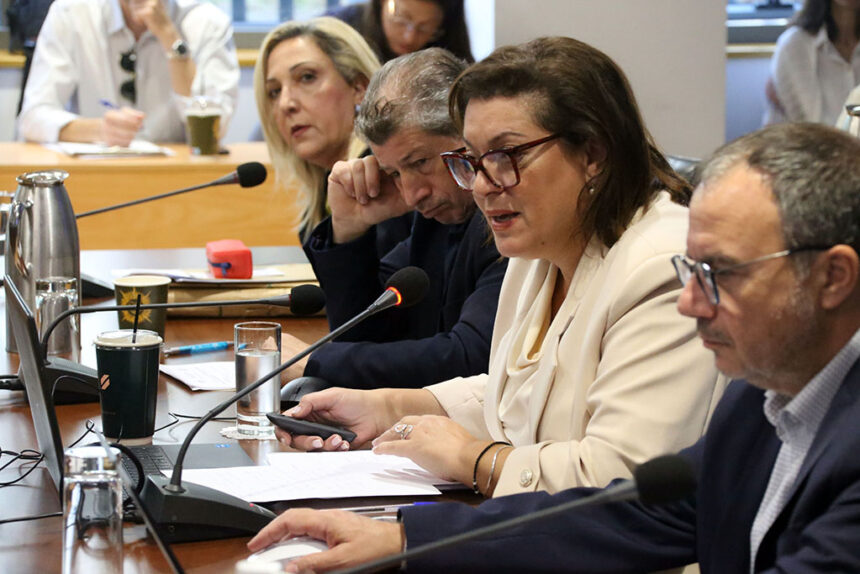
Teachers’ unions will take their final evaluation decisions on Thursday, as the discussion surrounding the new bill reforming teacher assessments reaches a pivotal moment. Education Minister Athena Michaelidou announced this development at the House education committee on Wednesday.
Michaelidou urged MPs to examine the bill clause by clause after a year marked by contention. Emphasising the supportive intentions behind the reform, she stated, “The new evaluation plan is not an audit mechanism, but an instrument to support, strengthen and acknowledge our teachers.” The proposed changes aim to modernise the existing evaluation system that has been in place for over fifty years.
Incorporating amendments made through dialogue, the minister acknowledged that total agreement among stakeholders would be elusive. The three unions—Poed, Oelmek, and Oltek—were presented with the amended bill late on Monday, prompting a crucial meeting of Poed’s hundred-member council scheduled for Thursday.
Poed president Maria Vasiliou confirmed that the council would convene to deliberate on the new changes and reach final decisions. Meanwhile, general secretary Charis Charalambous noted that while there were areas of agreement, significant disagreements persisted.
Oelmek president Demetris Taliadoros expressed his union’s continued opposition, labelling the changes as “not substantive.” He highlighted what he described as “paradoxes” within the bill, accusing the education ministry of failing to grasp the realities faced in schools.
Oltek president Panayiotis Chrysanthou remained non-committal, stating the union would also discuss the matter on Thursday, offering no further comments at this time. Meanwhile, a representative from the Law Office, Maria Kyprianou, confirmed that the latest changes from the education ministry had received legal approval, albeit with reservations regarding one clause that may be amended during the committee discussions.
Pavlos Mylonas, president of the House education committee, indicated that MPs would await the unions’ responses before moving forward. He expressed hope for a swift resolution, suggesting that the tendency for MPs to defer responsibility should be curtailed and the reform process should proceed without delay.
Despite the ongoing debate, the stance of the teachers’ unions will play a crucial role in determining the next steps for the proposed evaluation system. As the final decisions loom, the outcome of Thursday’s discussions could significantly impact the future of teacher assessments in the region.