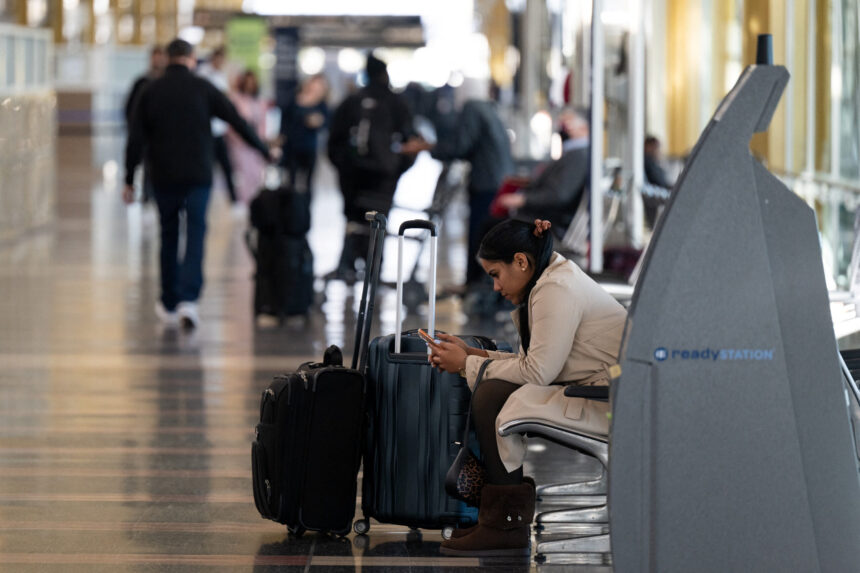
US airlines have faced significant disruptions, with 1,200 flights cancelled on Tuesday, reflecting a growing trend that has seen cancellations exceed 1,000 for five consecutive days. This situation arises from mandatory flight reductions imposed by the government due to safety concerns linked to air traffic control staffing shortages.
Last week, the Federal Aviation Administration (FAA) mandated airlines to cut 4 per cent of their daily flights starting from Friday, November 7, affecting operations at 40 major airports. As the week progressed, flight cancellations escalated to a staggering 6 per cent on Tuesday, with projections indicating further cuts to 8 per cent on Thursday and 10 per cent on Friday, November 14.
Discussions between airlines and the FAA regarding the potential easing of these flight reductions are ongoing as the record-setting 42-day government shutdown approaches a possible resolution. Sources have indicated that various options are being considered for how the FAA might eventually lift or lessen the flight cuts.
Transportation Secretary Sean Duffy addressed the issue, emphasising that any alleviation of the cuts will depend on data analysis. “We’ll alleviate that only when the data says we should,” he stated, underscoring the importance of a data-driven approach to resolving the ongoing crisis.
Meanwhile, the Senate took a significant step on Monday night by voting to approve legislation aimed at ending the shutdown and providing government funding through January 30. The House is expected to consider this legislation on Wednesday, potentially paving the way for a resolution.
Since the onset of the shutdown on October 1, air traffic control absences have led to tens of thousands of flight cancellations and delays. Over the weekend alone, 1.2 million passengers were impacted by delays or cancellations linked to the absence of air traffic controllers.
On Tuesday, airlines reported an additional 1,650 flight delays following a tumultuous Monday, which saw 2,900 cancellations and 9,600 delays according to FlightAware, a flight tracking service. However, there was a slight improvement in staffing issues on Tuesday, with airline officials noting only one reported staffing issue compared to more than two dozen the previous day.
The FAA currently faces a shortfall of approximately 3,500 air traffic controllers, a situation exacerbated by the shutdown. Many controllers had already been working mandatory overtime and six-day weeks before the shutdown, intensifying the strain on an already stretched workforce.
In a stark move to address the staffing crisis, President Donald Trump threatened to dock the pay of any air traffic controller who did not report for duty. He expressed a willingness to accept the resignations of workers who failed to demonstrate diligence in their attendance.