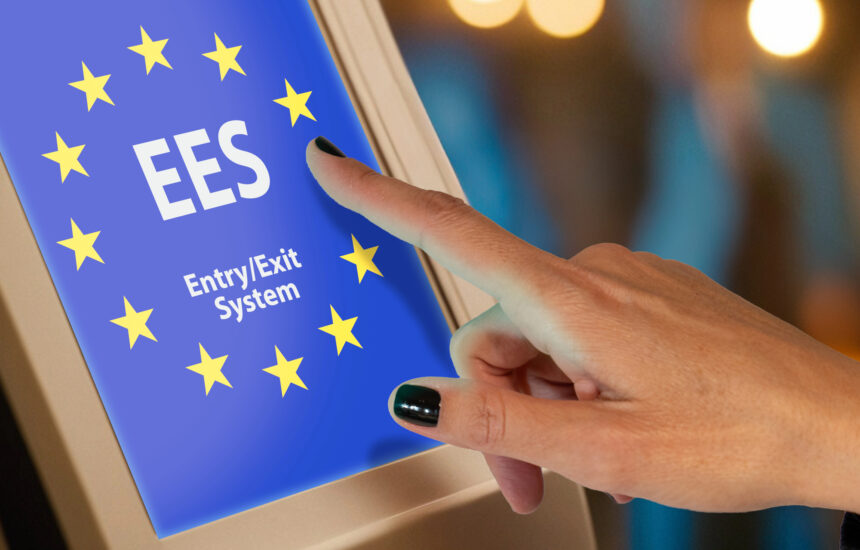
biometric border — Changes to biometric border checks will impact how non-EU citizens, including British visitors, travel to and from the EU starting Sunday. The European Union’s new Entry/Exit System (EES) will require all non-EU citizens to register their personal details, including fingerprints and facial images, when they first enter the Schengen area, which comprises EU nations excluding Ireland and Cyprus, as well as Iceland, Norway, Switzerland, and Liechtenstein.
Biometric border: Implementation Timeline for the New System
The data collection process will be gradually introduced at border crossings, with full implementation expected by April 10, 2026. The EU aims to ensure that the transition does not lead to long queues at the border.
Rationale Behind the New Biometric System
The introduction of the EES aims to modernise the management of the EU’s external borders. With this system, the EU intends to replace the manual stamping of passports with digital records, linking travel documents to individual identities through biometrics. This move is designed to enhance border security by preventing illegal migration, combating identity fraud, and monitoring compliance with visa-free travel rules.
What Travellers Need to Know
For anyone arriving in the Schengen area for the first time, the new process will involve scanning their passports, registering their fingerprints, and providing a facial scan. Upon departure, travellers’ details will be checked against the EES database to confirm adherence to the existing rules regarding duration of stay. After the initial entry, subsequent journeys will only require facial biometric verification.
Special Considerations for Children
Children under 12 will also need to be registered under the EES, although the process will be simplified; they will only need to have their photograph taken. Importantly, there will be no fees associated with the EES registration.
Locations Where the New Checks Will Be Enforced
The biometric checks will be implemented at international airports, ports, train terminals, and road border crossings within the Schengen area. Notably, at the Port of Dover, the Eurotunnel terminal in Folkestone, and the Eurostar terminal at London St Pancras, EES registration will be required on departure from the UK, overseen by French border officials. Travellers arriving at their destination will not need to undergo the check again until their departure.
Potential Delays and Transition Period
The EU has expressed confidence that the gradual introduction of the EES will not cause significant disruption at borders. Border officials will have the ability to suspend checks for short periods if processing times become excessive. From October 12, only freight and coach traffic will be subject to EES checks at the Port of Dover and Eurotunnel terminal. Checks for passenger vehicles will commence in November at Dover and by the end of the year at Eurotunnel, while Eurostar plans to implement the new border procedures gradually.
Despite the EU’s confidence, the British government has advised travellers to allow extra time for their journeys as the new systems are established. The Road Haulage Association has indicated that longer wait times may occur during busy periods.
Looking Ahead: Further Changes in 2026
The EES is just the first step in a broader plan for border management. Another system, the European Travel Information and Authorisation System (ETIAS), is set to become operational in late 2026. Under ETIAS, non-Schengen area citizens will be required to apply for an authorisation prior to travel, providing personal information and trip details, along with a fee of €20. This authorisation will be valid for three years or until the passport expires, whichever comes first.
Since April, European visitors to Britain have been required to purchase an electronic permit in advance for their trips, highlighting a growing trend towards digital documentation for international travel.