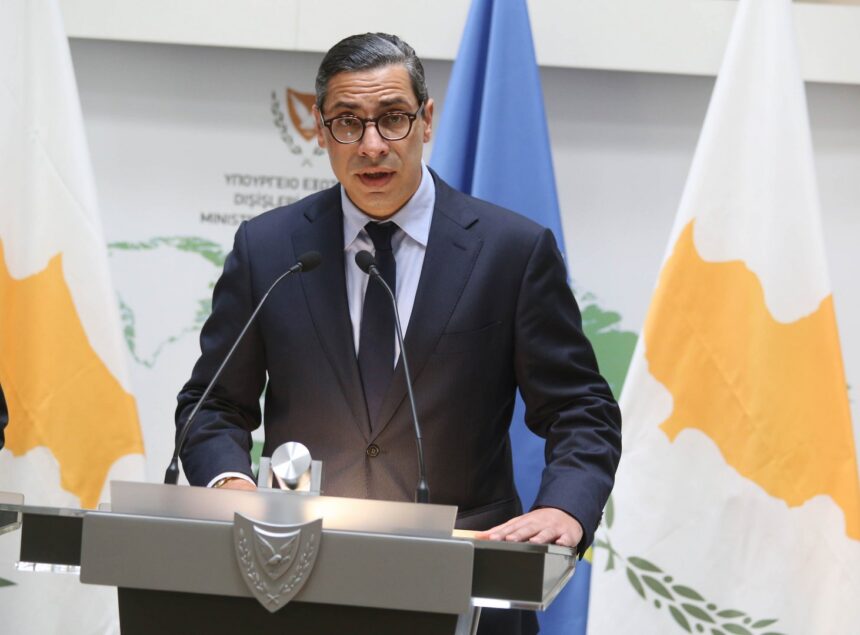
Cyprus’ Foreign Minister Constantinos Kombos has issued a stark warning against any “illusion of normality” regarding the Cyprus issue, emphasising that time does not bring a resolution but instead alters the realities on the ground.
Cyprus issue: Addressing the Conference
Speaking at the World Conference of Overseas Cypriots in Nicosia on Tuesday, Kombos expressed his concerns about the ongoing situation. He firmly dismissed the idea of a two-state solution, stating, “We will not become suicidal,” and rejected any acceptance of the current occupation.
Reality of the Situation
The Minister highlighted the urgency of addressing the issue, stating, “Time does not bring a solution. When the experience is daily, vivid, existential, it cannot be a memory – it is a responsibility, a duty for all of us.” Kombos articulated that some individuals may hope that time will lead to acceptance of the current state of affairs, but he questioned what there is to accept: “Acceptance of what? The continuing occupation? The danger, which is real and existential?”
Commitment to UN Framework
Kombos reiterated Cyprus’ unwavering commitment to seeking a solution within the framework established by the United Nations. “We have a duty to do everything possible to resolve our national issue through initiatives, proactive steps, with absolute commitment to the framework of the UN Security Council. There is no other option,” he asserted. The Foreign Minister’s remarks underline a clear message to all involved: future negotiations must strictly adhere to this framework.
Strengthening Ties with the Diaspora
During his address, Kombos also acknowledged the significant role of the Cypriot diaspora, describing it as an extension of the Republic that continuously supports Cyprus and its interests around the world. He introduced a new strategy aimed at enhancing relations with overseas Cypriots, which includes the implementation of several initiatives designed to strengthen institutional connections and improve communication through modern digital tools.
- Launch of a new website dedicated to diaspora affairs.
- Pilot implementation of the e-Consul platform for consular services.
- Development of a mobile application in partnership with Greece to inform overseas Cypriots on national issues.
- Creation of a digital identity to enhance connectivity with diplomatic missions and social media.
Kombos concluded his remarks by assuring the diaspora of the state’s “unwavering gratitude and support,” highlighting the government’s commitment to keeping them informed and engaged.
Support from Greece
Yiannis Loverdos, Greece’s Deputy Minister of Foreign Affairs, also addressed the conference, reinforcing Athens’ steadfast commitment to ending the Turkish occupation of Cyprus. He spoke of the necessity for a comprehensive, just, and viable solution within the framework of relevant United Nations resolutions.
The Path to Reunification
Loverdos advocated for a Cyprus settlement that not only reunifies the island but also ensures the withdrawal of all occupying troops and the termination of the outdated system of guarantees. “Cyprus and Greece will never accept the fait accompli of the continued Turkish occupation of more than a third of the territory of the Republic of Cyprus,” he stated emphatically.
Historical Context of the Issue
Cyprus has been divided since 1974, following Turkey’s invasion and subsequent occupation of its northern third. Repeated attempts to broker peace through UN-led talks have consistently failed to yield positive results. The most recent negotiations, which took place in July 2017 at the Swiss resort of Crans-Montana, concluded without agreement, underscoring the complexity and enduring nature of the Cyprus problem.
Looking Ahead
The statements from both Kombos and Loverdos reflect a unified stance against accepting the status quo and highlight the ongoing commitment of both the Cypriot government and the Greek state to achieve a lasting resolution to the Cyprus issue. The Foreign Minister’s call for a proactive approach within the UN framework signals a strategic pivot towards renewed diplomatic efforts, aimed at addressing the long-standing crisis that has left the island divided for nearly five decades.