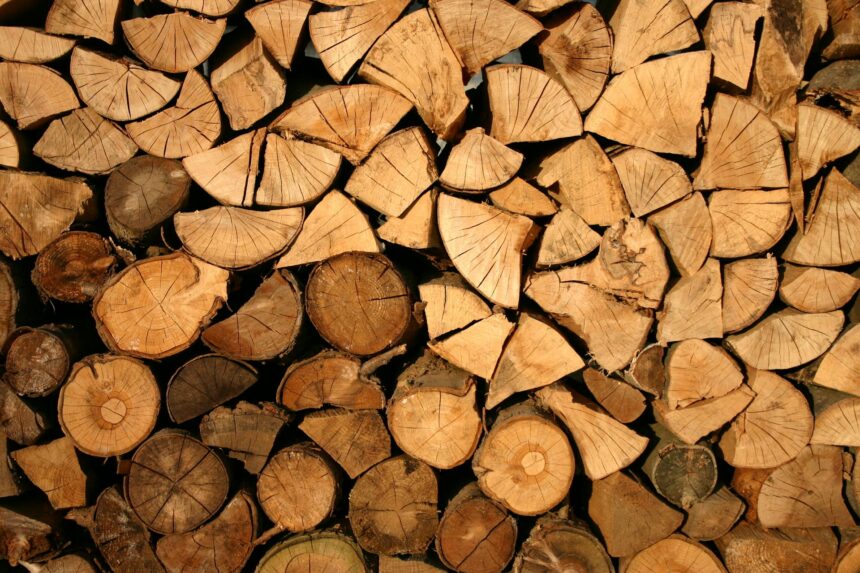
wood waste — Repurposing wood waste is becoming a pivotal strategy in the European Union’s quest for sustainable alternatives to fossil-based chemicals. In Estonia, a nation rich in forests, this transformation is already underway, challenging long-held perceptions about timber’s role in modern industry.
Historically, wood has served as a primary resource for construction and fuel. However, recent innovations are steering the focus towards less conventional wood products that promise to replace more harmful fossil-based materials in manufacturing. This shift not only highlights wood’s versatility but underscores its potential as a cornerstone of a sustainable future.
In 2018, Estonian biotech company Fibenol, with backing from the EU, embarked on an ambitious mission to convert hardwood leftovers into high-performance alternatives that could mitigate pollution in everyday products. The collaboration involved partners from Belgium, Finland, Germany, Italy, Latvia, and Sweden, collectively known as the SWEETWOODS project.
“Lignin can replace bitumen in asphalt mixes for example,” explained Peep Pitk, Fibenol’s chief development officer. “It can also replace phenol in resins used to glue together veneers in wood panels and sugars can be used as a binder in insulation products.”
This initiative is part of a broader €2 billion EU-backed strategy aimed at fostering a circular, bio-based economy where resources are utilised efficiently. Lignin, a natural polymer once treated as a mere byproduct, has become the focus of innovation. With its remarkable properties, lignin is now set to redefine applications across various industries, from construction to pharmaceuticals.
Fibenol’s journey began in the wood-for-energy sector, but a pivotal shift occurred in 2016 when the founders sought to unlock the full value of wood. “After scouting the world for two to three years, we decided to go with a new technology to extract lignin and sugars using minimal chemicals,” Pitk noted. Their flagship biorefinery in Imavere, Estonia, was established to harness this potential, launching operations in 2024 to produce high-purity lignin and wood sugars that replace toxic petrochemicals.
Utilising low-grade wood from sustainably managed forests or waste from the plywood industry, the biorefinery operates on renewable energy and adheres to a zero-waste policy, embodying the principles of a circular bioeconomy.
As the SWEETWOODS project concluded in 2024, Fibenol is now part of an international consortium called VIOBOND, which aims to propel lignin innovation even further. This collaboration includes partners from Austria, Estonia, Finland, Germany, Latvia, and Spain, all working towards developing next-generation bio-based resins. Central to this effort is a new bio-based resin factory being constructed in Riga, Latvia, with trials slated to commence in summer 2026.
Leading this initiative is Latvijas Finieris AS, the EU’s largest birch plywood producer, which has historically relied on fossil-derived resins. According to project coordinator Kristaps Stankus, lignin’s unique properties have led to a breakthrough product that defies conventional trade-offs often seen in sustainable technologies. “It’s not typical for green technologies. You usually have to compromise – either cost, strength or appearance. But that’s not the case here.”
Despite these advancements, producing sustainable resins at an industrial scale while maintaining performance standards presents challenges. A small proportion of fossil-based components remains necessary for now. “Our goal is to replace 70 per cent of phenol and formaldehyde with lignin in the resins used in our plywood factories,” Stankus elaborated. “We will be using lignin as nature intended, as a superior adhesive.”
Looking ahead, the VIOBOND initiative aims to enable manufacturers across Europe to develop more sustainable resins for diverse applications, including plywood, sandpaper, and insulation wool. Stankus anticipates that within five to ten years, lignin prices will decrease significantly, encouraging more industries to adopt sustainable practices.
Fibenol shares this optimistic outlook, envisioning a future where lignin and wood sugars extend far beyond resins, paving the way for alternatives to fossil-based chemicals across various sectors. “We are enablers of change,” Pitk affirmed, emphasising the need for end users to demand sustainable solutions. He believes that when sustainability becomes a priority, innovation will thrive, leading to remarkable advancements.