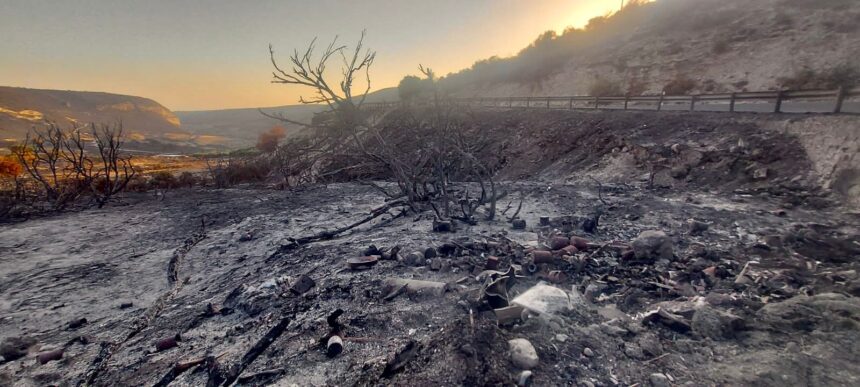
Wildfire scars in Limassol threaten to leave fields barren for decades without immediate government intervention, warns a senior environment official.
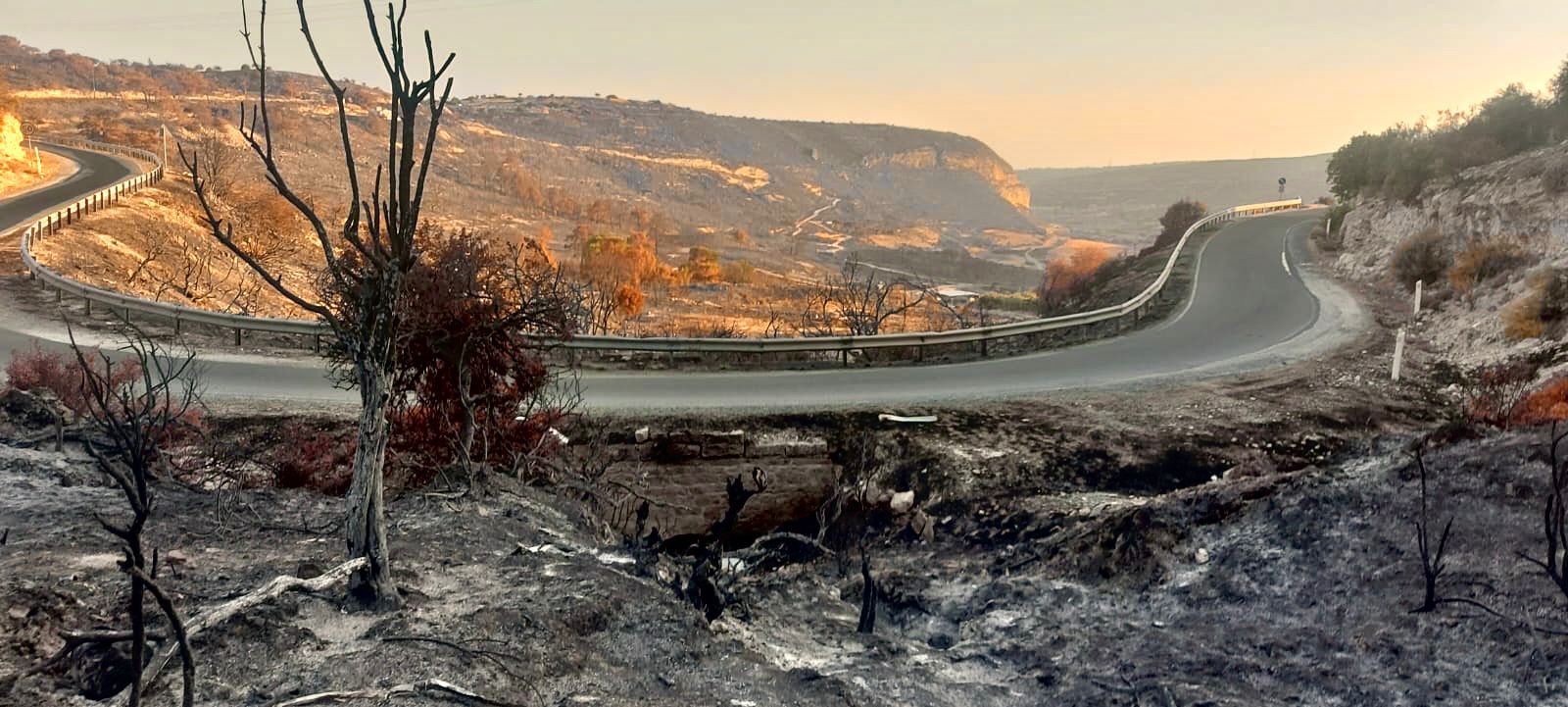
Photo: cyprus-mail.com
- Wildfire scars in Limassol threaten to leave fields barren for decades without immediate government intervention, warns a senior environment official.
Charalambos Theopemptou, Chair of the House environment committee, has stressed the urgency of commencing emergency fire-recovery work before the first seasonal rains arrive in late October. This call follows Cyprus’s most devastating wildfires in over 50 years, which ravaged the Limassol district on July 23-24, tragically resulting in two fatalities.
The fire inflicted extensive damage, scorching 124 square kilometres and affecting 17 communities, 13 of which suffered severe losses. Among the destruction, 706 buildings were consumed by flames, including 532 homes and 14,000 acres of agricultural land.
Wildfire scars: Urgent Erosion Prevention Measures Needed
Theopemptou, a former leader of the Green Party, highlighted the critical need for erosion prevention measures. He explained that the removal of vegetation leaves the soil exposed and vulnerable to rain, leading to erosion that could hinder recovery efforts for years, if not decades. “It’s a huge area, so the government should send surveyors in as soon as possible to prepare estimates, talk to scientists and generally understand the morphology of the landscape,” he emphasised.
However, surveyors cannot commence their work until they receive permission from landowners. Theopemptou urged the government to quickly locate these individuals and secure the necessary approvals before the rains begin.
Impact of Soil Erosion
The consequences of soil erosion are dire. Theopemptou noted that once a fire occurs, the protective vegetation is lost, leaving the topsoil exposed. “The surface is soft and loosely compacted, and the absence of the regular pressure of vehicles or people makes it vulnerable to erosion,” he stated. If erosion takes place, recovery could be a protracted process, relying on natural elements like wind or birds to carry new seeds to the area.
He characterised the Limassol fires as the worst since the Turkish invasion of 1974 and expressed concern that the recovery could take decades, depending on the specific soil and terrain conditions. “After a fire, you would have to wait for the winds or birds to bring new seeds — this is something that takes a very long time,” he remarked.
Legislative Changes for Timely Restoration
To facilitate more effective recovery measures, Theopemptou is advocating for emergency legislation that would empower officials to execute restoration work on private land without prior consent unless the owners explicitly objected. This legislative change could streamline the recovery process significantly.
Additionally, he called for the adoption of the Hellenic Technical Specification ELOT 1501 in Cyprus, which outlines guidelines on using locally sourced timber-based erosion control structures following forest fires. Such measures could enhance the recovery of vegetation in affected areas.
Insufficient Government Response
Theopemptou previously described the governmental response to the wildfires as “tragically insufficient,” pointing to a lack of proactive measures that could have mitigated the disaster’s impact. A parliamentary session is scheduled for August 29 to address ongoing relief efforts in the wake of these wildfires.