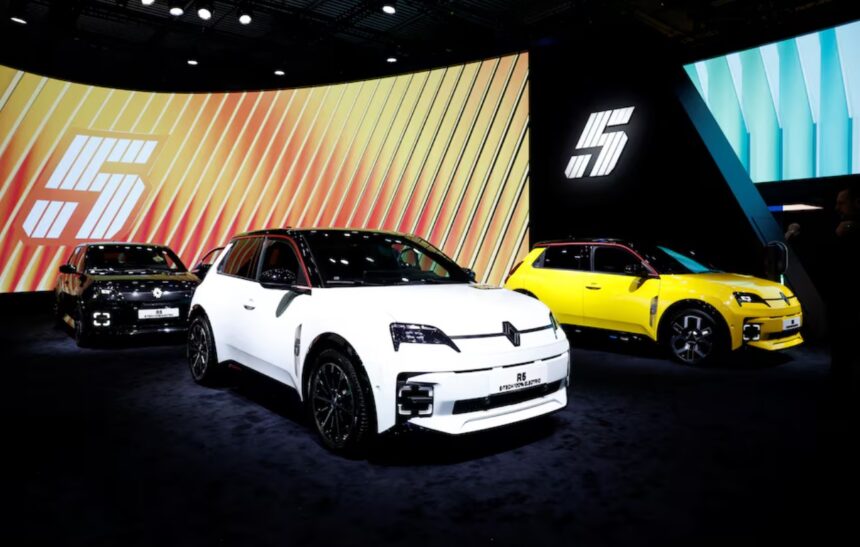
renault r5 — renault r5 — Renault’s compact electric R5 is proving to be more profitable than larger models, a shift in trend that has caught the attention of investors and industry analysts alike. CEO Francois Provost shared insights with Les Echos, highlighting the R5’s robust margins compared to the Megane and Scenic, which are traditionally seen as more lucrative.
European car manufacturers have long grappled with the dual challenges of stringent regulations and an immature battery supply chain, which have made profitability in the electric vehicle (EV) sector a complex puzzle. These hurdles are magnified by fierce competition from Chinese manufacturers, who continue to capture significant market share.
Typically, larger vehicles in the C segment yield higher profits due to their elevated price points. However, Renault’s recent performance indicates a potential paradigm shift. Provost noted, “We are making positive margins on the R5, R4, and Twingo — margins that are higher than those of the Megane or Scenic, even though the latter belong to a higher segment.” This assertion signals a promising development for Renault and suggests a re-evaluation of profitability expectations within the market.
The R5, launched in late 2024, has quickly ascended the ranks to become one of Europe’s best-selling EVs. This surge in popularity has been significantly bolstered by rising fuel prices, partly due to geopolitical tensions stemming from the Iran war. The ongoing crisis has catalysed a shift in consumer behaviour, driving demand for both new and used electric vehicles across Europe.
Provost reported a remarkable 50 per cent increase in the group’s EV order book in key markets like France and Germany since the onset of the conflict, illustrating a robust appetite for Renault’s electrified offerings. The momentum behind the R5 is not only a testament to its design and functionality but also reflects broader market dynamics that favour smaller, more economical vehicles in times of rising fuel costs.
Investors are likely to take note of these developments as Renault navigates its path in an increasingly competitive landscape. The company’s ability to deliver attractive margins on smaller models may encourage a shift in strategy among other manufacturers, particularly those struggling to achieve profitability in the current environment.
As Renault continues to expand its electric vehicle portfolio, the success of the R5 could serve as a blueprint for future models. With the automotive market undergoing significant transformation, the focus on profitability will remain crucial, especially as manufacturers adapt to changing consumer preferences and regulatory pressures.