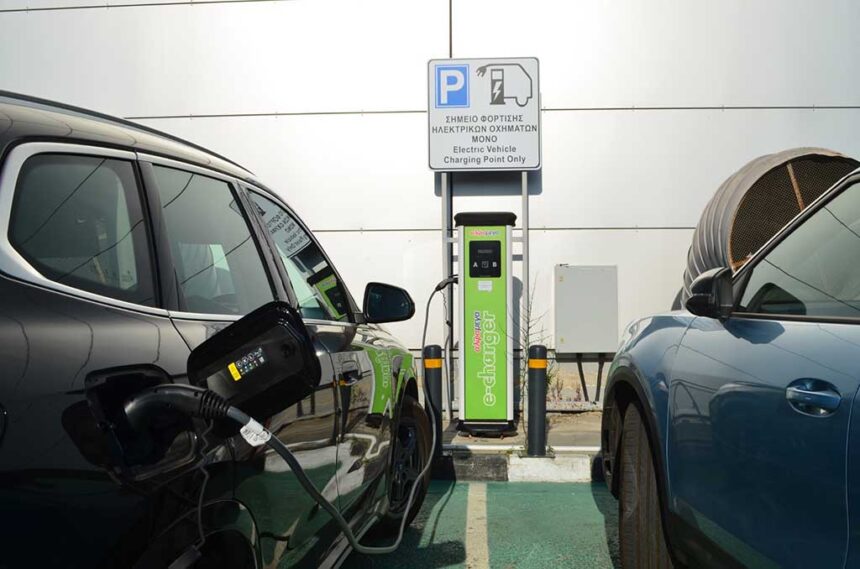
Cyprus is setting an ambitious goal to have 85,000 electric vehicles on its roads by 2030. This target, outlined by Transport Minister Alexis Vafeades, reflects a growing optimism in a nation that has historically struggled with low electric vehicle adoption rates.

Photo: cyprus-mail.com
- A subsequent scheme launched in December allocated 520 subsidies of €9,000 or more for zero-emission vehicles, aiming to stimulate further interest.
Electric vehicles: Current Electric Vehicle Landscape
Despite being an island that can be traversed within a few hours, Cyprus has one of the lowest electric vehicle adoption rates in Europe. Recent data from the European Alternative Fuels Observatory highlights that the country holds the lowest percentage of battery electric vehicles (BEVs) and plug-in hybrid vehicles (PHEVs) in the EU, at just 0.77 per cent.

Photo: cyprus-mail.com
In a broader context, Eurostat data from 2022 placed Cyprus alongside Bosnia and Herzegovina, North Macedonia, and Turkey as having the lowest EV adoption rates. However, it is worth noting that Turkey has made substantial progress in increasing its percentage of electric vehicles.
Increasing Adoption Rates
Positive trends in electric vehicle registrations have begun to emerge. According to data, BEVs accounted for 4.7 per cent of total vehicle registrations in 2025, an increase from 4.0 per cent in 2024 and 2.7 per cent in 2023. This uptick suggests a growing acceptance of electric vehicles, with the market share of BEVs and PHEVs now surpassing that of eight other EU countries.
Currently, there are approximately 8,200 licensed electric vehicles in Cyprus, encompassing all categories, including motorcycles, buses, and trucks. Despite this, the country still faces significant challenges in reaching its target.
Addressing Charging Infrastructure
A critical barrier to electric vehicle adoption in Cyprus has been the lack of accessible charging infrastructure. Until recently, the Electricity Authority of Cyprus was the sole provider of public charging stations, requiring drivers to have a subscription card to access a limited network of chargers.
However, changes are underway. Private operators, such as EV Power, have begun installing charging stations at supermarkets and petrol stations, significantly increasing the availability of public charging options. Additionally, new legislation effective from early 2025 mandates that non-residential buildings with more than 20 parking spaces must include at least one charging point.
As electric vehicles now often feature a range exceeding 400 km, practical concerns surrounding charging have diminished. The focus now shifts towards expanding the charging network to meet the needs of all drivers.
Government Subsidies and Challenges
Government-funded subsidies have played a pivotal role in promoting electric vehicle adoption. Previous grant schemes, funded through the EU’s Recovery and Resilience Facility, have provided financial incentives for purchasing electric vehicles. The most recent scheme, announced in 2024, offered €9,000 subsidies for nearly 1,900 new and used zero-emission vehicles.
Unfortunately, the government reduced the number of available subsidies in April 2025, citing unused funds as the reason. Michael Toumbas, a former chief technology officer at EV Power, noted that many potential buyers were unaware of the deadlines associated with the subsidies, leading to missed opportunities.
A subsequent scheme launched in December allocated 520 subsidies of €9,000 or more for zero-emission vehicles, aiming to stimulate further interest.
Market Dynamics and Consumer Insights
The rise of hybrid vehicles has also influenced the market, with regular hybrids accounting for nearly half of new passenger vehicle registrations in the first five months of 2026. However, these vehicles, which primarily rely on internal combustion engines, do not qualify for subsidies due to their higher emissions.
The government has yet to provide clarity on future grant schemes, leaving many potential buyers uncertain. Sotos Trikomitis, president of the Association of Motor Vehicle and Electric Vehicle Importers, has called for annual subsidies of between €15 million and €20 million, significantly exceeding the funding currently allocated.
Trikomitis argues that clear communication about future incentives could encourage more consumers to consider electric vehicles, as many are hesitant to invest without understanding potential subsidies.
Barriers to Entry and Future Outlook
The relative cost of electric vehicles remains a concern. While some models are now priced similarly to petrol vehicles, others still present a financial barrier. Toumbas highlighted that even when comparing equivalent models, electric versions tend to be more expensive, though their lower operating costs can justify the investment.
As the market evolves, Sofocleous remains hopeful that prices for electric vehicles will continue to decline, making them more appealing to consumers. A new European emissions trading system is set to factor carbon emissions costs into road transport fuel prices from 2028, further incentivising the shift towards zero-emission vehicles.
However, challenges remain. Current EU tariffs on Chinese-made electric vehicles, such as those from BYD, have resulted in higher prices for consumers. Despite these tariffs, BYD’s sales manager in Cyprus expressed confidence in their products’ competitiveness.
Educating the Public
Education is crucial for increasing electric vehicle adoption. Toumbas noted that many potential EV buyers lack understanding of costs, charging logistics, and battery ranges. He envisions a future where electric vehicles are charged during working hours, using solar energy, effectively transforming them into a dual-purpose asset.
Christos Kypris, a long-time EV owner, pointed out that access to affordable used electric vehicles is limited in Cyprus due to import regulations. He has suggested modifying these laws to facilitate the import of older electric vehicles, which could help diversify the market.
While there are differing opinions on relying on imported vehicles, there is a consensus that the government should provide more support, including financial assistance for installing home charging infrastructure.
A Vision for Sustainable Mobility
As Cyprus aims for its target of 85,000 electric vehicles, achieving this goal will require a multi-faceted approach. Increased registrations of internal combustion engine vehicles and limited public transport options present ongoing challenges.
Ultimately, achieving this ambitious target will necessitate a broader policy framework that supports sustainable mobility, enhances charging infrastructure, and encourages a cultural shift towards electric vehicles. Many stakeholders remain optimistic that Cyprus can embrace this transition and enjoy the benefits of electric mobility.