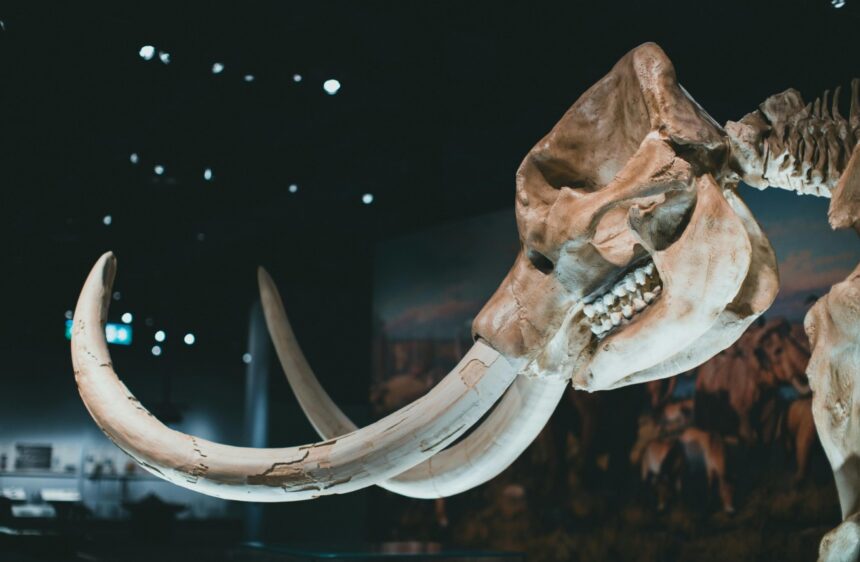
Mammoth bones found across Central Europe provide vital insights into how Ice Age humans hunted and survived. Researchers, supported by EU funding, are investigating these ancient sites to uncover the mysteries surrounding the woolly mammoths that roamed the region over 25,000 years ago.
Before the last Ice Age peaked, herds of woolly mammoths traversed a frigid landscape, following seasonal routes through grasslands and tundra. Archaeologists have discovered remarkable accumulations of mammoth bones, sometimes numbering in the thousands, which have intrigued scientists since the 19th century. This has led researchers to ponder whether these bone beds are remnants of hunting, natural deaths, or a combination of both.
Mammoth bones: New Insights from Ancient Sites
An EU-funded research initiative called MAMBA is taking a fresh approach to three significant sites: Kraków Spadzista in Poland, Dolní Věstonice in Czechia, and Langmannersdorf in Austria. This five-year project, which runs until June 2027, is led by Dr Jarosław Wilczyński, an archaeologist at the Polish Academy of Sciences. His international team aims to reconstruct life between 35,000 and 25,000 years ago through these mammoth bone deposits.
To unravel the complexities of these sites, the team employs a combination of traditional archaeology and advanced scientific techniques. Excavations are complemented by laboratory analyses that include genetics, isotope chemistry, geoarchaeology, and palaeoclimatology. As Dr Wilczyński notes, “We collect new material, but we also re-examine museum collections using methods that were not available before.”
Decoding the Past with Advanced Techniques
By analysing stable isotopes in mammoth bones, researchers can glean insights into their diets, habitats, and even the seasons in which they died. The extraction of ancient DNA (aDNA) from mammoth remains is helping to clarify the relationships and population dynamics of these extinct creatures. Alex Pryor from the University of Exeter is leading the charge on strontium and oxygen isotope analyses, which act as natural markers for tracking the movement of individual mammoths throughout their lifetimes.
High-precision radiocarbon dating is refining the timeline of each site, enabling researchers to better understand the environmental conditions of the period. As excavation techniques advance, the team is also emphasising conservation, ensuring that new samples are preserved carefully while minimising damage to historical collections.
Revealing the Complexity of Human Behaviour
As the MAMBA team delves deeper into their research, new findings challenge previous assumptions about Ice Age humans. Instead of being mere opportunistic scavengers, evidence suggests that these early inhabitants were skilled and organised hunters. Dr Dorothée Drucker, a research fellow at the University of Tübingen, explains that “they understood the animals and their environment very well.”
Ice Age hunters had a sophisticated understanding of mammoth migration routes and seasonal behaviours. This knowledge likely allowed them to strategically position themselves for successful hunts, requiring cooperation and communication within their communities. The bone accumulations we find today serve as physical evidence of their expertise.
The Ecological Role of Woolly Mammoths
The woolly mammoth was not merely a food source; it played a crucial ecological role in its environment, shaping landscapes as it moved. Dr Drucker highlights that the mammoth “crushed trees and bushes, changed its environment, and fertilised the soil with its dung.” For humans, the mammoth provided meat, fat, ivory, and bones, essential resources for survival.
The Upper Palaeolithic period was marked by rapid environmental changes, as climate cooled and ice sheets expanded across Europe. Humans demonstrated remarkable adaptability, responding to shifting conditions while continuing to exploit available resources. Drucker emphasises, “What we see is that humans were highly adaptable.”
Exploring Human Impact on Mammoth Populations
Researchers are now investigating the potential impact of human activity on mammoth population declines. The presence of high levels of nitrogen-15 isotopes in mammoth remains suggests that these animals were a significant dietary source for early humans. By analysing these isotopic signals alongside genetic data, the team seeks to understand the extent to which human hunting may have contributed to the decline of mammoths, in conjunction with climate change.
The decline and eventual extinction of the mammoth likely resulted from a combination of factors, including environmental shifts and human pressures. Untangling these influences remains a complex challenge for researchers.
Ultimately, the work being conducted at these ancient sites sheds light on human resilience and adaptability in the face of environmental stress. Far from being passive observers, Ice Age humans actively shaped their surroundings while also being influenced by them. While the woolly mammoths may be long gone, their legacy continues through the bones they left behind, offering a glimpse into the lives of those who once coexisted with these majestic creatures.