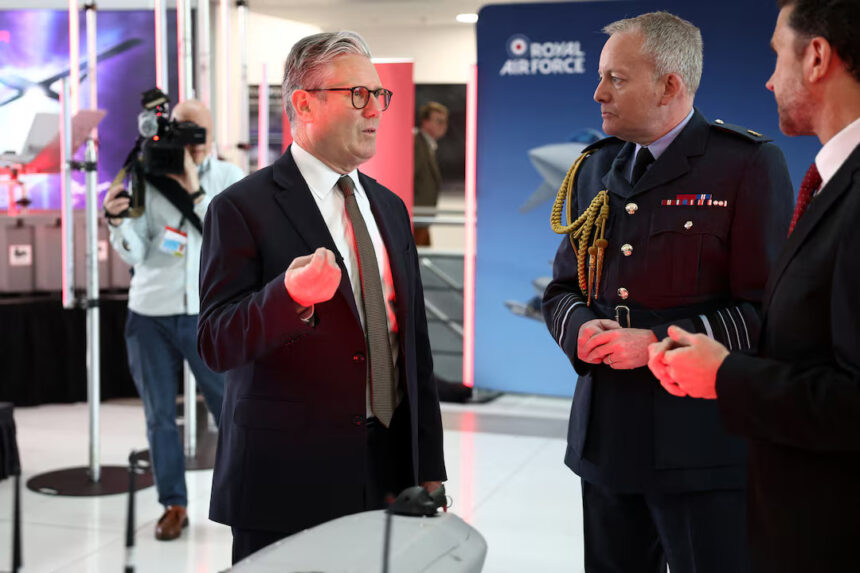
Cyprus has emerged as a crucial strategic asset for the UK, with British chief of the defence staff Sir Richard Knighton recently asserting, “We have an aircraft carrier – it’s called Cyprus.” This statement has drawn scrutiny as tensions rise in the Middle East.
Reports from British political magazine The Spectator indicate that Knighton faced criticism for leaving the UK’s military assets underprepared for potential conflict. A meeting of the United Kingdom’s national security council took place on February 27, just before the escalation of hostilities. During this meeting, a national security advisor proposed deploying the aircraft carrier HMS Prince of Wales to the region. Knighton reportedly dismissed this suggestion, highlighting the operational capabilities of the Royal Air Force from the Akrotiri air force base in Cyprus.
Intelligence officials expressed frustration, advocating for a broader range of military options to be presented to British Prime Minister Sir Keir Starmer. Knighton’s reluctance to act on these recommendations allegedly left officials feeling “very, very cheesed off,” with reports suggesting he has lost confidence among Starmer’s team. Sources noted, “He has failed to give the prime minister military capability, but also diplomatic and political credibility.” However, contrasting reports from The Telegraph suggest that confidence in Knighton remains intact.
Sources from The Telegraph described Knighton’s comments regarding the HMS Prince of Wales as having potentially been “a bit flippant.” They argued that while Knighton appreciates the role of aircraft carriers, their deployment should be context-driven. It was suggested that flying F-35 fighter jets to Cyprus would be quicker and more cost-effective than deploying a carrier.
F-35 fighter jets have been stationed in Cyprus since last month and have already been deployed for missions, including intercepting Iranian drones. Just three days after the national security council meeting, the Akrotiri base was struck by an Iranian-made drone.
In the wake of the drone strike, Starmer announced the deployment of the HMS Dragon, a Type 45 destroyer, which set sail from Portsmouth on Tuesday evening. Additionally, three AW159 Wildcat helicopters and a Merlin Mk2 helicopter have been dispatched to Cyprus. British Defence Secretary John Healey visited the island last week, assuring that “top experts” were on the ground to enhance air defence coordination.
Despite these developments, former Prime Minister Rishi Sunak has accused Starmer of lacking strategic foresight. Sunak questioned the delays in deploying British naval assets to the region following the drone strike, stating, “Given how much notice we had of these strikes, why was no ship moved to the Mediterranean to help protect our interests and allies?” He further remarked that it was “frankly embarrassing” that France appeared to be taking more proactive measures to safeguard Cyprus, especially given the UK’s sovereign bases on the island.