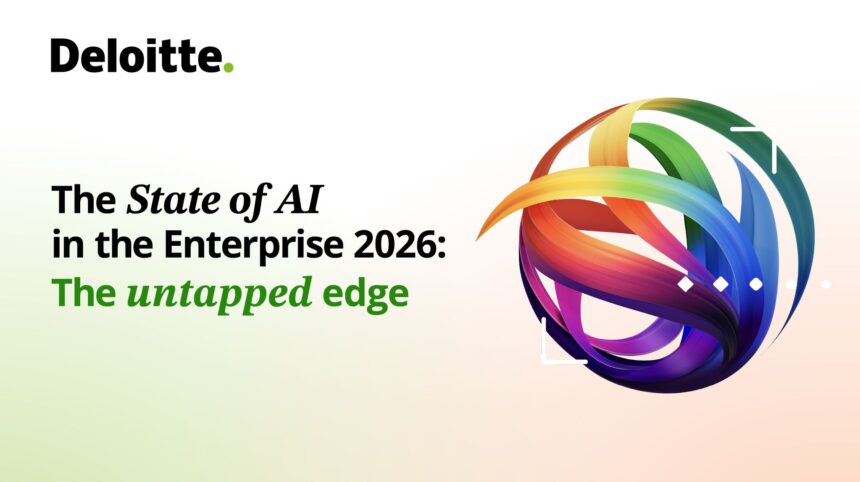
Sovereign AI has become a critical consideration for organisations as they assess vendor origins in the realm of artificial intelligence. A new global study from the Deloitte AI Institute highlights that while ambition surrounding AI is high, many companies are still on the cusp of unlocking its full potential. The report, titled The State of AI in the Enterprise: The Untapped Edge 2026, was released on Tuesday and circulated locally by Deloitte Cyprus.
Sovereign ai: Insights from the Global AI Study
The Deloitte report surveyed 3,235 business and IT leaders across 24 countries during August and September 2025, focusing on executives from director to C-suite levels who are directly involved in AI initiatives within their organisations. The findings indicate that while organisations are eager to advance their AI capabilities, a significant gap exists between ambition and actual deployment.
The Pilot-to-Production Gap
Despite the acceleration of AI experimentation, only 25 per cent of respondents reported having moved 40 per cent or more of their AI pilots into production. Nevertheless, 54 per cent anticipate reaching this production level within the next three to six months, indicating a pathway to achieving greater value from AI.
Balancing Innovation and Core Business
As organisations strive to balance their core business operations with the need for technological innovation, the report emphasises the importance of a clear AI strategy. This clarity can help mitigate what the report refers to as pilot fatigue, enabling companies to push beyond initial experiments and fully integrate AI into their business models.
Ambition and Transformation through AI
“Across the enterprise, we’re seeing massive ambition around AI, with organisations starting to pivot from experimentation to integrating AI into the core of the business with a focus on scale and impact,” stated Nitin Mittal, Deloitte’s Global AI leader. He further noted that to unlock AI’s full potential, leaders need to consciously weave AI into their workflows and better integrate human and machine intelligence.
Business Impact and Process Redesign
The report reveals that 25 per cent of leaders believe AI is having a transformative effect on their organisations, a figure that has more than doubled compared to a year ago. While there are widespread productivity gains, only 30 per cent of organisations are redesigning their key processes around AI. Additionally, 37 per cent of companies report using AI superficially, without significant changes to their underlying processes.
Agentic AI and Governance Challenges
The study highlights the rapid rise of agentic AI, with nearly three-quarters of companies planning to deploy such systems within the next two years. However, only 21 per cent of these organisations have a mature governance model in place to manage these systems effectively.
Companies that are achieving the most success with AI are taking a measured approach, starting with lower-risk use cases while building their governance capabilities and scaling their efforts deliberately. The report underscores that in this new AI era, governance should act not merely as a set of restrictions but as a catalyst for responsible growth.
Resilience and Vendor Selection
The concept of resilience in relation to sovereign AI readiness is gaining traction. Today, 77 per cent of companies consider the country of origin when selecting vendors, and nearly 60 per cent primarily build their AI technology stacks using local vendors. This trend reflects a growing recognition of the importance of vendor origins in fostering trust and stability in AI deployments.
Physical AI Adoption Across Industries
The report also notes the increasing integration of physical AI, particularly in sectors such as manufacturing, logistics, and defence, which are leading the worldwide adoption of this technology. Adoption of physical AI is projected to reach 80 per cent within the next two years, setting the stage for what Deloitte describes as the next wave of industrial automation.
Strategic Clarity for Future Success
Ultimately, while ambition around artificial intelligence remains strong, the study emphasises that unlocking AI at true enterprise scale will necessitate deliberate governance, strategic clarity, and a fundamental rethinking of work and business models. Organisations must not only optimise existing systems but also reimagine possibilities to achieve lasting competitive advantages in an increasingly AI-driven world.