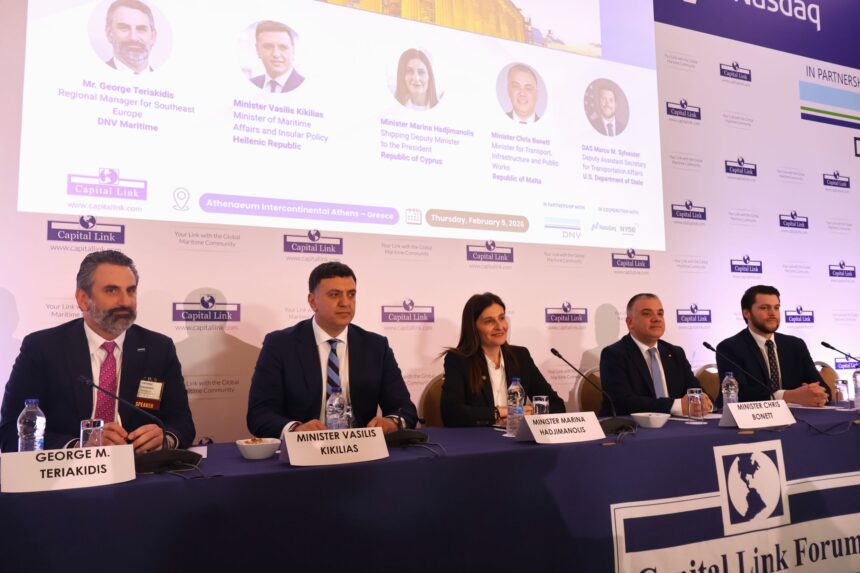
shipping decarbonisation — shipping decarbonisation — The United States has expressed firm objections to the Net Zero Framework (NZF) during a high-level debate on maritime decarbonisation, sending a clear message to the International Maritime Organisation (IMO). The discussion took place at the ministerial panel of the 16th Annual Capital Link Greek Shipping Forum, where key figures in the maritime sector gathered to address pressing environmental challenges.

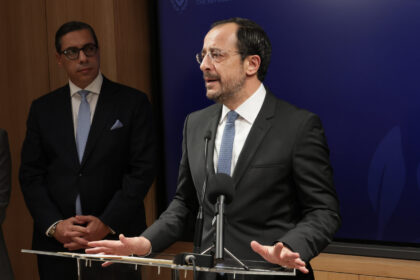
Photo: cyprus-mail.com
Cyprus shipping deputy minister Marina Hadjimanolis was among the officials participating in the panel, which also included Greece’s maritime affairs minister Vasilis Kikilias, Malta’s transport minister Chris Bonett, and US Deputy Assistant Secretary for Transportation Affairs Marco Sylvester. The forum provided a platform for these leaders to voice their concerns and perspectives on the future of shipping amid growing environmental pressures.

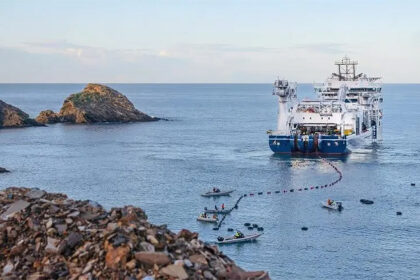
Photo: cyprus-mail.com
During the discussions, Sylvester articulated Washington’s view that the NZF could hinder rather than help progress in maritime decarbonisation. He warned that the transition to greener practices risks failure without a realistic approach, technical documentation, and active participation from the shipping industry. “Common sense is needed,” he stated, advocating for a reassessment of the framework, which he believes stifles advancement.
While the US has rejected the NZF, Sylvester clarified that this does not equate to a withdrawal from international collaboration. Instead, he argued that the framework could transform the IMO from a technical body focused on navigation safety into a regulator for global climate policy. This shift, he suggested, does not align with the IMO’s mission or the interests of the United States.
As the dialogue progressed, Sylvester outlined two potential paths for the future: either recycling the contentious discussions from last October or moving towards a more constructive framework that allows for significant progress. He emphasised the need for open dialogue to achieve a workable and acceptable outcome.
In addition to seeking a review of the NZF, the US proposed enhanced accountability for states, suggesting that national governments should explicitly ratify regulations. This would ensure that decisions are not solely attributed to the IMO, fostering greater responsibility among member states.
Industry participation emerged as a critical theme during the panel. Sylvester urged market players to articulate what is technically and economically feasible, highlighting the substantial costs associated with zero-emission targets. He noted that these costs would initially impact the shipping industry and ultimately be passed on to consumers. The exclusion of shipping from decision-making processes was described as unrealistic and counterproductive.
Hadjimanolis echoed the call for realism, emphasising the importance of listening to the shipping industry’s concerns. She pointed out that legislative measures often precede a proper understanding of the sector’s operational realities, which can lead to unintended consequences.
Kikilias added to the conversation by warning that any new burdens placed on the shipping sector would ultimately translate to higher costs for consumers. He highlighted that the transition to alternative fuels is currently limited, as these fuels represent only a small fraction of global availability, and the necessary infrastructure is still lacking.
With up to 90 per cent of global trade reliant on maritime transport, Kikilias cautioned that decisions made in these discussions would have direct and significant impacts on living costs and social cohesion. This perspective underscored the need for careful consideration of the implications of regulatory decisions on the wider economy.
Bonett raised the crucial issue of European unity, asserting that the EU must act cohesively on critical matters like maritime decarbonisation. His comments highlighted the importance of a unified approach to address the challenges posed by climate change in the shipping sector.