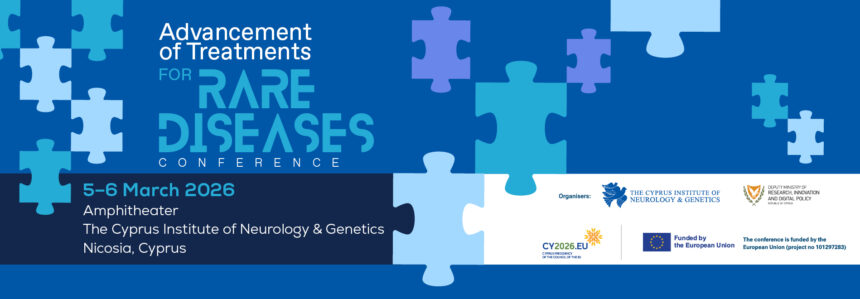
The upcoming European Conference on Advancement of Treatments for Rare Diseases is set to take place on March 5 and 6, 2026, at the Institute of Neurology and Genetics (INNG) in Cyprus. This event has garnered attention for its focus on enhancing collaboration in the rare diseases sector.
Hosted by the Institute of Neurology and Genetics Cyprus in partnership with the Deputy Ministry of Research, Innovation and Digital Policy, the conference is part of the initiatives under the Cypriot Presidency of the Council of the European Union in 2026.
With an impressive line-up of over 35 distinguished speakers and approximately 250 attendees from various countries, the conference aims to unite stakeholders from healthcare, research institutions, pharmaceutical companies, and patient organisations. Organisers have expressed that the main goal is to foster innovation and improve patient access to cutting-edge treatments.
“The aim is to strengthen collaboration and innovation in the field of rare diseases,” organisers stated, highlighting the importance of the conference in promoting research efforts in this critical area.
Registration for the event is mandatory, and all participants must complete their registration through the official Cypriot EU Presidency accreditation platform. The initial step involves obtaining an Individual Access Code by sending an email to [email protected].
In their email, participants should specify whether they are a speaker or panellist, a local attendee, or an international participant. Once the access code is received, registrants can proceed to finalise their registration on the relevant platform.
Given the limited capacity of the venue, organisers are encouraging early registration, with a deadline set for February 25, 2026. Participants can expect to receive their access code within one working day of their request.
Further information regarding the programme and the list of speakers can be found on the official conference website. This event is not only a significant gathering for those involved in rare diseases but also a vital component of the activities related to Cyprus’s presidency of the EU Council, funded through the Horizon Europe programme.