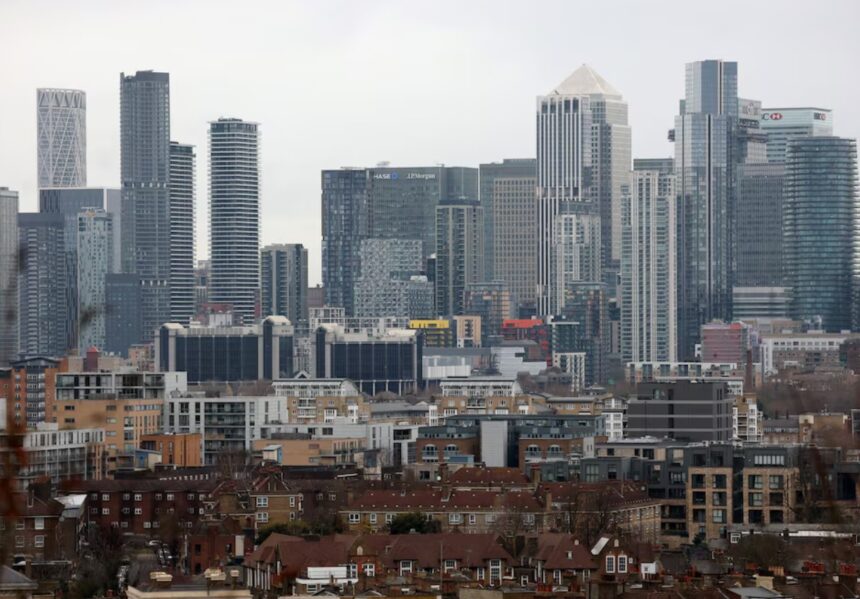
The UK economy returned to growth in August, expanding by a marginal 0.1 per cent from July, according to official data released on Thursday. This slight uptick offers a glimmer of hope for Finance Minister Rachel Reeves as she prepares for her upcoming budget announcement.
However, the Office for National Statistics revised July’s gross domestic product (GDP) to reflect a 0.1 per cent decline, having previously been reported as unchanged. This adjustment underscores the fragility of the UK’s economic recovery.
Looking ahead, the International Monetary Fund (IMF) has projected that the UK will experience the second-fastest growth among the Group of Seven nations in 2025, trailing only the United States. Yet, with an annual growth rate of 1.3 per cent, the need for tax increases in Reeves’ budget remains pressing.
Uk economy: Indicators of Future Growth
Fergus Jimenez-England, an associate economist at the National Institute of Economic and Social Research, noted that preliminary indicators for September suggest only limited growth for the third quarter. He emphasised that regaining economic momentum relies heavily on restoring business confidence and mitigating uncertainty. Jimenez-England advised that greater fiscal reserves in the forthcoming budget could assist in this endeavour.
Concerns Over Economic Performance
Sanjay Raja, chief UK economist at Deutsche Bank, shared concerns regarding the current state of the services and construction sectors, describing them as being in a “pre-budget funk.” He anticipates that growth in the third quarter will be about half of the Bank of England’s forecast of 0.4 per cent.
Raja pointed out that the UK economy has yet to fully grasp the implications of the ongoing US trade war. He also highlighted that budget uncertainty is reaching its peak, likely dampening household and business spending.
Mixed Signals from Key Economic Indicators
Despite expectations for a 0.1 per cent increase in GDP, economists surveyed by Reuters prior to Thursday’s data release had predicted this modest growth. In the three months leading up to August, growth improved slightly to 0.3 per cent, up from 0.2 per cent in the previous quarter. This boost was primarily driven by activity within the public health sector, although consumer-facing services saw a decline.
Interest Rates and Inflation Challenges
Policymakers at the Bank of England (BoE) are grappling with the dual challenge of persistently high inflation and sluggish growth. In September, they opted to maintain interest rates at 4 per cent. Governor Andrew Bailey recently noted a softening job market and cooling inflation pressures, following data that indicated unemployment has risen to its highest level since 2021 and private sector wage growth has slowed.
Monetary Policy Committee member Alan Taylor commented on the risks of a “bumpy landing” for the British economy, attributing part of this instability to the effects of trade tariffs imposed during the Trump administration.
Retail Sales and Consumer Sentiment
Recent data highlighted weak growth in retail sales, which has been partly attributed to growing concerns about potential tax increases in Reeves’ budget, scheduled for presentation on November 26. As consumers and businesses brace for possible financial adjustments, the economic landscape remains uncertain.