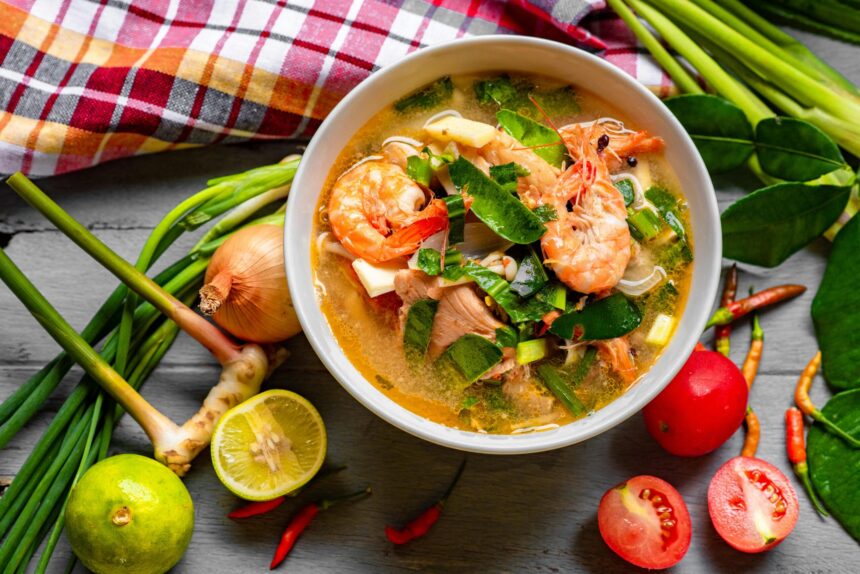
Tom Yum, a culinary masterpiece, showcases the rich tapestry of flavours that define the Thai landscape. As one of Thailand’s most recognisable dishes, this soup is a harmonious blend of heat, acidity, and fragrant herbs, each spoonful embodying the essence of Thai cooking.
The Heart of Tom Yum
At its core, Tom Yum is more than just a dish; it represents a philosophy of balance and freshness that permeates Thai cuisine. The term ‘Tom’ refers to the boiling process while ‘Yum’ signifies the distinctive hot-and-sour flavour profile. Traditionally, this soup was crafted using freshwater shrimp sourced from the abundant rivers of central Thailand, a testament to the country’s natural bounty.
Flavours That Speak of Home
The preparation of Tom Yum involves a careful selection of ingredients that are either foraged or cultivated locally. Galangal, lemongrass, kaffir lime leaves, and bird’s eye chilli come together to create a fragrant broth that warms the soul. Fish sauce enhances the umami, making each bowl a celebration of the flavours that thrive in the Thai landscape.
A Historical Journey
Tracing the origins of Tom Yum reveals a rich history intertwined with Thailand’s culinary evolution. Likely emerging between the 14th and 18th centuries, this soup reflects the blending of influences from neighbouring cultures, including Khmer, Chinese, and Lao cuisines. Over the centuries, Tom Yum has transcended its humble beginnings, becoming a staple in Thai households where it is cherished not just for its taste but also for its practicality.
An Adaptable Recipe
One of the beauties of Tom Yum lies in its adaptability. The most celebrated version is Tom Yum Goong, which features prawns, but variations abound. Tom Yum Gai, made with chicken, and Tom Yum Pla, featuring fish, are equally popular. For those seeking a creamier experience, Tom Yum Nam Khon introduces evaporated or coconut milk, softening the soup’s fiery edge without losing its distinctive character.
Tom Yum: A Cultural Staple
In Thailand, food is intrinsically tied to social interaction. Tom Yum occupies a central role on dining tables, encouraging sharing and fostering conversation among family and friends. This communal aspect underscores the cultural significance of the dish, transforming it into a symbol of togetherness.
Tom Yum Beyond Borders
As Tom Yum has journeyed beyond Thailand, it has gained fame in international culinary circles. In cities like London and New York, it serves as a gateway for many to experience Thai flavours. The dish has become synonymous with Thai cuisine, capturing the attention of food enthusiasts eager to explore the depth and complexity of its profile.
Tom Yum in Cyprus: A New Encounter
Interestingly, Tom Yum has also found its way to Cyprus, where it is a relatively new addition to the culinary landscape. Thai and pan-Asian restaurants across Nicosia, Limassol, and Larnaca now feature this aromatic soup on their menus. Local seafood sometimes takes the place of traditional prawns, and while not all herbs are readily available, the growing diversity of Cypriot cuisine means that ingredients like galangal and kaffir lime leaves are becoming more common.
Bridging Culinary Cultures
For many Cypriots, the intense heat and refreshing acidity of Tom Yum may evoke memories of avgolemono, a traditional Cypriot lemon soup. Both dishes seek harmony through a contrast of flavours, proving that culinary traditions can speak to one another across cultures.
Embracing the Spirit of Tom Yum
Ultimately, Tom Yum is more than just a dish; it embodies the spirit of Thai cooking and the natural beauty of its landscape. From its origins in the rivers of Thailand to its presence in kitchens around the world, this soup encourages exploration and appreciation of diverse culinary traditions. Whether savoured at a bustling street stall in Bangkok or enjoyed in a tranquil Cypriot restaurant, Tom Yum continues to resonate with those who seek to experience the flavours of Thailand.