What’s good for entertainment is bad for learning, and this paradox lies at the heart of Jared Cooney Horvath’s compelling book, The Digital Delusion. As a teacher, I often grapple with the encroachment of digital technology in our classrooms. Many educators, myself included, are caught in the crossfire of fervent EdTech advocates who promise transformative educational experiences through the latest apps and gadgets.
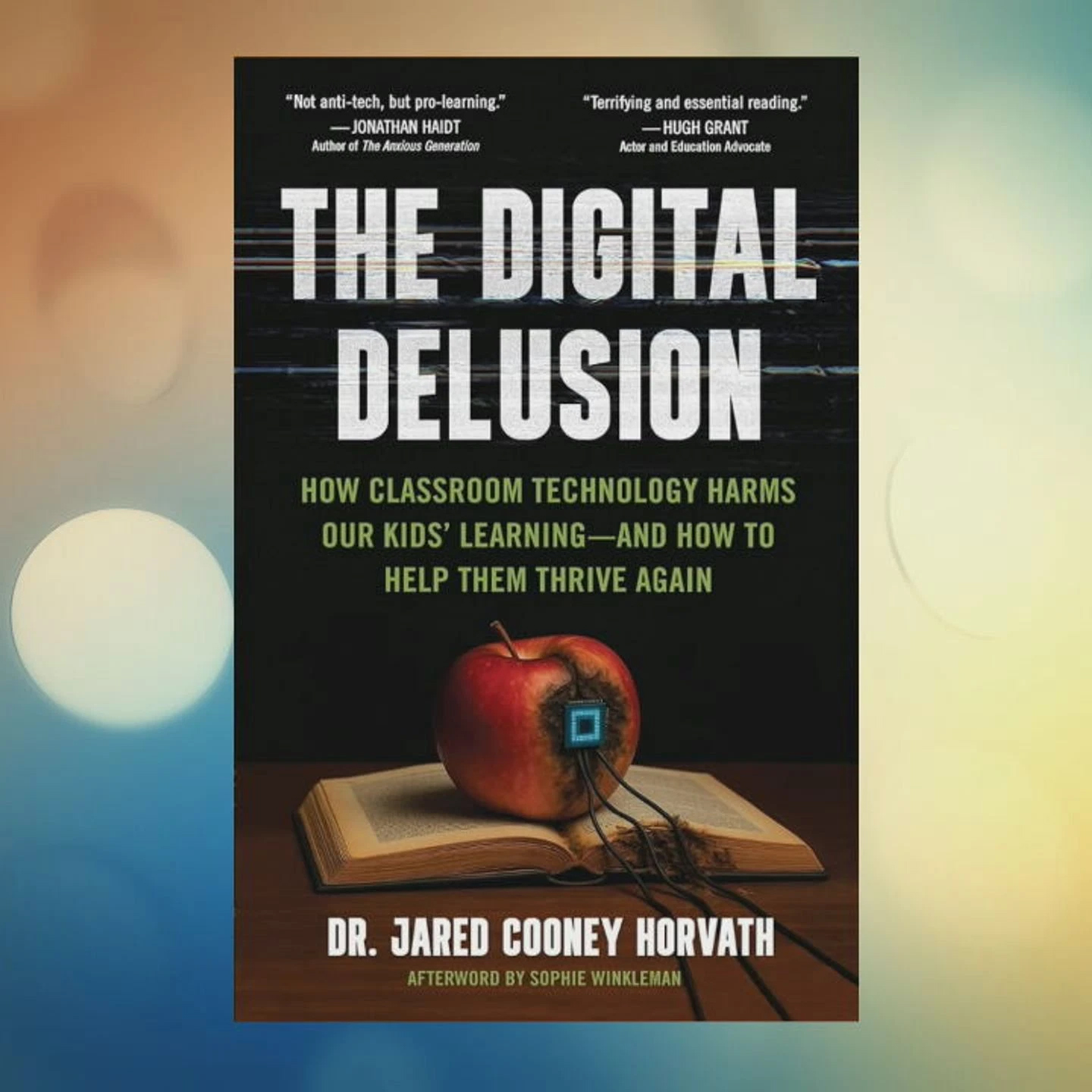
Photo: cyprus-mail.com
Cooney Horvath’s work challenges the prevailing narrative that digital tools inherently enhance learning. Instead, he argues that the very tools designed to aid education may be undermining it. He states, ‘we gave students laptops and took away their brains,’ a stark reminder of the consequences of unchecked technological integration in educational settings.
Digital delusion: Understanding the Limits of Learning
This isn’t a blanket condemnation of teaching technology, computing, or digital media. Rather, Horvath makes a clear distinction: he supports the inclusion of technology as a subject itself, taught by specialists using appropriate resources. The issue arises when technology becomes a medium for delivering all subjects, overshadowing traditional, more effective methods of instruction.
Horvath emphasises a critical point: learning is inherently challenging and should be viewed as such. The skills we seek to impart—rigour, resilience, sustained focus—are compromised when students are distracted by the very devices intended to facilitate their learning. Digital devices cater to a culture of instant gratification, which is antithetical to deep, meaningful acquisition of knowledge.
The Science Behind Learning
Numerous studies corroborate Horvath’s argument, shedding light on how EdTech can impede learning. For instance, research indicates that our attentional capacity is limited; we can only focus on a small amount of information at once. This limitation makes multitasking not just ineffective, but damaging to the learning process. Yet, schools increasingly equip students with devices that encourage this very behaviour, which can lead to superficial understanding rather than deep learning.
Moreover, evidence suggests that reading from paper significantly enhances retention compared to screens. The act of physically engaging with a book allows learners to contextualise information within a multi-dimensional space, providing a richer framework for memory retention. Screens, in contrast, offer a two-dimensional experience that may hinder the cognitive processes vital for effective learning.
The Importance of Human Connection
Another compelling argument presented in The Digital Delusion is the critical role of human connection in the learning process. Humans have evolved to learn from one another, and the emotional bonds forged in classroom settings foster an environment conducive to learning. Teachers who can interpret the emotional cues of their students are better positioned to support their learning journeys, something no AI or digital tutor can replicate.
In an age where technology often isolates rather than connects, it is crucial to question the narrative that blames traditional education for failing our children. Horvath challenges the notion that more technology is the answer to the issues exacerbated by technology itself. Instead, he advocates for a return to pedagogical methods that foster genuine engagement and understanding.
A Call for Evidence-Based Practices
Ultimately, Horvath’s book serves as a clarion call for educators, school leaders, and parents to demand evidence-based practices in education. The promotion of new educational tools often relies on anecdotal claims rather than rigorous research. We must ask ourselves whether these tools genuinely enhance learning or merely serve as a shiny distraction in a classroom filled with eager minds.
In my own experience, I am fortunate to work in a school where the use of EdTech is carefully considered and implemented only when it aligns with pedagogical goals. This approach acknowledges the importance of human relationships and the expertise of skilled professionals who prioritise the development of the students in their care.
For those interested in the intersection of education and technology, The Digital Delusion is an essential read. It provides a thought-provoking perspective on how we can better serve future generations by scrutinising our reliance on digital tools in education.