shepherds in — The number of shepherds in Cyprus is dwindling, reflecting a significant shift in agricultural practices and lifestyles. In the village of Mathiatis, the pastoral scene is increasingly rare, with only a handful of shepherds remaining to tend to their flocks. This small community, once bustling with farmers and herders, now sees only three individuals actively involved in sheep and goat husbandry, with just one practicing the profession full-time.

Photo: cyprus-mail.com
- “In a village of 800 people, who am I going to sell to?” George questions, underscoring the difficulties faced by local shepherds trying to maintain their livelihoods.
Shepherds in: Modern-Day Shepherds and Their Challenges
The main shepherd in Mathiatis, whose identity remains largely private, manages a sizeable flock of sheep but prefers to stay out of the spotlight. Meanwhile, George Kasapis, a 66-year-old retired goatherd, offers a glimpse into the life of shepherds today. Having worked as a full-time shepherd in his youth, George recalls the demanding nature of the job, which required unwavering commitment year-round.

Photo: cyprus-mail.com
“You’re tied to it,” George explains, sharing how the responsibilities of tending to livestock leave no room for personal emergencies. After years of milking and feeding his goats, he transitioned to a role in the forestry department, where he enjoyed a more stable lifestyle before returning to goat rearing as a hobby after retirement.
The Shepherd’s Life: A Labour of Love
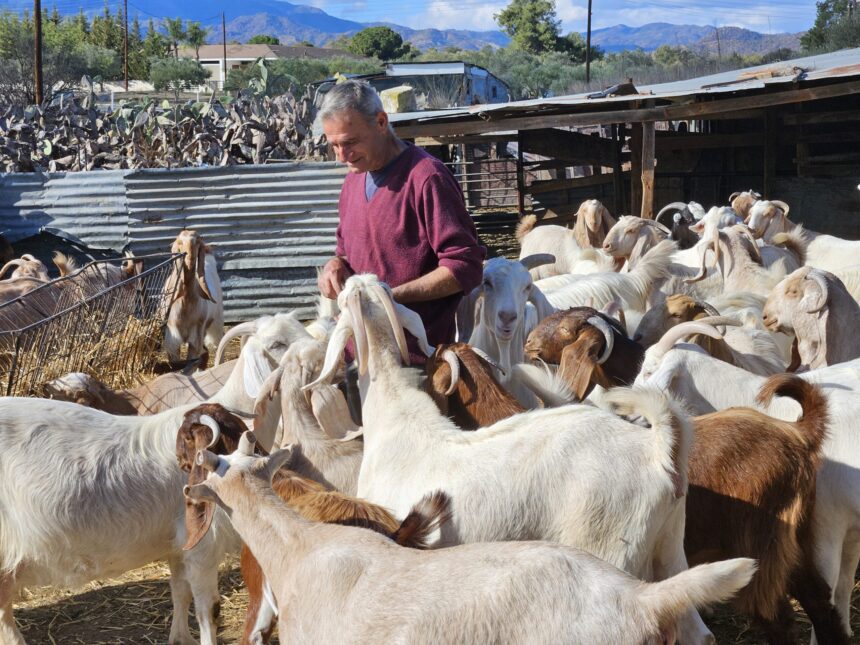
Now, George operates from an old enclosure that belonged to his wife’s uncle, tending to a flock of goats that he nurtures with care. Despite his physical limitations following an operation, George remains active, enjoying the connection he has with his animals. He takes pride in his goats, which he describes as intelligent beings capable of forming bonds with their caretakers.
“They love you,” he states, recalling moments where goats express gratitude after giving birth, acknowledging the help they receive. George’s approach to goat husbandry is rooted in tradition, with his daily routine involving letting the goats out to graze in a near-barren landscape, a practice that connects him to his past.
The Changing Landscape of Farming
Historically, the hills surrounding Mathiatis were dotted with farms and enclosures, but the landscape has dramatically changed since Cyprus joined the EU. George laments the effects of over-regulation, which he believes has contributed to the decline of traditional farming practices. He notes the requirements for licenses and specific facilities, such as milking areas equipped with machinery, which many local shepherds could not meet.
“It was all too much for local shepherds—most of whom were already old, even 20 years ago,” he reflects, highlighting how the demands of modern farming deterred younger generations from pursuing shepherding as a career.
Contrast with Modern Farming Practices
In stark contrast to George’s small-scale operation is the ultra-modern, EU-funded sheep farm owned by Marios Michael, a 40-year-old farmer. Marios manages a flock of 500 sheep, utilising advanced technology to streamline operations. While he acknowledges that the quality of milk improves when sheep are allowed to graze outdoors, he opts to keep them indoors due to the unpredictability of weather and food availability.
Marios’s farm exemplifies the shift towards industrialised farming, where machines handle feeding and milking, reducing the need for hands-on animal husbandry. “I don’t take them out,” he admits, recognising the trade-offs between efficiency and traditional practices.
The Financial Reality of Shepherding
Despite the advancements in farming technology, the financial viability of being a shepherd remains precarious. George, for instance, finds it challenging to sell his produce, limited by regulations that restrict him from selling milk commercially and confining his halloumi sales to private transactions. Compounded by rising feed costs and a recent drought, the economic pressures make shepherding a largely unpaid effort.
“In a village of 800 people, who am I going to sell to?” George questions, underscoring the difficulties faced by local shepherds trying to maintain their livelihoods.
A Connection to Tradition and Nature
Despite the challenges, George finds fulfilment in his work, driven by a genuine love for animals and a desire to remain connected to his rural roots. He often reflects on the importance of staying active and engaged with nature, drawing parallels to his father’s own determination to remain productive in old age.
As George continues to walk in the fields with his goats, he embodies a fading yet vital link to the pastoral traditions of Cyprus. “We don’t need shepherds anymore; then again, maybe we do,” he muses, contemplating the significance of shepherds as custodians of the land and its history.
Time may be shifting the landscape of agriculture in Cyprus, but the spirit of shepherding persists in the hearts of those, like George, who cherish their bond with the land and animals. As the sun sets over Mathiatis, George remains steadfast in his role, continuing the age-old tradition of shepherding amidst a changing world.