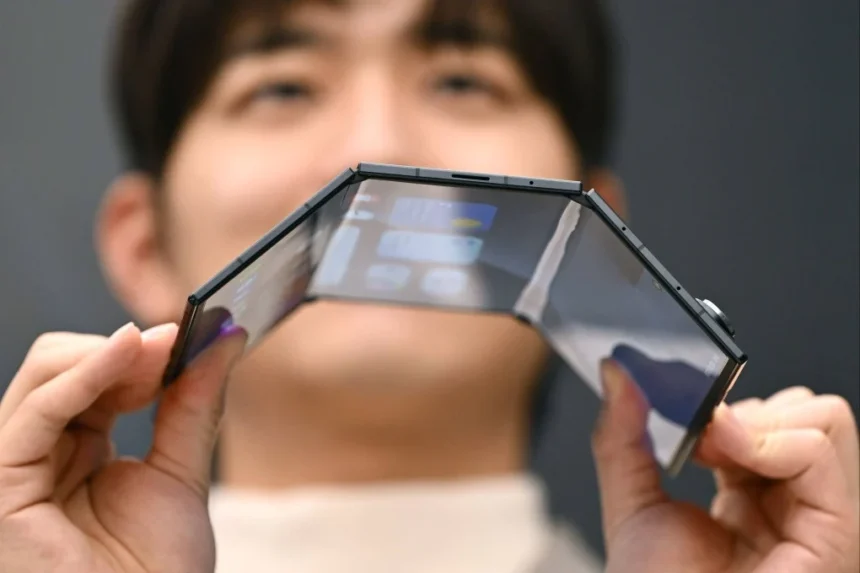
multi-folding smartphone — multi-folding smartphone — Samsung Electronics has made a significant move in the smartphone market by unveiling its first multi-folding device, the Galaxy Z TriFold. This innovative phone aims to solidify Samsung’s position in a rapidly evolving sector where competition is becoming fierce.
- This latest device boasts Samsung's largest battery in its flagship series and supports super-fast charging, allowing users to power the phone to 50 per cent in just 30 minutes.
Multi-folding smartphone: A Bold Step with the Galaxy Z TriFold
Released on Tuesday, the Galaxy Z TriFold unfolds into an impressive 253.1 millimetre (10-inch) display, utilising three panels. Priced at approximately 3.59 million won ($2,440.17), it offers a display nearly 25 per cent larger than the Galaxy Z Fold 7, Samsung’s latest foldable model. This ambitious product launch comes as Chinese competitors continue to gain traction in the foldable market.
Market Expectations and Strategic Vision
Alex Lim, Executive Vice President of Samsung Electronics, expressed optimism about the future of the foldable smartphone market. “I believe the foldable market will continue to grow, and the TriFold in particular could act as a catalyst that drives more explosive growth in key parts of the segment,” he stated. However, Lim clarified that the TriFold is designed for a specific customer base rather than as a mass-market device.
Launch Timeline and Features
Manufactured in South Korea, the TriFold is set to be available for purchase domestically on December 12. It will subsequently roll out to markets in China, Singapore, Taiwan, and the United Arab Emirates within the year, with a U.S. launch anticipated as early as the first quarter of 2024.
This latest device boasts Samsung’s largest battery in its flagship series and supports super-fast charging, allowing users to power the phone to 50 per cent in just 30 minutes.
Challenges and Market Analysis
Despite the excitement surrounding the TriFold, rising costs for memory chips and components have made pricing a challenge, according to Lim. Analysts remain cautious about the new device’s potential impact on the market, likening it more to a showcase of new technology than a high-volume flagship product.
Ryu Young-ho, a senior analyst at NH Investment & Securities, remarked, “The trifold is a first-generation product, and it’s the first time a trifold design is being commercialised, so it’s hard to see Samsung pushing large volumes at this stage.” He noted that while Samsung’s Galaxy Z Fold line has matured over seven generations, the TriFold may face issues relating to completeness or durability.
Competitive Landscape in Foldable Smartphones
The foldable smartphone market is heating up, especially with competitors like Huawei launching their own innovative devices, such as the industry’s first three-way folding phone last September. Analysts predict that Apple will also enter the foldable space next year, further intensifying competition.
According to Counterpoint Research, foldable phones are expected to account for less than 2 per cent of the total smartphone market this year and are projected to reach under 3 per cent by 2027. In the third quarter, Samsung’s shipment share of the foldable segment surged to 64 per cent, a remarkable increase from just 9 per cent in the previous quarter, highlighting the volatility of market share influenced by product launch timing.
Counterpoint forecasts a 14 per cent growth in the foldable smartphone market this year, with annual growth rates in the range of 30 per cent anticipated for 2026 and 2027, particularly as Apple prepares to enter the foldable arena.