reviving landscapes — reviving landscapes — Reviving Europe’s forgotten landscapes is becoming a reality as EU-funded researchers work to transform former coal-mining sites into thriving ecosystems. One notable project is led by Professor Alicja Krzemień, who has taken on the challenge of converting one of Poland’s largest coal-mining waste heaps into a vibrant meadow. The initiative, part of a collaborative effort called RECOVERY, aims to restore barren land and provide long-lasting environmental and social benefits.
- This innovative soil reclamation technique is now being applied at the Velenje mine in Slovenia as part of the GreenJOBS project, which is also EU-funded and set to run until the end of 2025.
Reviving landscapes: Innovative Soil Restoration Techniques
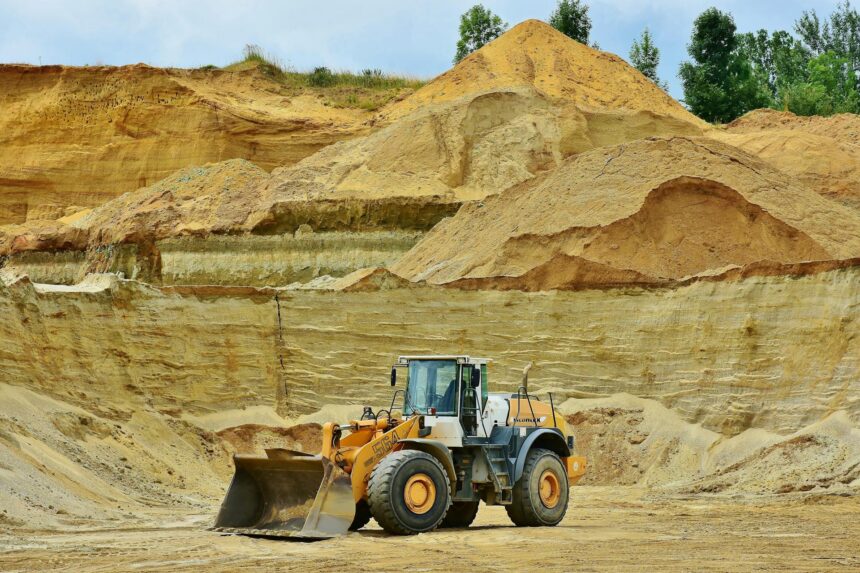
At the Janina mine in Libiąż, southern Poland, Professor Krzemień and her team implemented innovative soil restoration techniques to tackle the harsh conditions of the waste heaps. They introduced soil substitutes designed to improve structure, pH, nutrients, and organic matter, enabling the land to support diverse plant life. One of their initial steps involved sowing white mustard seeds to assess the efficacy of these mixtures.
“First, we waited for the white mustard to grow, to see if it germinates or not,” Krzemień recalled. “Then we saw that some plants were feeling really good in our soil substitutes, growing and flowering.” Within two years, life began to flourish around Janina, with rabbits, insects, and bees returning to the revitalised landscape.
Crucial Funding for Research Initiatives
None of this progress would have been possible without the support of the Research Fund for Coal and Steel (RFCS). Professor Krzemień emphasised the importance of ongoing investment in mining research, particularly as Europe shifts towards renewable energy to meet its climate goals. “At the moment, RFCS is the only funding scheme that is supporting our work in finding tangible solutions that could really have a long-term impact on society,” she stated.
Determining the Best Use for Restored Land
Once the soil is rehabilitated, the next challenge is determining the best use for the land. Should it be converted into a forest, meadow, community space, or even a solar farm? The RECOVERY team has developed a methodology to guide experts and communities in making environmentally sound and financially viable decisions regarding post-mining land use.
“There has to be a good justification for why you’re planning a certain solution after closing the mine,” Krzemień explained. This involves considering which ecosystem would provide the highest value, taking into account local circumstances and community needs.
Linking Ecosystem Services to Economic Value
The researchers have incorporated the concept of ecosystem services into their decision-making process. Ecosystem services quantify the value that nature provides to society, including both tangible products such as timber and crops, as well as less visible benefits like clean air and recreational spaces.
Professor Pedro Riesgo Fernández from the University of Oviedo in Spain articulated how the team has established a method to assign a monetary value to these indirect services. They reference carbon sequestration, the process of capturing and storing CO2 from the atmosphere, as a benchmark.
The pricing for carbon is derived from the EU Emissions Trading System, which requires companies to buy or receive permits for greenhouse gas emissions. This system’s decreasing cap on emissions sets a price for carbon that can be leveraged to quantify the value of restoration efforts.
Tailored Solutions for Local Contexts
Through six case studies involving partners from Germany, Spain, Poland, and Czechia, the researchers have demonstrated how their approach can accommodate local differences and facilitate systematic ecosystem assessments. For instance, at the Figaredo mine in northern Spain, the team evaluated various scenarios after consulting local neighbourhood associations, mining experts, trade unions, and environmental NGOs. They explored options ranging from a pine plantation and cattle farming to solar panels and recreational areas.
Ultimately, the study revealed that converting the area into a cow pasture struck the best balance between ecological and economic considerations. “Nowadays they have cows there, as well as horses,” Riesgo Fernández noted. “Our methodology allows us to perfectly determine the most interesting scenario for a specific place, taking into consideration its characteristics.”
Extending Restoration Methods Beyond Coal Regions
Before determining the optimal ecosystem for a specific site, it is vital to restore the degraded land. The research team has developed a strategy to make the hard, acidic waste heaps typical of post-coal mining areas suitable for plant growth. This involves mixing in by-products from other industries, such as treated waste, crushed stone, or lime to lower acidity, along with natural compost from mushrooms.
This innovative soil reclamation technique is now being applied at the Velenje mine in Slovenia as part of the GreenJOBS project, which is also EU-funded and set to run until the end of 2025.
Future of Land Restoration Initiatives
The findings from these projects are available on the RECOVERY project website, providing detailed best practice guidelines for similar initiatives. Remarkably, the team’s methodology is not limited to coal mining regions; it offers solutions applicable to any area in need of restoration.
“Our methodology is not only for post-mining areas. It is valid for any area in need of restoration, regardless of the reason,” Riesgo Fernández asserted. This shift in approach highlights the potential of innovative nature restoration to yield both social and environmental benefits for local communities and beyond.
As Europe progresses towards climate neutrality, initiatives like RECOVERY pave the way for a greener, more resilient future, demonstrating that revitalising forgotten landscapes can be both environmentally and economically advantageous.