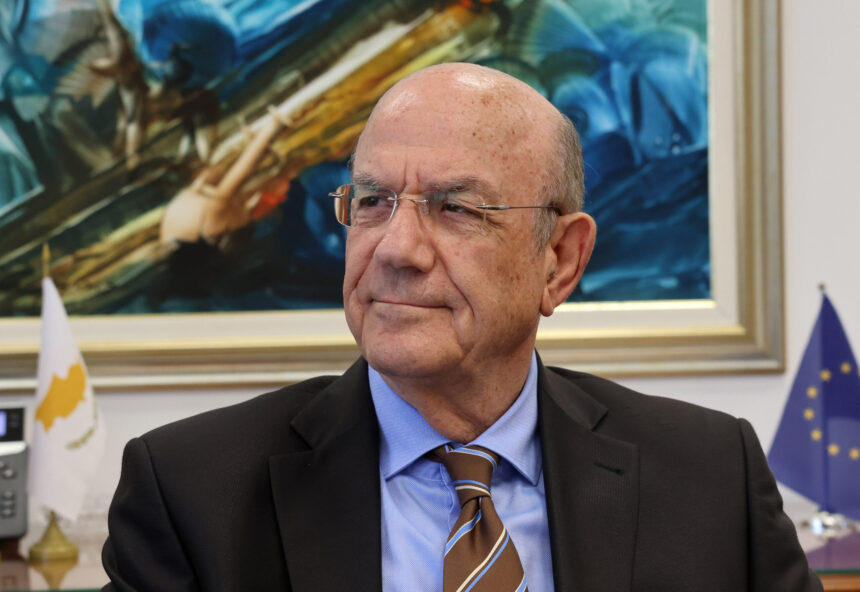
Finance Minister Makis Keravnos addressed the 4th Akel economy forum in Nicosia on Wednesday, showcasing the government’s commitment to a more resilient economy. He outlined major policy plans that focus on housing, climate, and energy as part of a broader strategy aimed at achieving a fairer society and a sustainable future.
Resilient economy: Defending Government Achievements Amid Economic Challenges
During his address, Keravnos defended the government against recent criticisms regarding its management of national issues, echoing sentiments expressed by government spokesman Konstantinos Letymbiotis a day earlier. “We are working concertedly and methodically to turn difficulties into opportunities for a more resilient economy, a fairer society, and a sustainable future for all,” he stated.
Promising Economic Indicators
Despite acknowledging the turmoil in international and European economies, Keravnos emphasised that the Cypriot economy stands out for its resilience and prospects. He noted that Cyprus is among the EU countries with the best fiscal performance, projecting a primary surplus of five per cent. Additionally, the economy is predicted to continue its growth trajectory, reducing public debt as a percentage of GDP to below the 60 per cent threshold by the end of 2025, ahead of the initial target of 2026.
This positive outlook has been recognised by international rating agencies, as Cyprus has returned to the ‘A’ rating category after thirteen years, achieving nine upgrades in the last two years. Keravnos stated that this strong economic foundation enables the government to implement social and developmental policies, particularly in housing and the green transition.
Innovative Housing Strategies
Keravnos addressed the pressing issue of housing, describing it not only as a Cypriot concern but as a challenge across Europe. He cited a European study indicating that housing prices in the EU are projected to rise by 58.33 per cent between 2015 and 2025, with the average household expected to spend 19.2 per cent of its income on housing by 2024.
Despite Cyprus experiencing the second-lowest increase in housing prices in Europe over the past decade, at 13.71 per cent, the minister acknowledged the urgent need for affordable housing. The government’s housing strategy consists of two main pillars: boosting residential stock and facilitating access to housing.
- Boosting residential stock through urban planning incentives, the ‘Build to Rent’ scheme, and the ‘Renovate and Rent’ initiative for vacant homes.
- Facilitating access to housing with targeted schemes for young people, families, and rural areas, alongside rapid digital licensing aimed at expediting permits for simple developments.
Keravnos announced that these programmes are expected to create over 1,900 new housing units, many of which will enter the affordable market.
Commitment to Green Transition
In addressing the climate crisis, Keravnos stressed its significance in shaping development strategies. He outlined the government’s cohesive plan for a green and sustainable Cyprus, in line with the European Green Deal and the goal of achieving climate neutrality by 2050.
The National Energy and Climate Plan (NECP) includes projects valued at €3.5 billion, which could rise to €6.4 billion with European contributions. Key initiatives encompass investments in Renewable Energy Sources, energy upgrades for homes and businesses, and the promotion of e-mobility.
Special attention is given to water projects, with the budget for such initiatives increasing from 32 per cent in 2025 to 38 per cent in 2026, including a €140 million allocation for water purchases from desalination plants—the largest sum ever designated for this purpose.
Balancing Environmental Goals and Economic Competitiveness
Keravnos highlighted the importance of balancing environmental ambitions with economic competitiveness. He noted the EU Council’s recent decision to postpone the implementation of a new Emissions Trading System for buildings and road transport by one year, moving the start date from 2027 to 2028. This delay is accompanied by the establishment of a Social Climate Fund that will provide €65 billion to member states to support citizens during the transition.
For Cyprus, the anticipated total funding for the period from 2026 to 2032 is expected to reach €174 million, with a substantial portion derived from the Social Climate Fund. Keravnos reassured citizens that the government is committed to a people-centred, balanced, and prudent economic policy, stating, “We do not have the right to burden future generations with additional debt or memoranda.”
Encouraging Public Engagement in Economic Policy
In closing, the Finance Minister expressed his belief in the value of forums like Akel’s in generating innovative ideas and proposals that could lead Cyprus towards a more resilient and sustainable future.