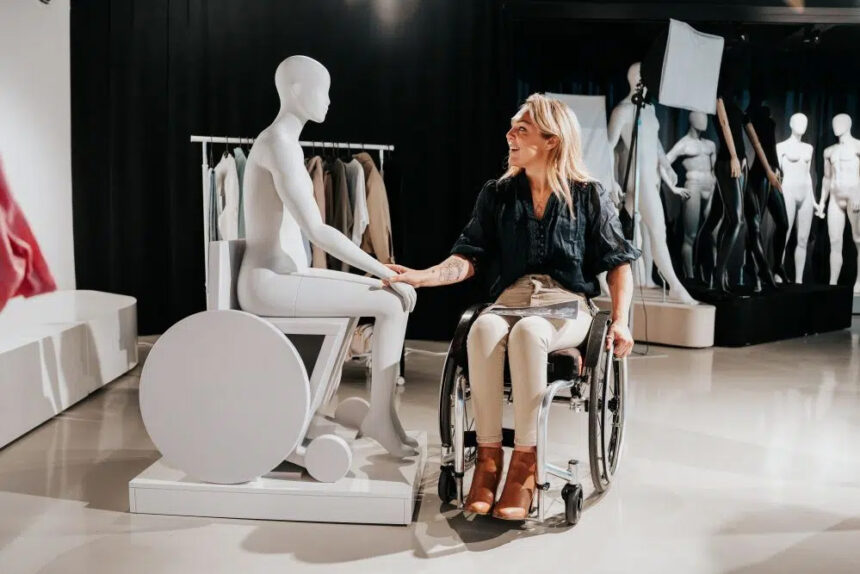
Primark’s wheelchair-using mannequin stands as a significant symbol in the ongoing conversation about disability representation in fashion. July, marked as Disability Pride Month, invites a closer examination of inclusivity and the visibility of disabled individuals within the retail landscape. Despite representing 16 per cent of the global population, disabled people often find themselves sidelined in marketing campaigns, leaving many to question the authenticity of brands that claim to champion diversity.
Wheelchair-using mannequin: A Notable Initiative in Inclusive Fashion
Primark’s recent introduction of a mannequin designed specifically for wheelchair users is a commendable effort towards addressing this gap. Collaborating with disability advocate Sophie Morgan, the mannequin, aptly named Sophie, is now featured in 22 flagship stores around the globe. This initiative exemplifies a forward-thinking approach, yet it raises critical questions about genuine inclusivity versus tokenism in the fashion industry.
Designing for Authenticity
The design journey for this mannequin was extensive, involving a year-long process that included reviewing body dimensions and creating 3D mock-ups. Morgan’s input was pivotal, ensuring that the mannequin authentically represents a manual wheelchair user. The result is a robust model, built to endure the rigours of retail environments, signalling a commitment to meaningful change rather than superficial gestures.
Adaptive Clothing: Expanding Horizons
Alongside the introduction of the wheelchair mannequin, Primark has also expanded its adaptive clothing range, initially launched in January 2025. This collection features practical designs such as magnetic closures and elasticated waistbands, catering specifically to the needs of seated wearers. As a wheelchair user, I can attest to the importance of such thoughtful designs, which are often overlooked in mainstream clothing lines.
Affordability as a Game Changer
One aspect that sets Primark’s initiative apart is its focus on affordability. Traditionally, adaptive clothing has been available mainly through specialised retailers or high-end brands, often out of reach for many disabled individuals. By offering these inclusive options at low price points, Primark could potentially shift the narrative around accessible fashion, making it mainstream.
Visibility in Retail Spaces
Placing the seated mannequin in shop windows and on the sales floor is a strategic move that brings visibility to disabled individuals in the retail sector. This contrasts sharply with previous campaigns by brands like Sainsbury’s and River Island, which, while groundbreaking, primarily existed in advertising and online spaces. Primark’s approach challenges long-standing visual norms and provides disabled shoppers with recognition in the very places they frequent.
Photo: cyprus-mail.com
Three Key Strengths of Primark’s Initiative
- Inclusive Development: The involvement of disabled individuals throughout the campaign’s development is commendable. Morgan’s contributions were not merely symbolic; they played a crucial role in shaping the final product.
- Durability and Mass Production: The mannequin is designed for multiple locations, ensuring that its presence is not just a fleeting marketing gimmick but a lasting change in representation.
- Thoughtful Design Features: The adaptive clothing line includes features often missing from standard offerings, such as seated-friendly fits and access points for medical needs, which enhance dignity in dressing.
Room for Improvement
While Primark’s efforts are noteworthy, there are still significant areas for growth. The mere presence of a mannequin cannot address the physical barriers that exist in many retail environments. Accessibility issues, such as step-free access and automatic doors, continue to hinder the shopping experience for disabled individuals. Without addressing these fundamental challenges, the mannequin risks becoming a symbol that is disconnected from the reality faced by many.
Expanding the Adaptive Range
Moreover, the current range of adaptive clothing remains limited. To truly cater to the diverse needs of disabled shoppers, Primark should consider expanding its offerings to include a broader variety of styles and sizes. This would prevent disabled individuals from being relegated to choosing from a selection of functional basics.
Broader Representation and Future Directions
Representation in disability campaigns must also reflect the diversity within the community. Disability comes in various forms, and future initiatives should encompass this range. Additionally, true inclusion should extend beyond visual representation to encompass hiring practices and customer service. Employing more disabled staff and creating accessible roles within retail would shift the focus from mere imagery to operational reality.
The Path Ahead
While there are promising developments within Primark’s initiative, it is essential to remember that the journey towards genuine inclusivity in fashion is ongoing. Long-term commitments to improving store accessibility, diversifying representation, and enhancing hiring practices are crucial. Without these efforts, there is a risk that Primark’s actions may be perceived as performative allyship, which could harm both its brand and the disabled community.
Ultimately, Primark’s wheelchair-using mannequin may not be a revolutionary change, but it stands as a powerful symbol advocating for visibility and inclusion. It sends a clear message that disabled individuals deserve to be seen not as an afterthought, but as valued participants in society. For meaningful transformation, visibility must be accompanied by tangible access and systemic change in the retail landscape.