Preparing young people for an evolving future is at the heart of the UK’s proposed post-16 education and skills policy, which aims for a nation where nobody is left behind. The modern industrial strategy 2025 envisions a workforce equipped for growth, green jobs, and the integration of artificial intelligence. Yet, amid this ambitious rhetoric lies a challenge: how do we truly prepare students for a world in flux?

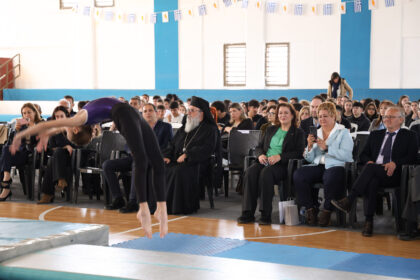
Photo: cyprus-mail.com
- Perhaps what this moment calls for is a revival of wonder in education. By championing curiosity and ethical reasoning, we can prepare young people not just for the workforce but for life itself.
Preparing young: Education Beyond Employment
Education should transcend the mere production of employable individuals; it must foster holistic human development, nurturing judgement, imagination, and active democratic participation. Without a clear moral framework, our forward momentum may become little more than acceleration without a sense of direction.
The Wisdom of the Past
Albert Einstein, in 1949, poignantly stated that it is miraculous modern instructional methods have not entirely stifled the innate curiosity of inquiry. Fast forward more than seventy years, and his words resonate as a stark warning. Many UK universities now prioritise metrics, policies, and dashboards, while students grapple with anxiety and burdensome debt.
Educational reformers like John Dewey viewed education as a vital part of life itself, while Paulo Freire warned against a model where students merely absorb facts without engaging in critical thinking. Bell hooks celebrated education as a practice of freedom. These thinkers laid out blueprints for a meaningful educational experience—ones that recognise that education is not just training but a transformative journey.
The Language of Learning
Today, however, the discourse around education has become transactional. Students are labelled as “learners,” and teachers as “deliverers,” while curiosity is often sidelined in favour of key performance indicators. The challenge is that we are crafting a system that measures everything except the true essence of learning.
Recent revelations suggest that Amazon may replace hundreds of thousands of jobs with automation, highlighting a labour market where efficiency could outpace employment opportunities. With this reality, the pressing question for higher education is: what are we preparing young people for?
Preparing for the Uncertain Future
The answer cannot simply be “the jobs of tomorrow”, as those roles may not even exist. Instead, our focus should shift towards cultivating adaptability, creativity, and moral judgement—qualities that no algorithm can replicate. As Hannah Arendt noted, education is where we decide whether we love the world enough to take responsibility for it. This is the work that lies ahead.
Building Capable Citizens
We must strive to produce not only employable graduates but capable citizens—individuals who can think ethically, collaborate across cultures, and create meaning in an increasingly automated world. Higher education must reclaim its position as a forum for society’s most pressing questions. What is the true purpose of progress? What does prosperity mean without dignity? How can we flourish—or even matter—in an age dominated by intelligent machines?
Challenging the Status Quo
Universities worldwide are proclaiming the need for transformation, yet the question remains: how many are truly embracing change? Despite the rhetoric of innovation, many institutions are still tethered to outdated teaching models and governance structures.
However, a new wave of institutions is emerging, challenging conventional notions of what a university can be. The “challenger university” model, exemplified by Minerva University in the US and the London Interdisciplinary School in the UK, is beginning to dismantle long-held assumptions about education and its purpose. These institutions view the world as their campus, integrating digital learning, experiential education, and global perspectives to centre learning around curiosity instead of compliance.
Redefining the University Experience
Traditional universities are gradually adapting, introducing accelerated degrees and hybrid formats that embed experiential learning within their cities. At Royal Holloway Business School, for instance, the BSc Business and Management (London Accelerated) programme transforms London itself into a classroom. Students collaborate with businesses on projects that marry innovation with ethical considerations, learning to engage with artificial intelligence as a creative partner rather than a threat.
Courses with Purpose
This approach is not merely about survival; it’s about significance. It teaches that employability is a byproduct of imagination, which springs from a sense of purpose. Central to this is the courage of moral imagination—the ability to envision not only alternative futures but also better ones.
A Fork in the Road for Higher Education
Higher education stands at a critical juncture. One path leads deeper into optimisation, with faster courses and tighter metrics aligned closely with industry demands. The other path suggests a return to truth, curiosity, and moral imagination. While the first route may seem safer, it risks becoming devoid of soul. The second path, though uncertain, is full of potential and vibrancy.
Perhaps what this moment calls for is a revival of wonder in education. By championing curiosity and ethical reasoning, we can prepare young people not just for the workforce but for life itself.
Lucy Gill-Simmen is Associate Dean (Education & Student Experience) at the Faculty of Business & Law, Royal Holloway, University of London. This article is republished from The Conversation under a Creative Commons licence.