Political parties are facing unprecedented uncertainty as they prepare for the 2026 parliamentary elections, with the political landscape more fluid and unpredictable than ever before.
- Political parties are facing unprecedented uncertainty as they prepare for the 2026 parliamentary elections, with the political landscape more fluid and unpredictable than ever before.
- The dynamic nature of the current political scene demands adaptability from all parties involved, as they navigate a landscape marked by uncertainty and shifting allegiances.
According to party sources and political analysts, this unprecedented climate has made it challenging for parties to establish coherent strategies. Voter fluidity has reached extraordinary levels, leaving leaders scrambling to adapt.
Unprecedented uncertainty: Challenges in Candidate Selection
In light of this uncertainty, party leadership teams are focusing on assembling their candidate lists. The emphasis is on recruiting individuals who possess significant recognition and popularity, whether broadly across the electorate or specifically within target demographics.
For months, party leaders have been on the lookout for strong candidates, a task made more complicated by the current political dynamics. Internal transfers and party movements have garnered considerable attention, indicating a shift in voter allegiance.
The cases of Giorgos Pamporidis and Anastasia Anthousi for DISY’s Nicosia ballot highlight this trend. Both candidates are seen as “returns” to the party, appealing to a segment of Nicosia’s urban society that has felt disconnected from DISY.
Prominent Names in the Mix
Among the leading candidates for DISY is retired Brigadier Paris Markou, whose family history resonates deeply with the party’s base. His candidacy in Famagusta comes at a critical time, as the party has faced challenges from ELAM.
Another example is Andreas Apostolou, whose potential switch to DIKO’s ballot underscores the ongoing movement within the political landscape. Having previously secured a top position in the European elections, his shift reflects the increased mobility among party ranks.
The Crucial Role of Parliamentary Leadership
As the elections approach, the election of the Parliament President will be a key moment, signalling potential alliances that could develop ahead of the presidential elections. The results of the parliamentary elections will shape the political landscape, determining the strength of various parties.
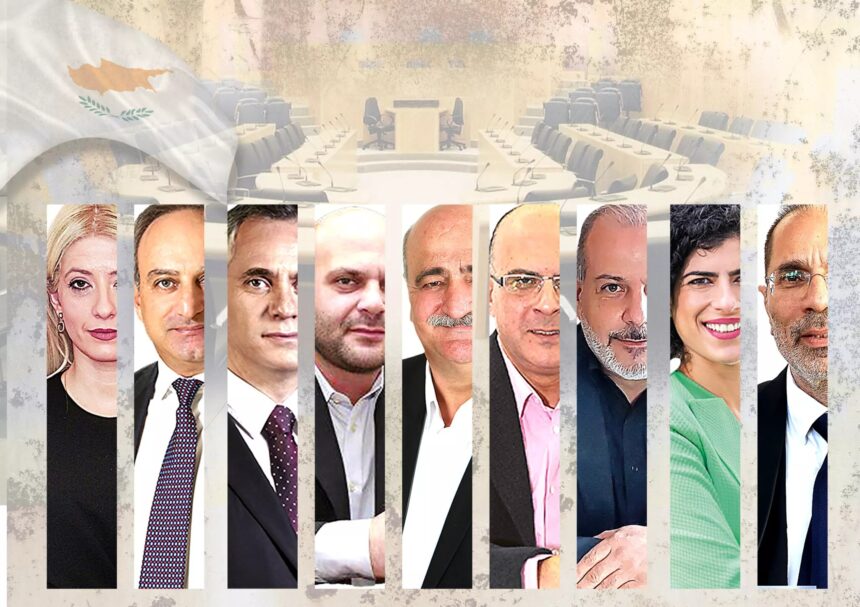
Names such as Annita Dimitriou, Stefanos Stefanou, and Nikolas Papadopoulos are already being discussed in connection to the Parliament’s leadership. Speculation about coalition formations between centre-right parties, as well as the possibility of cooperation among AKEL, the ALMA Movement, and the Greens, adds another layer of intrigue to the unfolding scenario.
Electoral Aspirations and Strategies
At DISY, the primary goal is to maintain its position as the leading party, even if this means accepting a percentage loss. The specifics of that lead and the distance from competitors will be critical metrics.
In contrast, AKEL is cautious about openly aiming for first place, although there is a belief among some within the party that it is achievable under certain conditions. Their main focus remains on maintaining or improving upon the 22.34% they garnered in the 2021 elections.
ELAM aims to stay above the 10% mark, positioning itself as a regulatory force in Parliament, while DIKO strives for double-digit percentages to assert its influence. The ALMA Movement’s Odysseas Michaelides is also eyeing parliamentary entry as a foundation for his presidential ambitions.
The Importance of Upcoming Polls
The coming months will be pivotal, with the first post-summer opinion polls expected to shed light on shifting voter intentions. As parties finalise their candidate lists by the year’s end, clearer patterns of electoral behaviour are likely to emerge.
The dynamic nature of the current political scene demands adaptability from all parties involved, as they navigate a landscape marked by uncertainty and shifting allegiances.