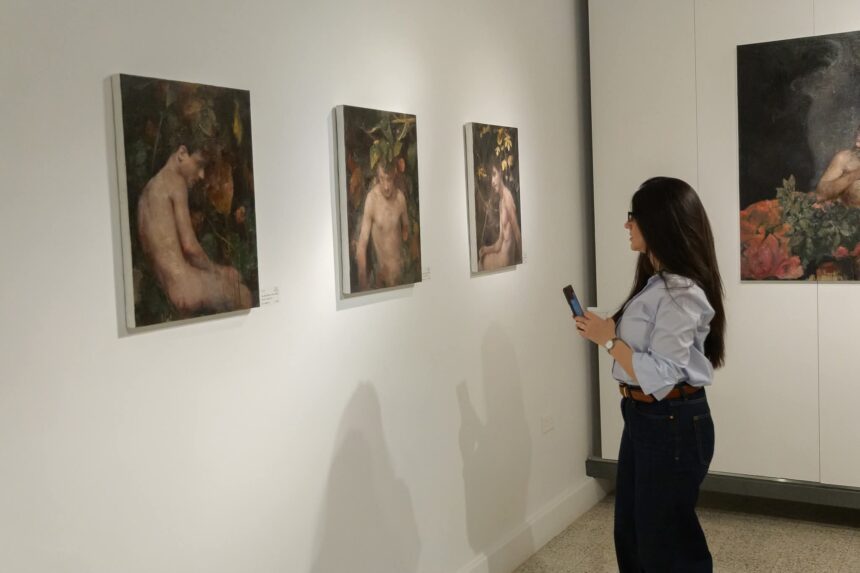
religious symbols — The recent cancellation of an art exhibition in Paphos has sparked significant debate, primarily due to the controversial portrayal of Orthodox Christian symbols. The Blue Iris gallery made the decision on Sunday after receiving backlash over works by artist Giorgos Gavriel, whose paintings depict Christ and the Virgin Mary in ways that critics have labelled blasphemous.

Photo: cyprus-mail.com
Disy MP Efthymios Diplaros voiced strong opposition, stating, “The Blue Iris gallery is exhibiting works that deliberately desecrate Christ, the Virgin Mary, and the most sacred symbols of the Orthodox faith. This is blatant blasphemy, not art.” He further emphasised that invoking “freedom of expression” as a justification for such depictions is a “cheap excuse for offending the religious conscience of millions of believers.”
The Blue Iris gallery released a statement acknowledging the controversy, explaining that the exhibition had provoked “opposition from a section of society” and asserting that the decision to cancel was made to avoid further unrest. The gallery expressed no intention to offend or disrespect any religion and reiterated its commitment to promoting art and culture.
House President Annita Demetriou also condemned the exhibition, expressing her revulsion towards what she described as “works of art that brutally offend the symbols of our people’s faith.” She insisted that freedom of expression should not serve as an excuse for vulgarity and highlighted the problematic nature of the political exploitation of the issue by the Elam party, calling it “equally obscene.”
Paphos mayor Phedonas Phedonos described the artworks as “unacceptable” and “provocative.” He remarked, “Freedom of expression is one thing, but there are limits to everything. They cannot provoke the religious feelings of the majority of the people in such a brutal way.” Phedonos pointed out that there is currently no review process before artworks are displayed in galleries.
The political party Diko also weighed in on the matter, labelling Gavriel’s paintings as “an abomination” and accusing the artist of attempting to shock the public for self-promotion and financial gain. They stated, “Our religious symbols are not to be exploited for financial gain or desecrated. Insult and disrespect are not art; in this case, they are not free expression, but simply toxicity and hatred towards everything our society considers sacred and holy.”
This incident has not only raised questions about artistic freedom but has also highlighted the sensitivities surrounding religious beliefs in Cyprus. As the debate continues, it remains to be seen how the local community will navigate the balance between freedom of expression and respect for deeply held convictions.