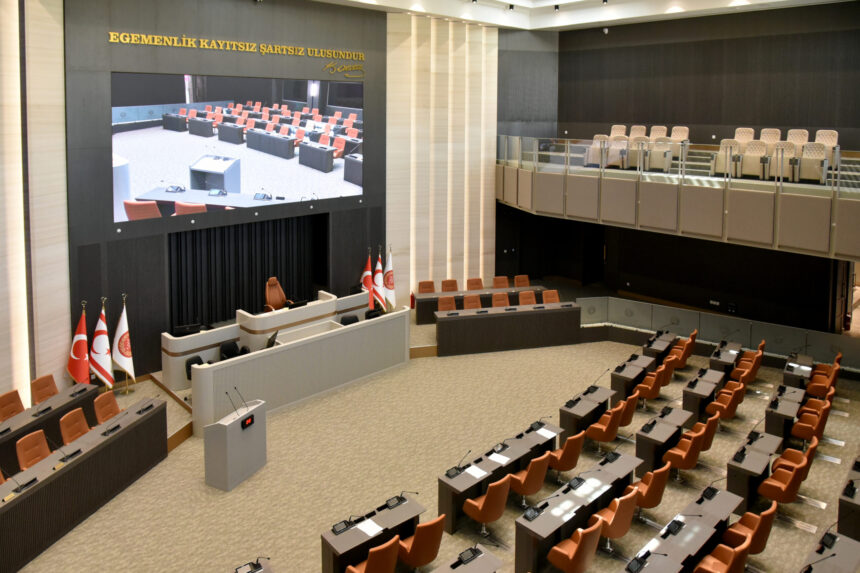
north parliament — The north’s parliament could not be opened for business on Tuesday due to a lack of members, with the ruling coalition pointing fingers at the opposition for the disruption.

Photo: cyprus-mail.com
- north parliament — The north’s parliament could not be opened for business on Tuesday due to a lack of members, with the ruling coalition pointing fingers at the opposition for the disruption.
North parliament: Failure to Meet Quorum
A minimum of 26 members are required for the parliament to convene, but only 25 members from the ruling coalition were present, resulting in a failed session. The coalition, which includes the UBP and DP parties, accused the opposition, specifically the CTP, of intentionally boycotting proceedings.

Photo: cyprus-mail.com
Absences from the Ruling Coalition
Four members of the ruling coalition were absent from the chamber. Deputy Prime Minister Fikri Ataoglu and Energy Minister Olgun Amcaoglu were attending official business abroad, while backbenchers Resmiye Canaltay and Ahmet Savasan were on holiday. This absence contributed to the coalition’s inability to reach the necessary quorum.
Political Blame Game
The ruling coalition swiftly blamed the opposition for the disruption. Finance Minister Ozdemir Berova expressed his dissatisfaction with the CTP’s decision to boycott, labelling it “unprecedented in history.” He stated, “The CTP is doing extraordinary things now it has been left without a leader,” referring to Tufan Erhurman’s recent departure from the party following his election as the Turkish Cypriot leader.
Opposition’s Justification
Responding to the accusations, CTP member Sila Usar Incirli explained that their boycott was a strategic decision aimed at pushing for early legislative elections. “The Turkish Cypriot people have made a clear call for change,” she said, criticising the current government led by Prime Minister Unal Ustel. Incirli argued that the coalition is ignoring the public’s demand for an election, which she believes reflects a wider desire for democracy and reform.
Historical Context of Boycotts
Devrim Barcin, another CTP member, countered Berova’s claims of an unprecedented boycott by recalling a similar situation in 2017 when the UBP, then in power, refused to enter the chamber. He stated that the UBP had deliberately failed to provide enough members for a parliamentary session at that time, suggesting that the current situation is not without precedent.
Calls for Early Elections
The call for early elections has gained traction among opposition parties, with CTP’s Secretary-General Erkut Sahali advocating for a vote to be held on March 22, nearly 11 months earlier than the latest possible date, which is February 2027. Sahali argued that the current government must be held accountable and that fresh elections are essential for the future of the Turkish Cypriot community.
Ongoing Parliamentary Challenges
This inability to convene is not an isolated incident; it follows delays in the previous session on Monday, where proceedings were postponed for three hours due to three UBP members refusing to enter the chamber. Those members—Izlem Gurcag Altugra, Ali Pilli, and Hasan Tacoy—are former ministers who have expressed dissatisfaction with Prime Minister Ustel’s leadership. Altugra has stated she will boycott sessions until Ustel resigns.
Prime Minister’s Stance
During the tumultuous Monday session, Prime Minister Ustel dismissed calls for an early election, stating that the UBP is always prepared for elections. “The election date is January 2027, but if conditions improve in 2026, we will meet with our partners and discuss the prospect,” he claimed, indicating a reluctance to entertain any immediate changes.
The Public’s Role
As the political landscape remains contentious, the voices of the Turkish Cypriot people are becoming increasingly important. The opposition is positioning itself as the voice of change, while the ruling coalition is accused of ignoring public sentiment. This ongoing standoff reflects deeper issues within the political framework and the urgent calls for reform among the electorate.