Nicosia’s new student residences have been successfully completed with funding from the European Union, marking a significant milestone in Cyprus’s Recovery and Resilience Plan. The country has received a total of €568 million from the EU’s Recovery and Resilience Facility (RRF), with more financial support on the horizon.
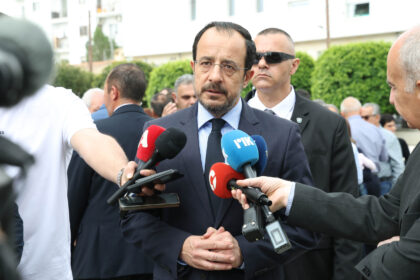
During the inauguration of these residences, Finance Minister Makis Keravnos highlighted that the Recovery and Resilience Plan aims to inject around €1.2 billion into Cyprus by 2026. This funding is being channelled through 135 measures, reforms, and investments across five policy axes, involving over 70 public sector bodies and targeting 271 milestones and objectives.
Keravnos noted that Cyprus has already secured €568 million through the first five grant tranches and pre-financing, which equates to 53% of the total available grants. Currently, the European Commission is evaluating a request for the sixth tranche, valued at approximately €61 million.
Student residences: Revitalising Nicosia’s Inner City
The new student residences are part of a broader initiative aimed at the regeneration and revitalisation of Nicosia’s Inner City, which carries a budget of €18 million (excluding VAT). This initiative encompasses two primary components: the purchase and renovation of buildings to convert them into student dormitories, led by the Municipality of Nicosia, and a grant scheme for transforming existing rooms into student accommodation, managed by the Department of Town Planning and Housing.
The budget allocation for these components is €7 million for the renovation of buildings and €11 million for the grant scheme. Keravnos described the dormitories as a “model of effective utilisation of state and European funding,” emphasizing the collaboration between the government, local authorities, and the academic community that resulted in significant social benefits.
Addressing Housing Challenges for Students
In his address to students and their families, Keravnos acknowledged the financial challenges many face in securing affordable housing amidst rising living costs. He reiterated the government’s commitment to alleviating these burdens, stating, “The government’s priorities are to relieve you in various ways from the financial burden, both for you and your families.”
Keravnos expressed pride in inaugurating a project that demonstrates the government’s support for the younger generation. He reinforced the notion that investments in education are crucial, calling education “an investment in human capital, the most valuable asset of our small homeland.”
Broader Development Initiatives in Nicosia
Beyond the student housing project, the Recovery and Resilience Plan supports several other development initiatives in Nicosia. One notable project is the urban flood protection scheme, which has a budget of €14 million aimed at enhancing the city’s infrastructure to mitigate flood risks.
Progress has been made in various areas, including Ayios Antonios, Lycabettus, Trypiotis, Ayioi Omologites, and central Nicosia, with further construction expected to conclude by August 2026 in Pallouriotissa and the city centre.
Keravnos also highlighted the synergies between European funding sources and the Cohesion Policy Programme ‘Thaleia 2021–2027’, under which ten projects worth €73 million are being implemented in the expanded Municipality of Nicosia. These projects include the transformation of the old municipal market into a research and innovation centre, the development of smart city infrastructure, and the revitalisation of the creative enterprise district.