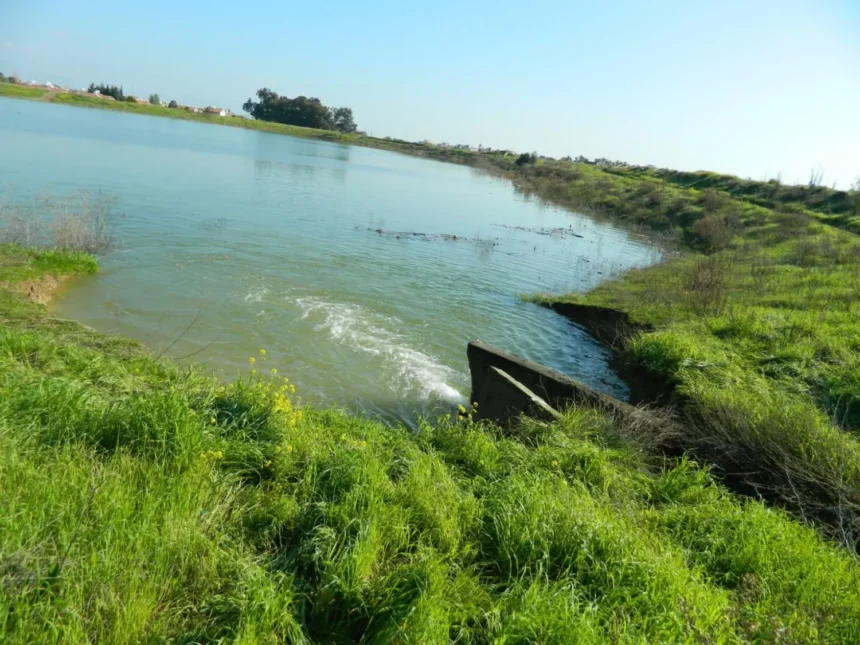
magkli lake — Magkli Lake in Lakatamia remains under private ownership because state services failed to follow Cabinet instructions meant to bring the ecological landmark into public hands. A Cabinet decision made in 2011 aimed to gradually transfer the lake to state ownership, stipulating that whenever the owners developed adjacent plots, they would have to surrender land for public green space, effectively “crediting” this against the lake area until the entire basin was publicly owned.

Photo: in-cyprus.philenews.com
- Moreover, declaring the site a protected area would prevent any building on the land but would not resolve the ownership or management issues, as it would remain privately owned.
However, this plan has faltered. In a recent parliamentary session, Interior Minister Constantinos Ioannou disclosed that the specific condition required for the lake’s transfer was never imposed on the planning permits issued for land divisions in the surrounding residential zones, known as Ka6 and Ka8. This oversight has allowed the lake to remain in private hands, complicating its management and access.

Photo: in-cyprus.philenews.com
The lake currently consists of three private plots within a designated protection zone, with the Kykkos Monastery holding the majority share. This arrangement means that neither the local municipality nor the state can effectively manage the site, leaving it vulnerable to neglect.
The Interior Ministry has since explored various options to resolve this impasse, following discussions with Lakatamia Municipality and the Environment Commissioner. One proposed solution was a land exchange, trading the lake for state land. However, this option appears unlikely to succeed; the low financial value of the lake plots makes an equitable exchange unattractive for the owners.
Another avenue considered was compulsory acquisition, but this too faces hurdles. Without the Church’s consent, which owns most of the land, this approach is deemed unfeasible. Even if consent were obtained, valuing the land appropriately presents its own challenges.
Moreover, declaring the site a protected area would prevent any building on the land but would not resolve the ownership or management issues, as it would remain privately owned.
In light of these obstacles, Minister Ioannou indicated that amending the Nicosia Local Plan might be the most viable route forward. This amendment would create new provisions to facilitate the lake’s transition to public ownership during the upcoming plan review, potentially revitalising efforts to protect this ecological asset for the community.