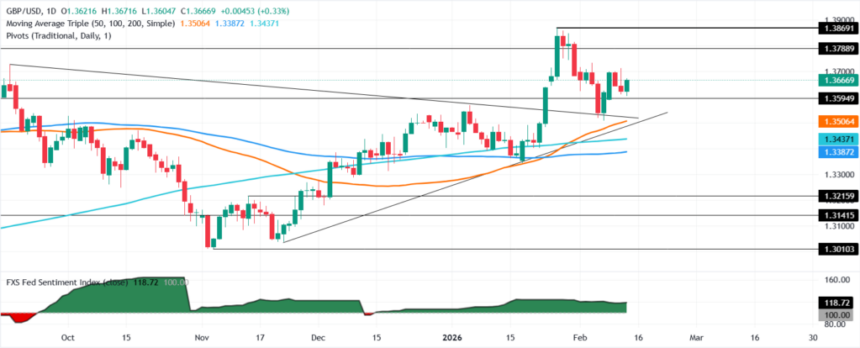
The recent jobless claims data has dented the dollar, influencing traders’ sentiment as the Pound Sterling gained traction against it. During the North American session on Thursday, GBP/USD rose to 1.3664, marking an increase of 0.28%. This uptick comes despite disappointing economic figures from the UK, which showed a weaker-than-expected performance.
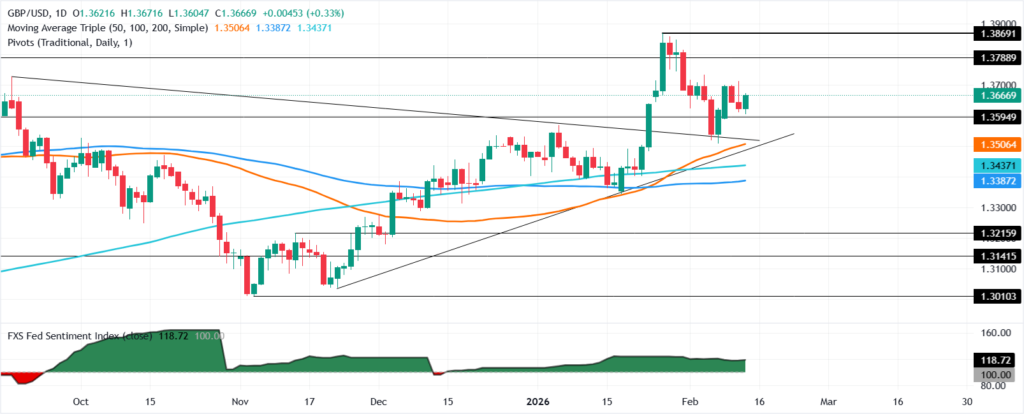
Photo: financialmirror.com
The Initial Jobless Claims report from the US Department of Labor revealed that claims for the week ending February 7 rose to 227,000, surpassing forecasts of 222,000 and representing a slight increase from the previous week’s 232,000. While this rise in claims suggests a softening labour market, the four-week average remains around 219,500, indicating some level of stability.
In contrast, the US economy had recently posted a strong nonfarm payrolls report, indicating the creation of over 130,000 jobs in January. This surge saw the unemployment rate dip below the Federal Reserve’s 4.5% estimate for 2026. However, the latest jobless claims data has cast a pall over the dollar, prompting investors to reassess their positions.
Across the Atlantic, the UK’s gross domestic product (GDP) figures for Q4 2025 showed a year-on-year growth decline from 1.2% to 1%, falling short of expectations. The quarterly growth rate remained unchanged at 0.1%, below the anticipated 0.2% increase. This disappointing performance has led to heightened speculation regarding potential interest rate cuts by the Bank of England (BoE).
Market sentiment is currently pricing in a 70% chance of a rate cut at the BoE’s meeting on March 19, as indicated by data from Prime Market Terminal. The combination of weak GDP growth and declining inflation figures has led investors to believe that a more accommodative monetary policy may be on the horizon.
Nick Rees, Head of Macro at Monex, remarked on the political uncertainty surrounding the UK economy, suggesting that ongoing speculation about Labour leader Keir Starmer could further complicate the pound’s outlook. The implications of political developments could weigh heavily on GBP as traders await further cues.
As traders look ahead to Friday’s US inflation figures, the focus will also be on remarks from the BoE’s Chief Economist, Huw Pill. Preliminary figures suggest that the UK economy lost momentum towards the end of 2025, adding to the pressure on the BoE to act.
In the Eurozone, attention shifts to upcoming GDP data expected to show a quarterly growth of 0.3% for the fourth quarter, consistent with previous readings. On an annual basis, GDP is projected to rise by 1.3%, slightly down from 1.4% previously. ECB policymakers have offered a cautiously optimistic outlook, with comments suggesting that inflation is on target and economic growth is expected to remain steady.
François Villeroy de Galhau stated that the Eurozone’s economic growth in the first quarter should align with an annual growth rate of approximately 1% for 2026. In addition, Gabriel Makhlouf highlighted the ECB’s current stability, with expectations of holding the deposit rate at 2.0% through 2026, as indicated by a recent Reuters poll.