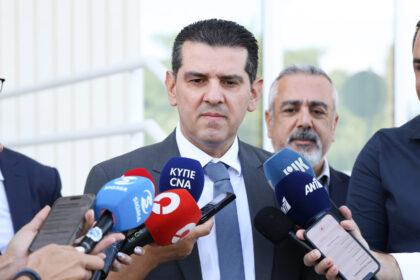
The effects of artificial intelligence (AI) on democracy and society were the focal points of a recent discussion held by the House institutions committee.
- The effects of artificial intelligence (AI) on democracy and society were the focal points of a recent discussion held by the House institutions committee.
Concerns Over AI Influence on Elections
During the session, which took place on Wednesday, attending members of parliament (MPs) expressed significant concerns regarding Cyprus’ readiness to combat potential interferences via AI, particularly during election periods. The fear of external influence on information disseminated through AI applications was a predominant theme.
Call for Protections and Regulations
Committee chairman and Disy MP Demetris Demetriou urged the government to implement effective protection mechanisms for users. He highlighted the necessity for control measures regarding the use of AI technology in public discourse and electoral processes.
Legislative Amendments Needed
Vasiliki Triga, a university professor specialising in political communication, stressed the importance of updating current legislation to address the new challenges posed by the increasing use of AI. She warned that tools like ChatGPT should not be relied upon for unbiased information gathering, as they often reflect inherent biases.
Ongoing Regulatory Efforts
An official from the digital policy directorate of the deputy ministry of innovation stated that efforts to regulate AI are already in progress. The relevant EU regulation is currently under discussion at both national and European levels, especially in light of Cyprus’ forthcoming EU Council Presidency.
Study on AI Implementation
The ministry representative also revealed that a study had been initiated to evaluate the current state of AI implementation on the island. This study aims to identify stakeholders involved in AI and support the creation of a national legal framework for its use, with a preliminary version already drafted.
Timeline for Legislative Action
The official presentation of the comprehensive AI regulation bill is scheduled for March 2026. In the meantime, Maria Stylianou-Lottides, the commissioner for administration and human rights, along with Maria Christofidou, the information and personal data protection commissioner, have been appointed as supervisory authorities for regulatory matters concerning AI.
Progress in Supervision and Implementation
Officials from the Radio-Television Authority, responsible for ensuring compliance with the provisions outlined by the EU’s digital services act, indicated that measures to facilitate the regulation of AI are advancing. They reported that the regulation is currently under review, with procedures being drafted to address the issues raised.
Creating a Register of Supervised Entities
Additionally, plans are underway to establish a register that will list entities subject to supervision under the new regulation. This measure is aimed at enhancing transparency and accountability in AI usage.
Importance of News Literacy
Nikolas Karydis, a representative from the Institute of Mass Media (IMME), highlighted the human aspect of AI, stressing the need for news literacy among the public. He pointed out that both young people and the elderly must be equipped with the skills to discern fake news, particularly as social media continues to play a significant role in information dissemination.
Promoting Digital Literacy in Education
Thanasis Tsokos, director general of CyBC, stated that the broadcaster is committed to promoting digital literacy from a young age. He advocated for the development of courses that would teach users about the risks and opportunities presented by AI, suggesting that such proposals should be integrated into the education ministry’s curriculum.
Survey Findings on Information Sources
A survey conducted by the Union of Cyprus Journalists in early October revealed that television and social media remain the primary sources of information for 72 per cent of the public. Notably, 44 per cent of respondents identified misinformation and fake news as major concerns. In terms of alternative sources, online portals accounted for 45 per cent, while radio followed closely at 43 per cent. Print media lagged behind at just 15 per cent, with Greek and foreign press comprising only 10 per cent and 9 per cent, respectively.