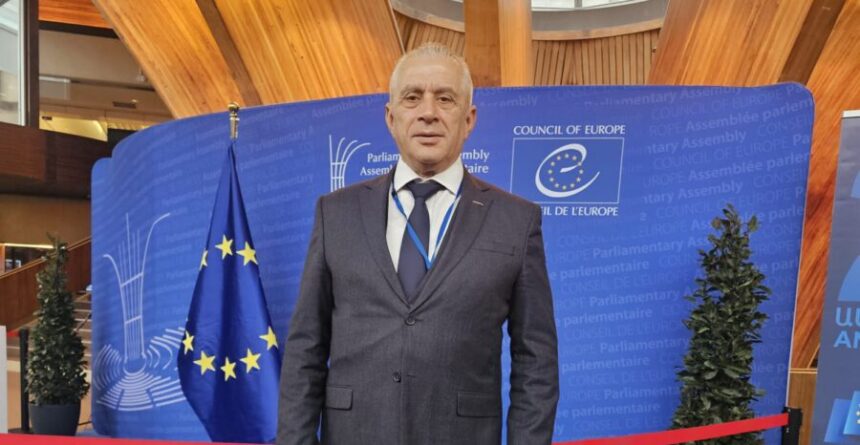
Hasan Tacoy has called for European Parliament seats for Turkish Cypriots during a recent press conference. The Turkish Cypriot non-voting representative at the parliamentary assembly of the Council of Europe emphasised the need for designated seats for the Turkish Cypriot community in the forthcoming elections, scheduled for 2029.
Turkish cypriots: Calls for Separate Representation
In his address, Tacoy highlighted the historical context of representation in Cyprus. He stated, “Just as the referendum was held on two separate sides, this election should also be held on two separate sides.” This statement refers to the 2004 Annan Plan referendum, which sought to reunite Cyprus but was ultimately rejected.
Proposed Model for Elections
According to Tacoy, the right of Turkish Cypriots to representation should not be based on the current voting methods. Instead, he advocates for a “direct and separate election model” that would reflect the distinct will of the two communities on the island. He argues that this model would be more equitable and representative of the Turkish Cypriot population’s desires.
Current Voting Landscape
Turkish Cypriots who are citizens of the Republic of Cyprus and reside on the island are automatically registered as voters for European Parliament elections. In the most recent elections held in 2024, 104,103 Turkish Cypriots were registered to vote. Of these, 103,269 lived in the northern part of the island, while 834 resided in the Republic.
Absence of Designated Seats
Despite these figures, Cyprus’ six seats in the European Parliament are not allocated to any specific community. This contrasts sharply with the Republic of Cyprus’ constitution, which designates a proportion of public roles for Turkish Cypriots. For instance, 30 per cent of MPs were intended to be Turkish Cypriots, alongside guarantees for mayoralties and the vice presidency, as outlined in the 1960 constitution.
Historical Context of Representation
The Turkish Cypriot community lost access to these roles in 1963 when they were ejected from public office within the republic. The Annan Plan envisioned a new distribution of public roles, including the allocation of two of the six members of the European Parliament to Turkish Cypriots. However, the rejection of the Annan Plan in the 2004 referendum meant that this proposal never materialised.
Current Election Practices
As it stands, the six Members of the European Parliament (MEPs) from Cyprus are elected without regard to community affiliation. Due to the ongoing division of the island, polling stations for the elections are only established in the Republic, complicating the voting process for Turkish Cypriots. Consequently, Turkish Cypriot political parties do not participate in these elections.
Limited Turkish Cypriot Representation
To date, only one Turkish Cypriot candidate, Niyazi Kizilyurek from the Akel party, has been elected to the European Parliament. Other candidates, including Hulusi Kilim from the Volt party and Oz Karahan from the Ecologists’ Movement, have stood for election but without success. This lack of representation has been a point of contention within the Turkish Cypriot community.
Upcoming European Parliament Elections
The next European Parliament elections are set to take place from June 7 to June 10, 2029, with Cyprus specifically scheduled to vote on June 10. As the date approaches, calls for reform regarding Turkish Cypriot representation are expected to intensify, with advocates like Tacoy pushing for change.
Implications for the Turkish Cypriot Community
Advocates for Turkish Cypriot representation argue that a dedicated parliamentary seat would empower the community and ensure their voices are heard in European governance. The absence of such representation is seen as a continuation of historical injustices faced by the community since the 1960s.
Looking Ahead
As discussions surrounding the upcoming elections gain momentum, the issue of representation remains critical for the Turkish Cypriot community. With the potential for seats specifically allotted to their representatives, the community hopes to address the disparities in political representation and engage more actively in European matters.