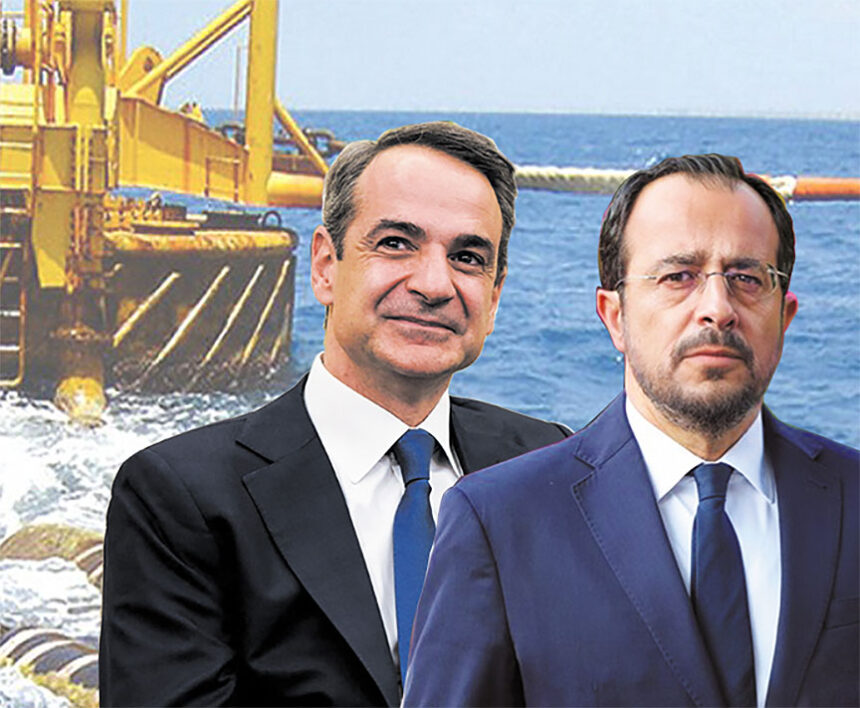
This week, the Great Sea Interconnector (GSI) found itself entangled in complex issues beyond its viability, as tensions escalated into an information war.

Photo: cyprus-mail.com
- This week, the Great Sea Interconnector (GSI) found itself entangled in complex issues beyond its viability, as tensions escalated into an information war.
Greek Prime Minister Kyriakos Mitsotakis publicly urged Cyprus to uphold its financial commitments, while Cyprus’ Finance Minister Makis Keravnos reiterated his reservations about the project. Compounding these tensions, media reports have surfaced suggesting that Greek Foreign Minister Giorgos Gerapetritis, a strong proponent of the GSI, may be linked to a potential conflict of interest.
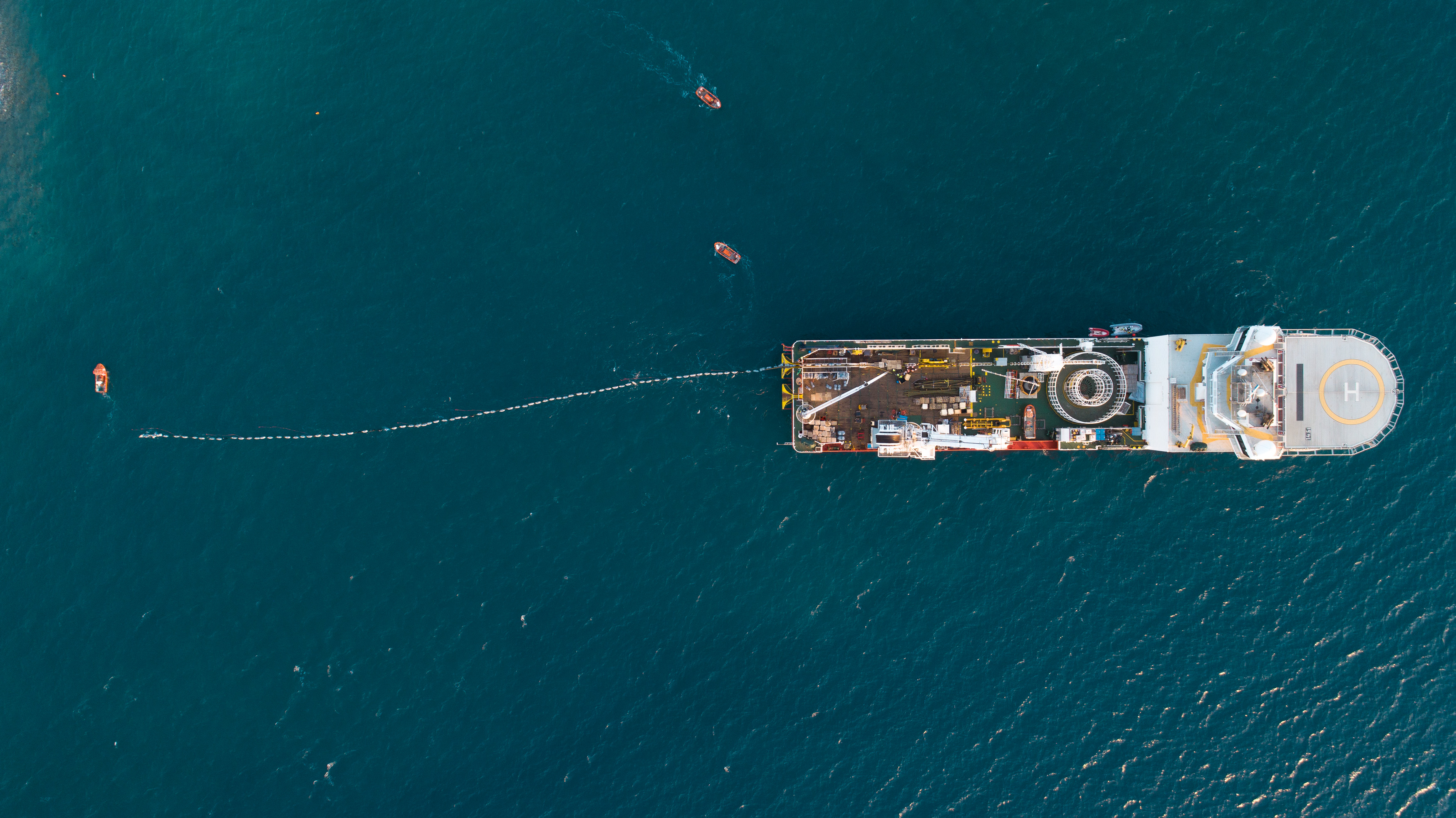
Photo: cyprus-mail.com
The GSI now resembles a minefield, especially with the European Public Prosecutor’s Office (Eppo) announcing an investigation into its operations. Though details remain sparse, reports indicate that Eppo is scrutinising the Cypriot company EuroAsia Interconnector Ltd, which previously spearheaded the project, particularly regarding its acquisition of a €650 million grant from the European Commission.
In December 2024, the Auditor-General’s office alerted the Eppo about potentially questionable dealings related to the interconnector. Currently, the Audit Office is preparing a special report focused solely on the period when public funds were committed to the GSI, as explained by spokesman Marios Petrides.
EuroAsia Interconnector Ltd stepped away from the GSI project in October 2023, transferring control to Greece’s independent power transmission operator, Admie. Reports from daily Phileleftheros suggest that the Eppo is examining connections to a Politically Exposed Person (PEP) tied to the project, alongside relatives and former officials.
Allegations have emerged that this PEP leveraged their position to secure the substantial grant, which was approved by the European Commission in January 2022. The investigation reportedly includes other PEPs and government officials in Cyprus.
Additionally, Sigma news outlet revealed a puzzling financial transaction where EuroAsia received €48.8 million upon selling the project to Admie, only to see the amount return to Admie shortly thereafter. This unusual sequence has drawn the attention of the Eppo.
Speculation surrounds several former officials, including ex-Foreign Minister Ioannis Kasoulides, former Transport Minister Marios Demetriades, and former Justice Minister Ionas Nicolaou, whose names have circulated in connection with the investigation. Kasoulides had previously served as the foreign minister during crucial periods and held a leadership role at EuroAsia Interconnector as of March 2018. Demetriades also had ties to EuroAsia and served as transport minister from 2014 to 2018.
For many, the GSI was initially viewed as a private venture supported by the government to secure EU funding. However, this perception shifted when EuroAsia sought state guarantees for loans and later requested a €300 million subsidy, proposals which were ultimately rejected. The previous administration agreed to lend EuroAsia €100 million from the Recovery and Resilience Facility, contingent on specific conditions, but this funding was never disbursed.
Despite the stalling of funding and the absence of a comprehensive cost study from EuroAsia, the current administration under Nikos Christodoulides has involved taxpayers by agreeing to an 8.3% return on capital for Admie and an annual payment of €25 million. This has placed Cypriot taxpayers firmly on the hook for the project.
Recent reports indicate that the European Commission grew hesitant about the GSI, realising that EuroAsia lacked the necessary expertise and funding capabilities for such a complex initiative. Consequently, it allegedly encouraged Admie to acquire EuroAsia, a move supported by both Nicosia and Athens.
As the investigation unfolds, Finance Minister Keravnos has expressed uncertainty over the ultimate cost of the interconnector, with estimates fluctuating between €2 billion and €3 billion. The lingering question remains whether the GSI will effectively reduce electricity prices for Cypriots.
Two leaked reports commissioned by the government in December 2024, one from Charles River Associates, questioned the GSI’s potential to decrease electricity costs and meet renewable energy targets. A legal due diligence report from Curtis, Mallet-Prevost, Colt & Mosle LLP also raised concerns about the project’s financial feasibility as envisioned in the Cross-Border Cost Allocation Agreement.
Critics are now questioning the project’s very purpose. Engineer Linos Jacovides pointed out that the GSI’s capacity of 2,000 megawatts far exceeds that of the Cypriot grid, which stands at 1,400 megawatts, raising serious doubts about its practicality.