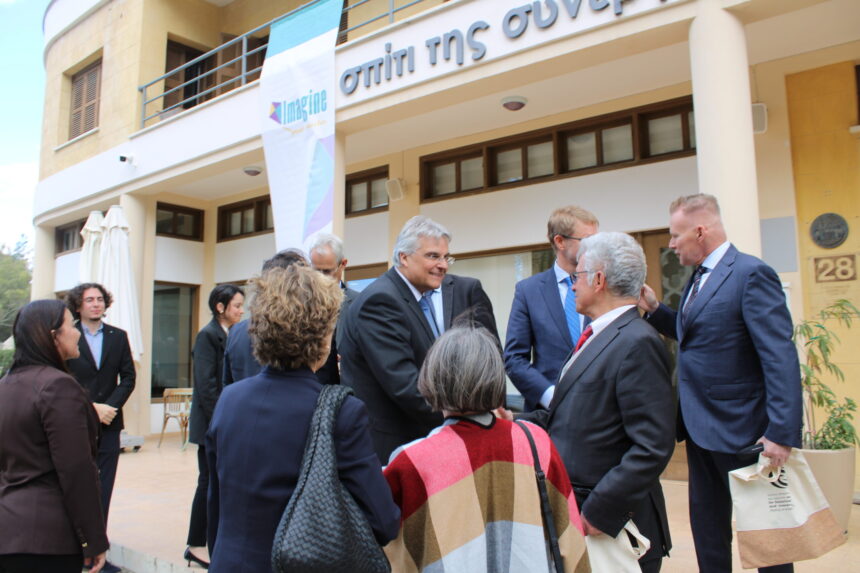
Education was highlighted as a vital confidence-building measure during a recent diplomatic briefing at the Home for Cooperation in Nicosia. This meeting gathered ambassadors and representatives from various foreign missions, showcasing a collective interest in fostering peace through educational initiatives.
- By collaborating, the ambassador believes that stakeholders can ensure the programme continues to make meaningful contributions to trust-building and the long-term prospects for peace on the island.
Confidence-building: Key Event Details
The event, hosted by German ambassador Hans Peter-Jugel and the director of the Association for Historical Dialogue and Research (AHDR), Loizos Loukaide, placed particular focus on the bicommunal peace education programme, Imagine. This programme has been at the forefront of efforts to bridge divides between Greek Cypriot and Turkish Cypriot communities.
Impact of the Imagine Programme
Ambassador Hans Peter-Jugel described the Imagine programme as “confidence-building in action.” He emphasised that its impact extends beyond mere symbolism, highlighting the importance of sustained engagement in fostering trust. He stated, “The strength of this programme lies in the trust AHDR has built across communities, even during politically challenging periods.”
By collaborating, the ambassador believes that stakeholders can ensure the programme continues to make meaningful contributions to trust-building and the long-term prospects for peace on the island.
Achievements and Future Directions
The briefing detailed the current status, achievements, and future directions of the Imagine programme. This initiative has successfully brought together more than 8,200 students and 2,560 teachers from both communities through workshops focused on peace education, anti-racism, and human rights. It operates under the auspices of the technical educational committee and receives funding from the German federal foreign office.
Civil Society’s Role
Kyriakos Pachoulides, co-president of AHDR, addressed the importance of civil society in driving change. He remarked that civil society must remain “at the forefront of change, especially when things get stalled.” He further noted that Imagine continues to thrive despite political obstacles, as it creates bottom-up opportunities to build bridges through education.
Significance of Teachers’ Participation
Hale Silifkeli, Pachoulides’ co-president, underscored the critical role of teachers in the programme’s success. Their sustained participation has been essential in keeping the initiative alive over the years, nurturing a conducive environment for dialogue and learning.
Recent Developments
In a notable development earlier this month, the education ministry issued long-delayed circulars to public schools outlining procedures for participation in the programme. This information, which had previously been promised for release in January, is expected to facilitate greater involvement from schools.
International Perspectives
The UN Office of the High Commissioner for Human Rights has expressed concerns regarding the lack of progress in education-related initiatives in Cyprus. It has described the Imagine programme as “the only mechanism in Cyprus that has successfully brought together more than 8,200 students and 2,560 teachers from both communities.” This underscores the programme’s unique role in promoting dialogue amidst ongoing tensions.
Dialogue Through Education
The briefing concluded with an open discussion among diplomats, highlighting a consensus that education remains one of the few functioning channels for dialogue on the island. Participants recognised the need to support and expand such initiatives to enhance understanding and cooperation between the divided communities.